What bat droppings look like
Bat droppings (guano) are small, dark pellets about 1/8 to 1/4 inch long that pile up under a roost or entry hole and crumble into dry, glittery dust when pressed, because they are made of insect parts.
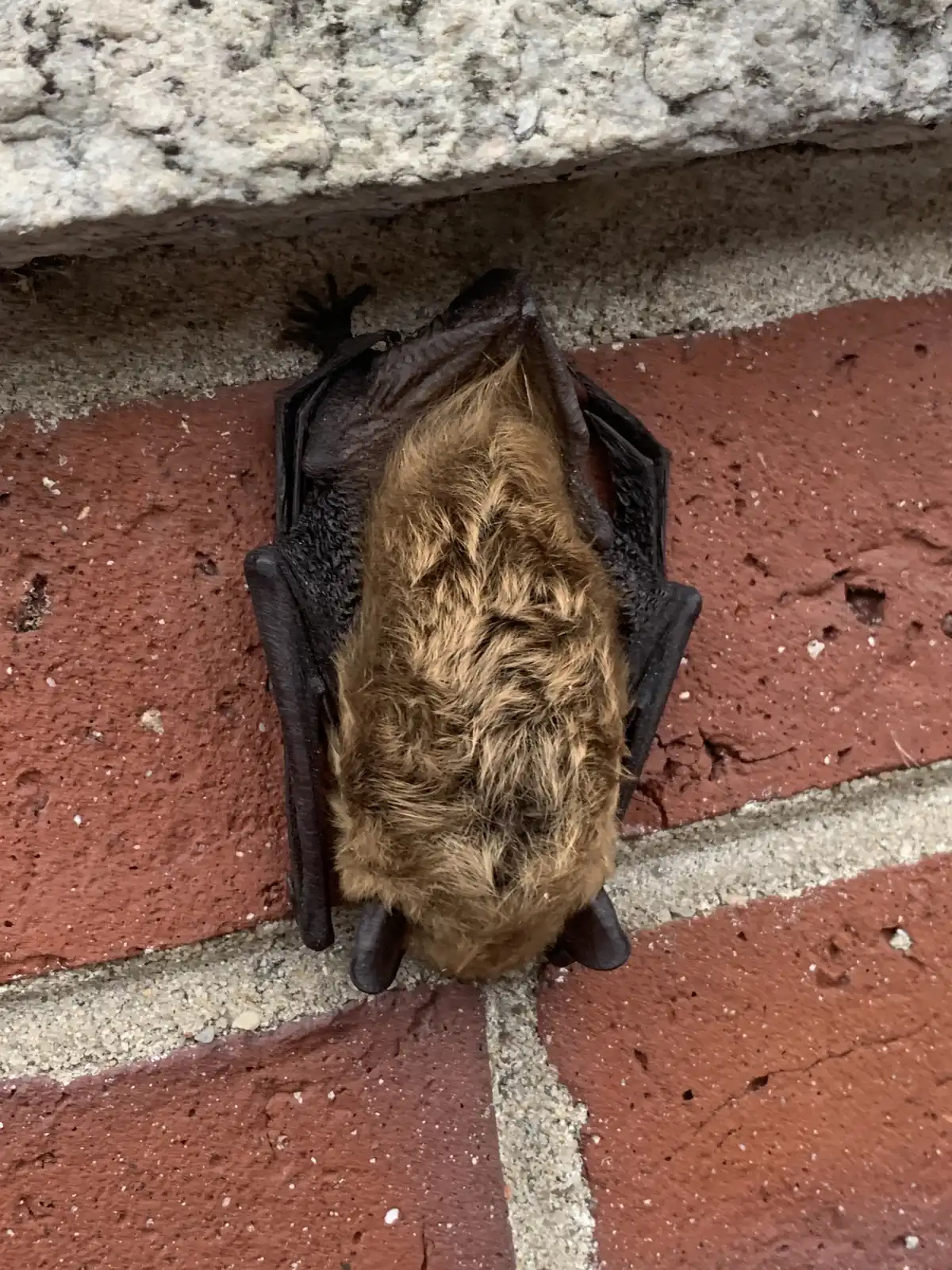
How to recognize bat guano
Bat droppings are small, about 1/8 to 1/4 inch long (3–6 mm), roughly the size of a grain of rice. They are black or dark brown and look a lot like mouse droppings at first glance, which is why people mix them up. The difference is what they are made of. Bats in the US eat insects, and their droppings are packed with undigested wings and legs. Fresh guano may show white or shiny specks of insect wing.
The crush test: bat vs mouse droppings
Put on gloves and press a dry dropping with a stick or gloved finger.
- A bat dropping crumbles into dry, powdery dust with tiny glittering flecks of insect wing.
- A mouse dropping stays hard, or smears if fresh, and does not crumble or sparkle.
Shape and placement help too. Mouse droppings are pointed at one or both ends and scattered along walls, cupboards and runways. Bat droppings pile up in one place, under the spot where bats hang or right below the hole they fly out of. Dry, black piles under the main exit hole are a classic sign. Droppings can also stick to walls and windows below a gap. Rodent droppings are covered on the mouse droppings and rat droppings pages.
Other signs of bats
- Bats leaving a gap in the roof, eaves or chimney at dusk
- Brown, oily rub marks around small cracks, vents and eaves
- Squeaking or scratching in walls or the ceiling, especially at dusk and dawn
- Staining and a strong odor where droppings and urine build up in an enclosed attic
Bats can squeeze through gaps as small as 3/8 inch wide, and the CDC notes some use openings about 1/4 inch wide.
Why guano needs careful handling
The fungus that causes histoplasmosis lives in soil and grows in bird and bat droppings, especially old, damp accumulations. People get sick by breathing in spores, which become airborne when guano is disturbed. Most people who breathe in spores never get sick, but the infection can be serious for people with weakened immune systems, infants and adults over 55. The fungus is most common in the central and eastern US.
Bats are also the leading cause of human rabies deaths in the US. Fewer than 1 in 200 bats carries rabies, but never touch a bat with bare hands.
Cleaning up a small amount of bat droppings
For a few droppings on a porch floor or windowsill:
- Wear disposable gloves and a dust mask or N95 respirator.
- Mist the droppings lightly with water so they do not turn to dust.
- Wipe or scoop them into a plastic bag, seal it and put it in the trash.
- Wash your hands well.
Do not sweep or vacuum dry guano. Large deposits, such as an attic floor covered in droppings, should be removed by a professional hazardous-waste or wildlife cleanup company, not by a homeowner. Remove the bats first, or new droppings will keep falling. See how to get rid of bats for timing rules.
Where in the US
Bats are found across the US. The big brown bat is the species most often found in and around buildings and roosts in colonies of 50 to 200, while the little brown bat forms very large maternity colonies in the northern and eastern states. About half of US bat species are in decline, white-nose syndrome is a serious threat, and states such as Florida protect bat roosts by law, which limits when and how bats can be removed.
Photos
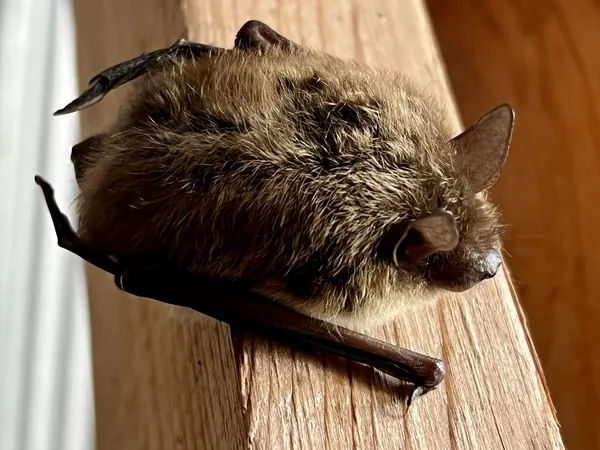
Often mistaken for
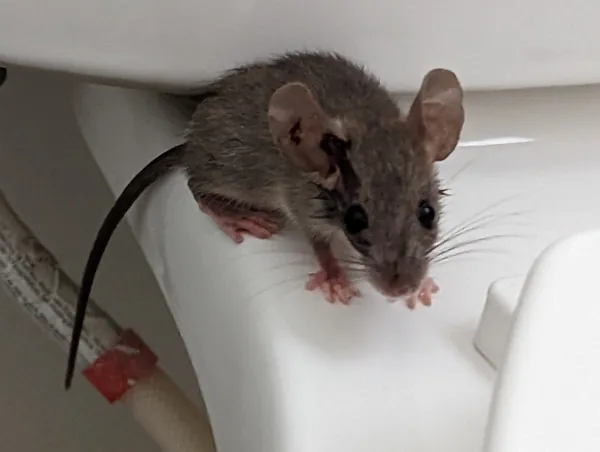
Photo: Justin via iNaturalist, CC BY 4.0
House mouse
Body 6.5–9.5 cm plus a tail about as long
Mouse droppings are hard, pointed at one or both ends, scattered along paths, and do not crumble or sparkle.
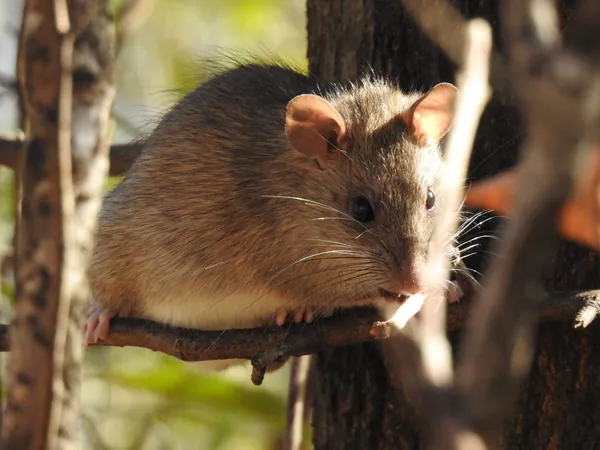
Photo: Laura Mae via iNaturalist, CC BY 4.0
Norway rat
Body 18–25 cm; tail shorter than the body (Norway rat)
Rat droppings are much bigger, 12–18 mm with blunt ends, and stay firm when pressed.
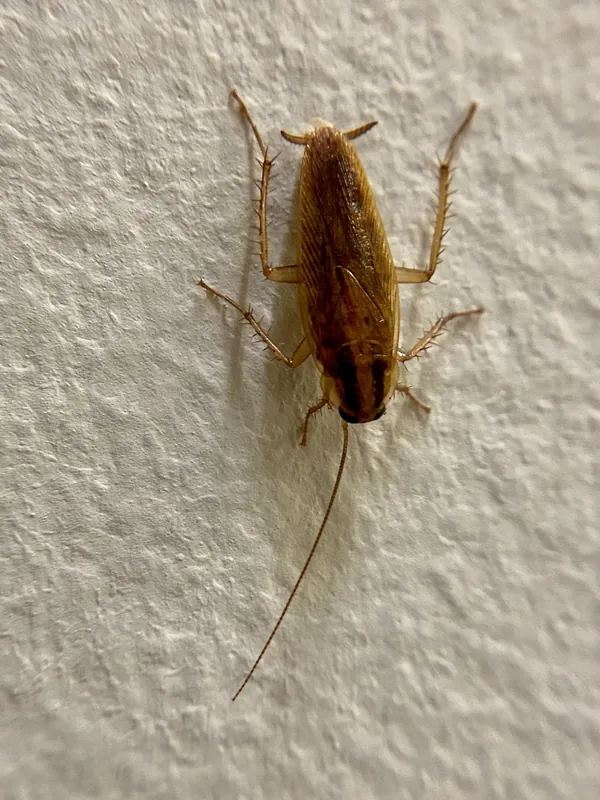
Photo: Sandra H Statner via iNaturalist, CC BY 4.0
Cockroach
German 12–16 mm; American 35–40 mm
Roach droppings are tiny specks or smears near food and water, not piles under a high gap.
When to call a professional
Hire a professional for any attic or wall with more than a handful of droppings: CDC advises that large amounts of droppings be removed by companies that specialize in hazardous waste. Call a bat exclusion specialist to remove the colony itself, because timing is restricted by law in many states. If a bat was in a room with a sleeping person or a young child, call your health department the same day.
Questions
Are bat droppings dangerous to touch?
The main risk is breathing in histoplasmosis spores from disturbed, dried guano. Wear gloves and a mask, mist droppings before cleanup, and leave large deposits to professionals.
How do I know if it is bat or mouse poop?
Crush one with a gloved hand or a stick. Bat droppings crumble into dust with shiny insect bits; mouse droppings stay hard and are pointed at the ends.
Why are there droppings under my window or porch light?
Bats often hang under eaves or shutters and drop guano below. A steady pile under one spot points to a roost or entry hole just above it.
Can bat guano be used as fertilizer?
Guano is a fertilizer, but attic guano carries histoplasmosis risk. Nebraska Extension advises handling it outdoors, in small amounts, with a dust mask.