How to get rid of stink bugs
To get rid of stink bugs, seal cracks around windows, doors, siding and utility lines before they move in each fall, and remove the ones already inside with a vacuum or by knocking them into soapy water; indoor sprays don't help.
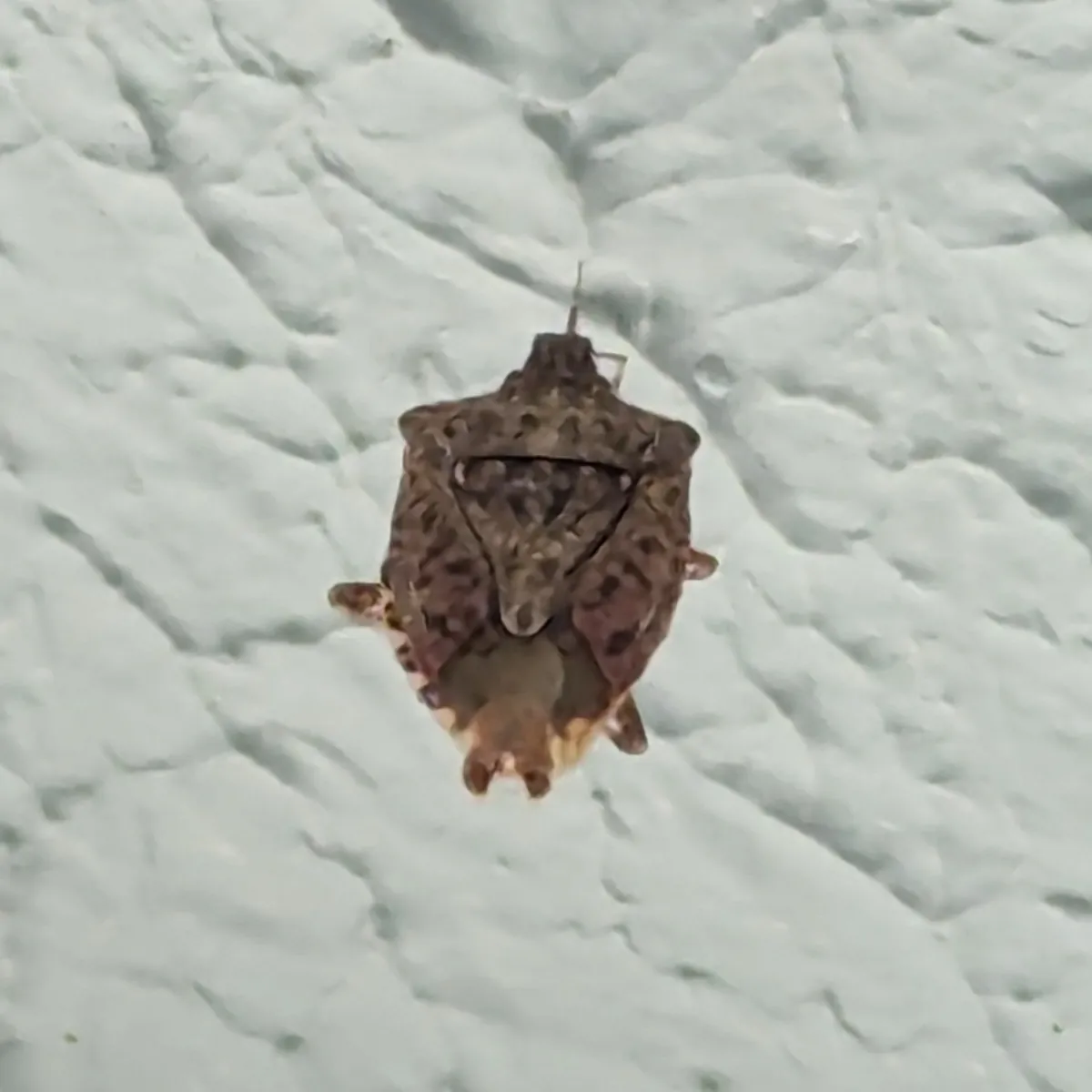
What a stink bug looks like
The stink bug that comes into US homes is the brown marmorated stink bug, an insect from east Asia first found in Allentown, Pennsylvania, in 1998. Adults are about 17 mm (2/3 inch) long, about the size of a dime across, and shield-shaped, nearly as wide as they are long. They are mottled brown on top and underneath, with coppery or bluish metallic flecks on the head and shoulders. Two features set them apart from native stink bugs: light bands on the antennae, and alternating light and dark bands along the edge of the abdomen. The shoulders are smooth and rounded, not spiny.
Nymphs look similar but have no wings; newly hatched ones have a yellow-red abdomen. Eggs are barrel-shaped and laid in clusters on the undersides of leaves.
Why they are in your house
Stink bugs feed on fruit, vegetables and ornamental plants in summer. From September through October, adults look for sheltered places to spend the winter. On warm fall days they gather on the sunny sides of buildings and crawl in through gaps around windows, doors, siding, chimneys and utility lines. Inside, they hide in wall voids and attics and stay inactive through winter. On warm winter days, or when the heat is turned up, some wander into living areas, often near windows, lights and ceiling fans. In spring they try to get back outside.
They do not reproduce or lay eggs indoors, don't bite, and don't damage the house. The smell when they are crushed can irritate sensitive people's nose and eyes, and crushing them on skin can cause a rash in a small number of people.
How to get rid of stink bugs
Keeping them out is far more effective than killing them once they are in.
- Seal before September. Caulk cracks around windows, doors, siding, utility pipes and chimneys, and under fascia boards, with silicone or silicone-latex caulk. Repair torn window and door screens, and seal gaps where cables, cords and pipes enter the house.
- Seal indoor entry points too. Bugs already in the walls come out around baseboards, window and door trim, exhaust fans and ceiling light fixtures. Caulking these keeps them in the wall until spring.
- Remove the ones inside. Use a vacuum (a shop vacuum or a bag you can throw away, since vacuums keep the smell) or knock them into a container of soapy water, then discard.
- Don't crush them. That releases the odor.
What doesn't work
Indoor insecticides are not recommended. Bugs hidden in walls and attics won't be reached, and the dead bugs can attract carpet beetles, which then damage wool and stored goods. Foggers are not a long-term solution. Outdoor perimeter sprays applied by a licensed applicator just before bugs gather in fall give, at best, minor relief, because sunlight breaks them down within days to a week.
Garden damage
Brown marmorated stink bugs feed on about 200 plants, including apples, peppers, tomatoes, beans, grapes and sweet corn, leaving pitted, discolored, misshapen fruit. In home gardens, handpick bugs into soapy water; specific treatment is generally not needed.
Where in the US
Brown marmorated stink bugs arrived from Asia in the 1990s, first in eastern Pennsylvania, and have spread through most of the eastern and midwestern US and into many western areas. Penn State expects them to be found across the continent. Home invasions are a fall-to-spring problem wherever they are established.
Often mistaken for
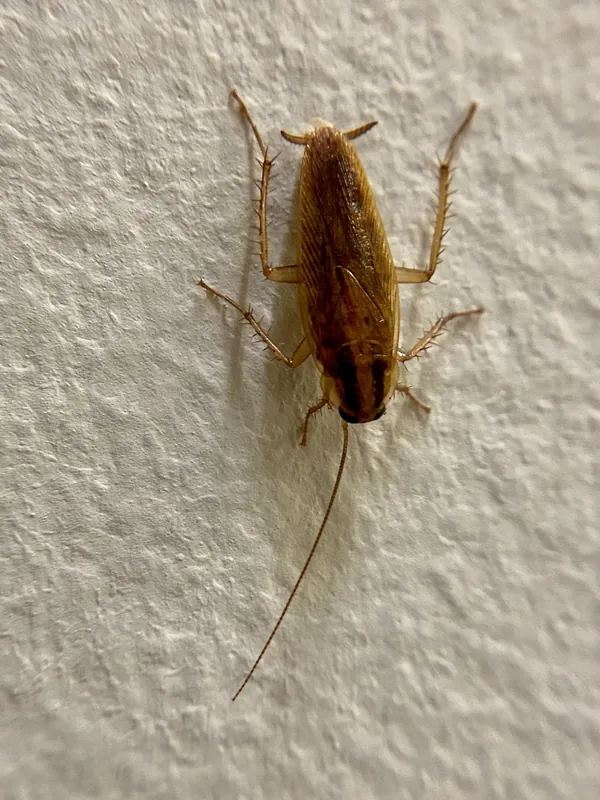
Photo: Sandra H Statner via iNaturalist, CC BY 4.0
Cockroach
German 12–16 mm; American 35–40 mm
Flat and oval rather than shield-shaped, with long whip antennae; runs fast.
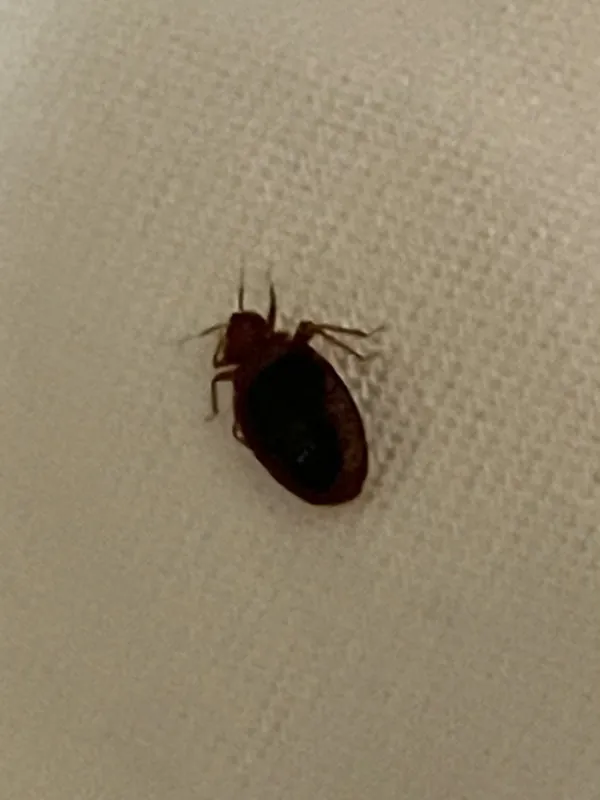
Photo: Evelyn Lazzaretti 🏳️⚧️ via iNaturalist, CC0 1.0 (public domain dedication)
Bed bug
5–7 mm adult, about the size of an apple seed
Much smaller, about 5 mm, reddish and wingless; lives in beds and feeds on blood.
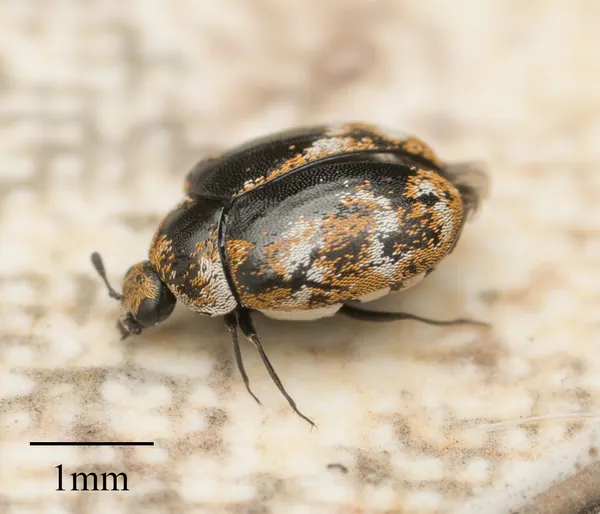
Photo: Jesse Rorabaugh via iNaturalist, CC0 1.0 (public domain dedication)
Carpet beetle
2–4 mm adult; larvae up to 5 mm and hairy
Tiny, 2–4 mm, round and patterned; larvae are hairy.
Choose a treatment
Stink bugs can't be sprayed away once they're inside; the bigger the problem, the more the answer is sealing the outside before next fall.
Vacuum or soapy water
Do it yourself
- Knock bugs into a container of soapy water, or vacuum them with a shop vac or a vacuum bag you can throw away. Don't crush them.
- Caulk gaps around indoor window and door trim, baseboards, exhaust fans and ceiling light fixtures where they come out.
Professional
Not needed.
Seal the outside before fall
Do it yourself
- Before September, caulk cracks around windows, doors, siding, chimneys, utility pipes and under fascia with silicone or silicone-latex caulk.
- Repair window and door screens and seal where cables and pipes enter.
- Keep removing bugs inside with a vacuum or soapy water.
- Skip indoor sprays and foggers; they don't reach bugs in the walls, and dead bugs can draw carpet beetles.
Professional
A handyman or exclusion contractor can seal high gaps at soffits, rooflines and chimneys that you can't safely reach.
Professional exclusion
Do it yourself
- Seal indoor entry points so bugs stay in the walls until spring.
- Vacuum the ones that get through and remove dead bugs from attics and wall openings you can reach, to avoid feeding carpet beetles.
Professional
Expect a full exterior sealing job before fall. A licensed applicator may also treat exterior walls just before bugs gather in fall, but sunlight breaks these products down within days to a week, so they give only minor relief. Read and follow the label; the label is the law.
The odor can irritate the nose and eyes of sensitive people, and crushing bugs on skin can cause a rash in a few people. Use a vacuum or soapy water rather than bare hands.
Sealing the outside of the building is usually the owner's job; ask your landlord in writing to caulk and repair screens before September.
When to call a professional
Call a professional if bugs are pouring in through gaps you can't reach, such as at the roofline, soffits or chimney, or if you want exterior work done before the fall rush. A licensed applicator can treat the outside in late summer, but the main value is in sealing. Indoor spraying isn't worth paying for.
Questions
Do stink bugs bite?
No. They don't bite people or pets and don't reproduce indoors. The odor can irritate sensitive people, and crushing them on skin can cause a rash in a few people.
Why are there so many stink bugs in my house in winter?
They moved into walls and the attic in fall to overwinter. Warm days or turning up the heat wake some of them, and they wander toward light. Seal entry points before next September.
What kills stink bugs instantly?
Knocking them into a container of soapy water. Indoor insecticides aren't recommended because they don't reach bugs in the walls.
How do I tell a brown marmorated stink bug from other stink bugs?
Look for white bands on the antennae and alternating light and dark bands along the edge of the abdomen. Native brown stink bugs lack the banded antennae.