Venomous: medically significant bite
Brown recluse spider: identification and range
A brown recluse is a plain tan to brown spider with a body about 3/8 inch (9 mm) long, six eyes in three pairs, a dark violin mark on its front body, and legs of one solid color with no bands or spines.
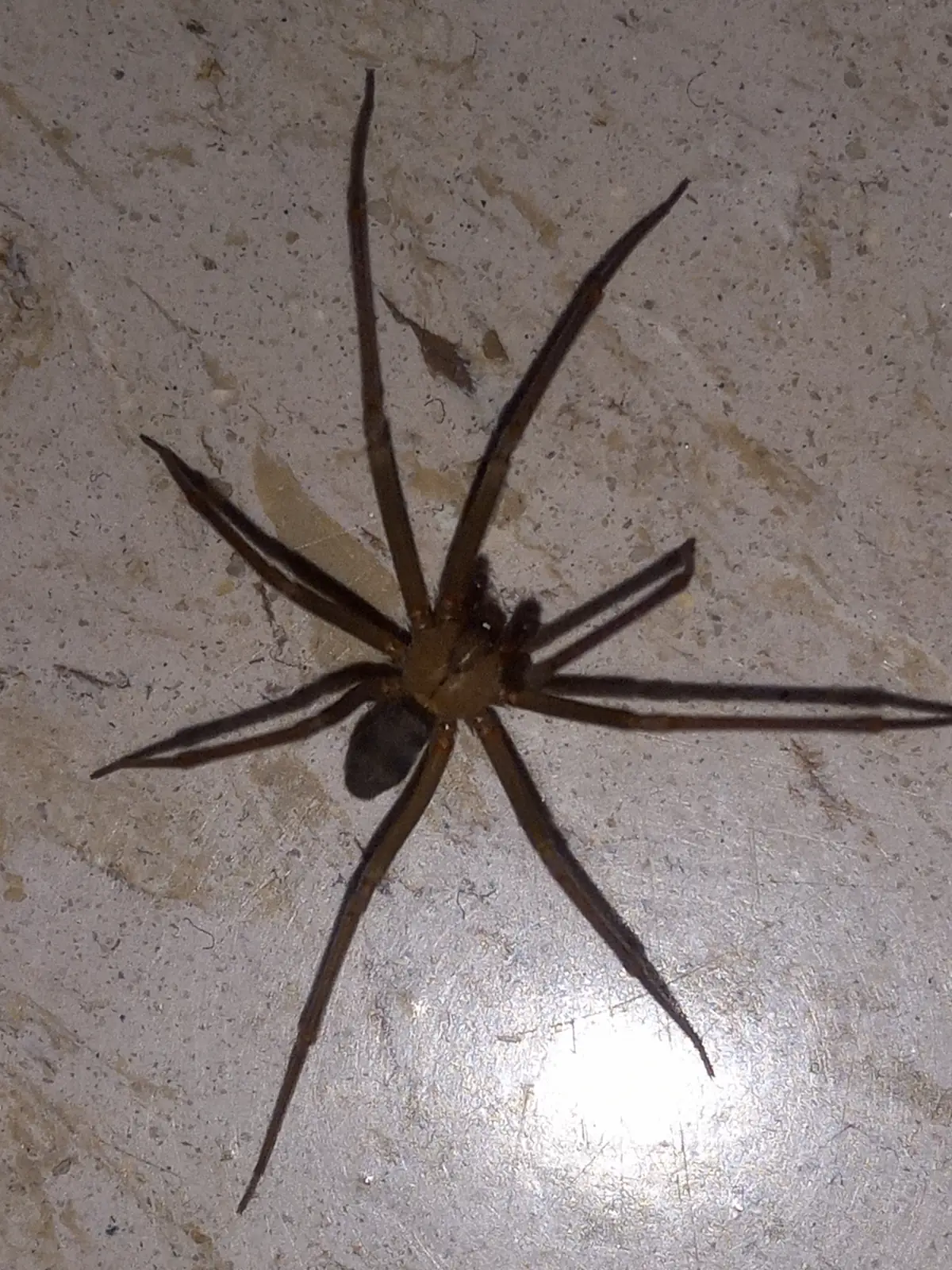
How to identify a brown recluse
Many brown spiders are mistaken for recluses. Check every point below, not just the violin.
- Six eyes arranged in three pairs: one pair in front and one on each side. Most spiders have eight eyes. You need a good hand lens to see this, and it is the most reliable feature.
- A dark violin-shaped mark on the front body, with the neck of the violin pointing toward the abdomen. Arachnologists warn that people often see violins on other spiders, so the mark alone proves nothing.
- An abdomen of one even color, cream to dark brown, covered in fine hairs. A recluse abdomen never has two colors of pattern.
- Long, thin legs of one uniform light color, with no stripes, bands or thick spines.
- A body about 3/8 inch long. With legs spread it is roughly the size of a quarter. If the body alone is longer than 1/2 inch, it is not a recluse.
Common lookalikes include cellar spiders, which have eight eyes and patterned abdomens; spitting spiders, which have a similar eye pattern but spotted legs and abdomen; and funnel weavers and orb weavers, which have banded or spiny legs. If you live in recluse country and need certainty, have the spider confirmed by your county extension office or a knowledgeable pest professional.
Where brown recluses actually live
The brown recluse lives in the central US: from Nebraska south to Texas, and east to southernmost Ohio and north-central Georgia. Populations are densest around Kansas, Oklahoma and Missouri. Outside that area, recluses are rare and heavily over-reported. The species has never established breeding populations in California.
If you live outside the range, it is highly unlikely that the spider in your house is a recluse.
Most "recluse bites" are something else
In one analysis by UC Riverside arachnologist Rick Vetter, about 60% of reported brown recluse bites came from areas where no recluse spiders have ever been found. About 40 medical conditions can look like a recluse bite, including bacterial skin infections such as drug-resistant Staphylococcus aureus, diabetic and pressure ulcers, and bites of other arthropods. A misdiagnosis means the real condition goes untreated.
Recluses are not aggressive. Bites happen when a spider is pressed against skin, usually in bedding or clothing. One Kansas family collected 2,055 brown recluses in their home over six months and, after eight years living there, had no evident bites. Most bites are medically minor and heal in about 3 weeks. Some develop a sunken, bluish patch of dead skin that can take months to heal and leave a scar. Rarely, a bite causes fever, chills, rash or vomiting; children, older adults and people in poor health are more likely to react severely.
If you think you were bitten
Wash the area with soap and water, apply a cold, damp cloth or ice, and elevate it if you can. Seek medical care promptly, and bring the spider in a sealed container if you can catch it safely; an identified spider helps your doctor. Do not try to remove the venom.
Where they hide indoors
In infested homes, recluses hide in dark, undisturbed places: wall-floor junctions behind clutter, inside walls and concrete block voids, behind baseboards, along joists and under insulation in attics, basements and crawl spaces, and in closets, shoes, clothing and stored boxes. They hunt at night and build small, irregular retreat webs behind objects, never out in the open.
Avoiding bites
- Shake out shoes and clothing before wearing them, and keep them off the floor.
- Wear gloves and long sleeves when sorting boxes or stored items.
- Move beds a few inches away from walls and remove bed skirts.
- Store seldom-used items in sealed plastic containers.
- Place flat sticky cards along baseboards and behind furniture to check for spiders and track progress.
Where in the US
The brown recluse lives only in the south-central and midwestern US: from Nebraska south to Texas and east to southernmost Ohio and north-central Georgia, densest around Kansas, Oklahoma and Missouri. It has never established breeding populations in California, and outside its range the spider is rare and often over-reported.
Often mistaken for
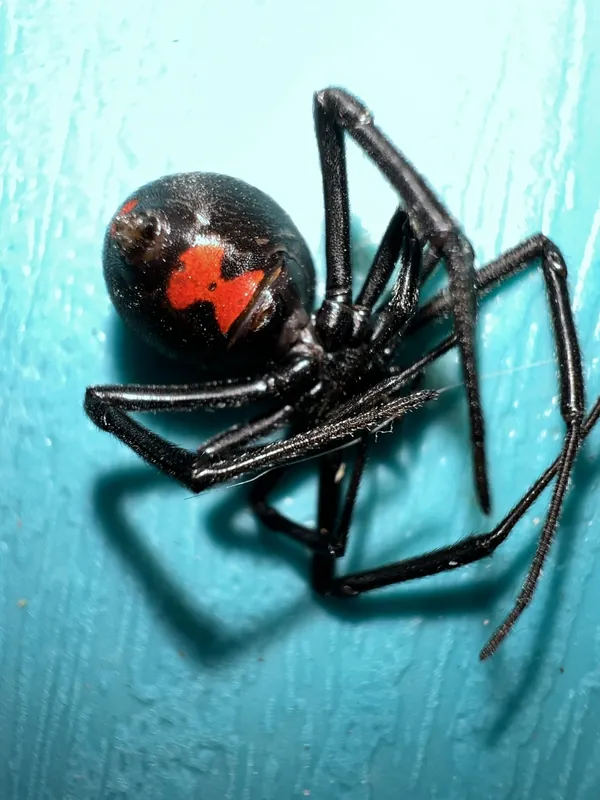
Photo: Jessica Moulton via iNaturalist, CC BY 4.0
Black widow
Female body about 6–13 mm (1/4–1/2 inch), glossy black
Glossy black with a round abdomen and red hourglass underneath; builds messy webs low to the ground.
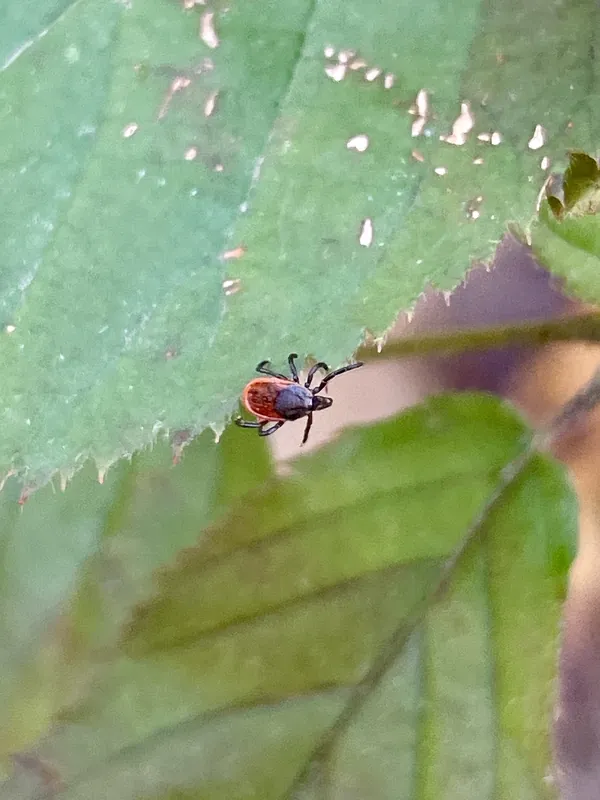
Photo: infiniteuniverse via iNaturalist, CC0 1.0 (public domain dedication)
Tick
1–5 mm unfed (nymphs ~1–2 mm); up to 10 mm engorged
Also eight-legged, but tiny, flat and oval with no waist; clings to skin and pets.
When to call a professional
Professional treatment is recommended for brown recluse infestations, because the spiders hide inside walls, under insulation and in voids that sprays do not reach. A professional inspects with a flashlight and sticky traps, applies dust to wall voids and cracks, and treats harborages inside and out. Ask for help identifying the spider first if you live outside the known range.
Questions
How can you tell a brown recluse from other brown spiders?
Count the eyes with a hand lens: a recluse has six, in three pairs. Its legs and abdomen are each one plain color, with no bands, stripes or spines.
Do brown recluses live in my state?
They live from Nebraska south to Texas and east to southernmost Ohio and north-central Georgia. Outside that area, a brown spider is very unlikely to be a recluse.
Are brown recluse bites always serious?
No. Many bites are medically minor and heal in about 3 weeks. Some form a slow-healing wound that needs medical care, so get any suspected bite checked promptly.
Are brown recluses aggressive?
No. They bite when trapped against skin, for example in clothing, shoes or bedding.