Silverfish: how to identify and get rid of them
To get rid of silverfish, the silvery, carrot-shaped insects about 1/2 inch long, dry the room out with a dehumidifier, fix leaks, seal the cracks they hide in, store paper and dry food sealed, and dust voids with a desiccant.
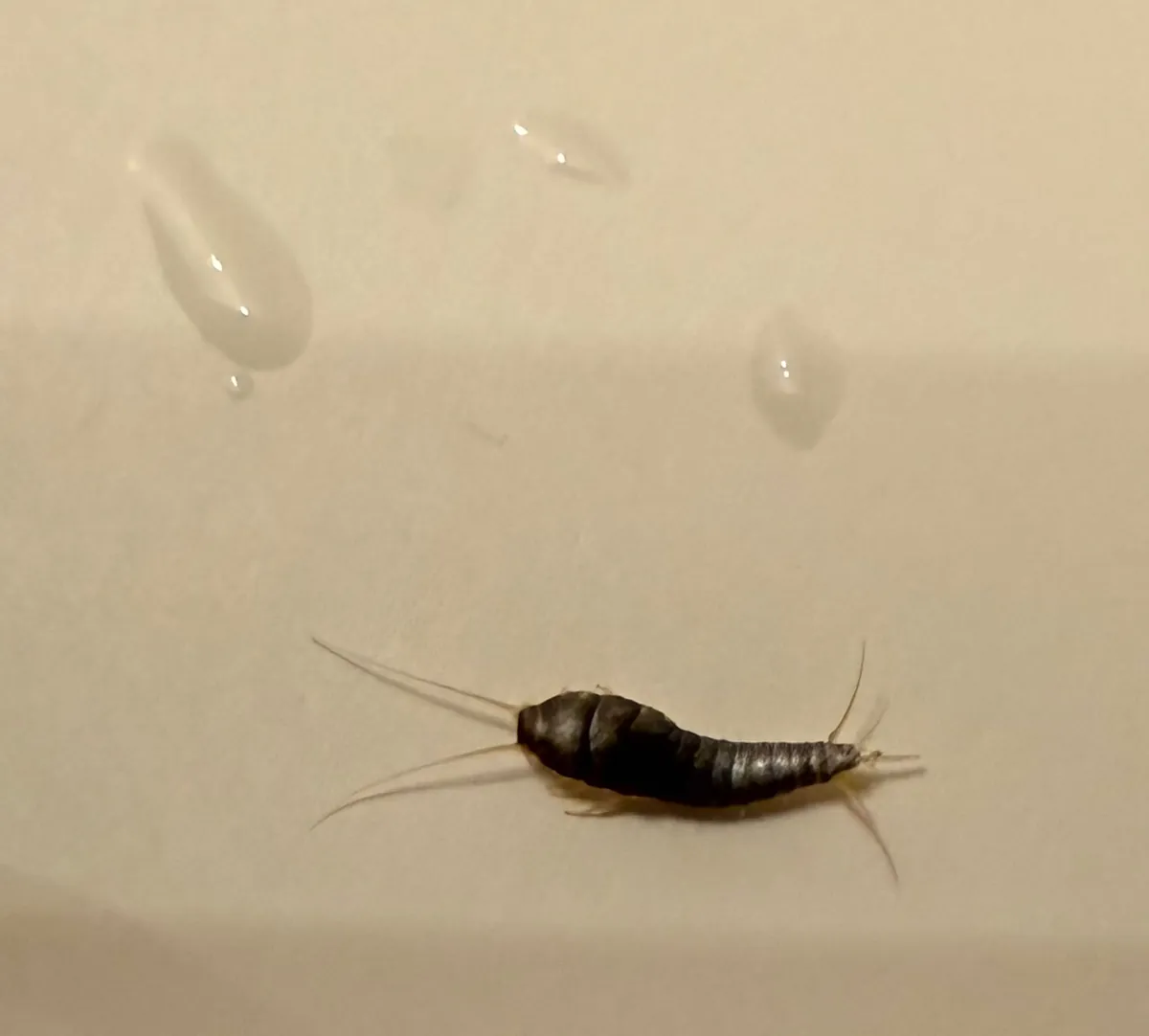
What a silverfish looks like
Silverfish are flat, wingless insects about 1/2 inch long, a little longer than a fingernail is wide, that can grow to 3/4 inch. The body is wide at the head and tapers to the rear like a carrot, ending in three long, thin bristles. Two long antennae stick out in front. The whole body is covered with shiny silver to pearl-gray scales. They run fast, wiggling side to side like a fish, and squeeze into narrow cracks.
The firebrat is a close relative with the same shape but mottled gray or brown, with antennae longer than its body. Firebrats like heat over 90°F and turn up near furnaces, water heaters, hot water pipes, ovens and fireplaces, and in summer attics.
Where they live
Silverfish hide by day and come out at night. They like damp places: basements, laundry rooms, bathrooms, under sinks, and closets and storage boxes on concrete floors. They often travel along pipes and through gaps in walls and floors, and get trapped in bathtubs and sinks because they can't climb the smooth sides. At warmer temperatures they need relative humidity above about 75%, which is why drying a room out works so well.
Signs and damage
Silverfish eat starch: paper, glue and paste in book bindings and wallpaper, starched clothing, cardboard, cereal, flour, pasta and pet food. They scrape at paper rather than bite through it, leaving irregular, ragged holes and thinned patches that start in one spot and spread. Other signs:
- Fine, dust-like silvery scales near damaged items.
- Small light brown spots of excrement on damaged paper.
- Yellowed or discolored pages from mold associated with their feeding.
- Insects trapped in a tub or sink in the morning.
They are a nuisance pest, not a health threat. A few in a basement is common; many in living areas, or damage to books and papers, means conditions are too damp.
How to get rid of silverfish
No single method clears them. Penn State Extension recommends combining several steps.
- Dry it out. Run a dehumidifier in basements and other damp closed rooms, use exhaust fans in bathrooms and laundry rooms, fix leaks, keep gutters clear and grade soil away from the house. Lay plastic sheeting over a dirt crawlspace floor.
- Remove food. Store cereal, flour, pasta and pet food in airtight containers. Move books, photos, papers and clothing out of damp basements, or store them in sealed plastic bins rather than cardboard boxes.
- Seal hiding spots. Caulk or fill cracks along baseboards, window and door trim, and gaps around pipes.
- Clean. Vacuum often along edges, in closets and in storage areas to remove eggs, scales and food crumbs. Clear clutter.
- Trap and monitor. Put sticky traps in corners and along edges. A simple jar trap also works: wrap the outside of a small glass jar in masking tape so they can climb in but not out of the slick inside.
- Use desiccant dust. Puff a light layer of diatomaceous earth or silica aerogel dust into cracks, crevices and wall voids. These dry insects out and keep working as long as they stay dry. Boric acid dust alone doesn't work on firebrats.
Baits generally don't work well because silverfish tend not to feed on them. For large infestations, a crack-and-crevice spray labeled for silverfish can be applied into cracks and voids, not on open surfaces. Read and follow the label; the label is the law. Foggers are not recommended. If you don't see results in 2 to 3 weeks, look for missed hiding places and water sources.
Where in the US
Silverfish and firebrats live in homes across the US. Silverfish are most common in damp basements, bathrooms and laundry rooms. Firebrats favor hot spots such as furnace and boiler rooms and summer attics, and tolerate drier air.
Photos
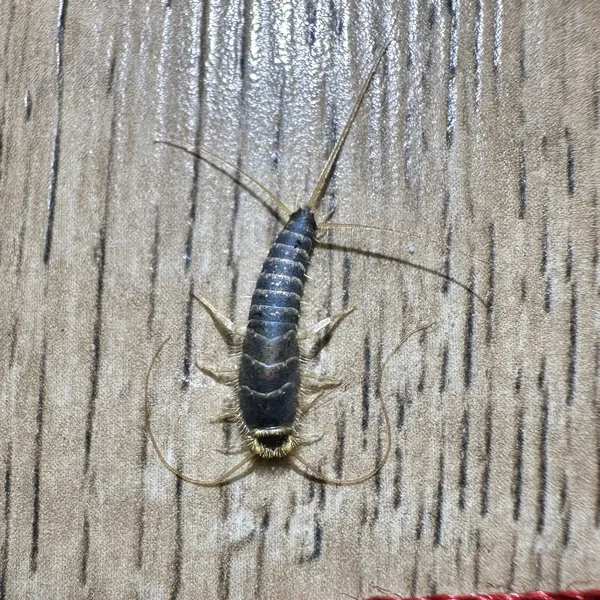
Often mistaken for
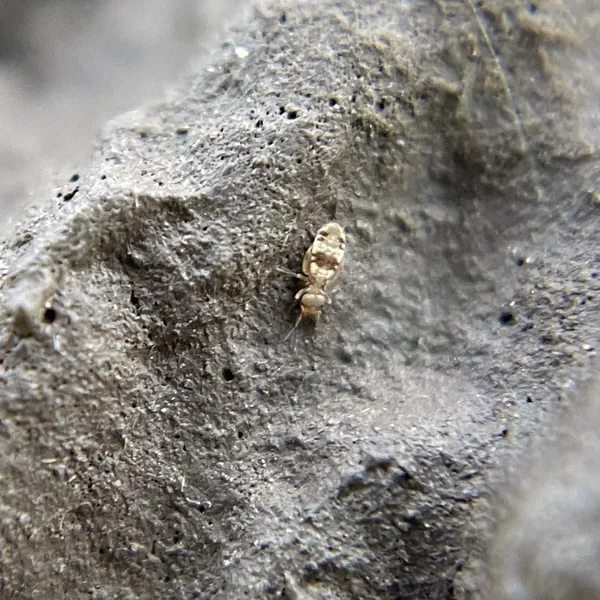
Photo: northerly via iNaturalist, CC BY 4.0
Booklouse
About 1 mm, pale and soft
Much smaller, about 1 mm, pale and soft, with no scales or tail bristles.
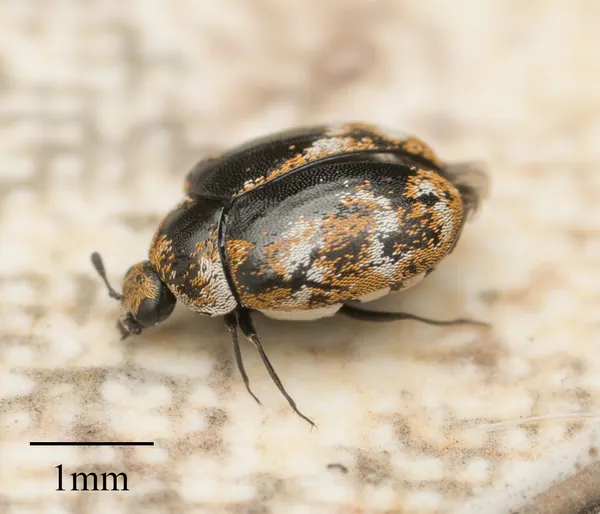
Photo: Jesse Rorabaugh via iNaturalist, CC0 1.0 (public domain dedication)
Carpet beetle
2–4 mm adult; larvae up to 5 mm and hairy
Larvae are hairy and banded, not scaly and silver; damage wool and fabric.
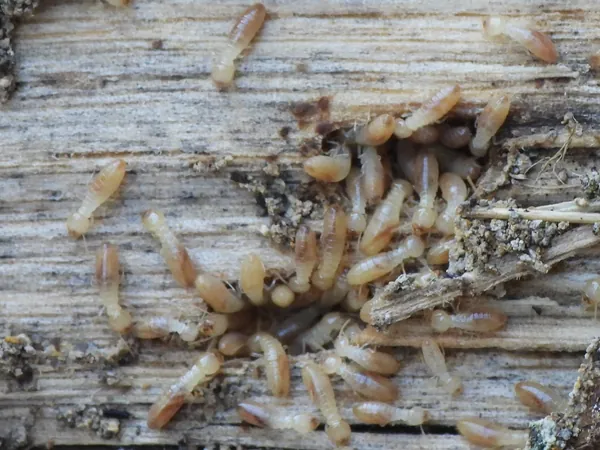
Photo: Sam Kieschnick via iNaturalist, CC BY 4.0
Termite
Workers 3–4 mm; winged swarmers about 10 mm with wings
Pale and soft with no scales or tail bristles; lives in wood and soil.
Choose a treatment
Humidity drives silverfish numbers, so every level starts with drying out; insecticides only help once the moisture is fixed.
Dry out and monitor
Do it yourself
- Run a dehumidifier in the basement and exhaust fans in bathrooms and laundry rooms. Fix dripping pipes.
- Move paper, books and cardboard off damp floors into sealed plastic bins.
- Put sticky traps in corners and along edges to see where they are.
Professional
Not needed.
Dry, seal, dust the cracks
Do it yourself
- Keep up dehumidifying; also clear gutters, grade soil away from the foundation, and cover a dirt crawlspace floor with plastic sheeting.
- Store cereal, flour, pasta and pet food in airtight containers.
- Caulk cracks along baseboards, door and window trim and around pipes.
- Puff a light film of diatomaceous earth or silica aerogel dust into cracks and voids; it only works while dry.
- Vacuum edges, closets and storage areas often.
Professional
A one-time service can inject desiccant dust into wall voids and treat cracks you can't reach.
Protect items, treat cracks
Do it yourself
- Move valuable papers, photos and books to a dry room in sealed containers.
- For a large infestation, a crack-and-crevice spray labeled for silverfish can go into cracks and voids, not on open surfaces. Read and follow the label; the label is the law. Don't use foggers.
- Recheck after 2 to 3 weeks; if they persist, look for missed hiding places and moisture.
Professional
A professional treats voids and cracks throughout the house and can advise on moisture sources. For valuable collections, ask a conservator about cleaning and storage.
Apply dusts into cracks and voids, not on open floors, and keep them away from children and pets. Avoid breathing the dust while applying it.
Throw out dry food with silverfish in it, and keep the rest in airtight containers. Never apply dusts or sprays on food-contact surfaces.
When to call a professional
Call a professional if silverfish are damaging books, documents, artwork or collections, if they persist in living areas after you have dried out and sealed, or if they seem to be coming from wall voids or the attic. A technician can inject dusts into voids and treat cracks where you can't reach, but humidity control is still your part of the job.
Questions
What attracts silverfish?
Damp, humid rooms and starchy food: paper, glue, cardboard, book bindings, cereal and flour. Drying the room out is the most effective fix.
Are silverfish harmful?
No. They don't bite or carry disease. They can damage paper, books, wallpaper and stored dry food.
Does seeing silverfish mean my house is damp?
Usually it means at least one area is. Silverfish need high humidity, so look for leaks, poor ventilation in bathrooms, or a damp basement.
Do silverfish traps work?
Sticky traps and taped-jar traps catch silverfish and help you find where they are, but they won't clear an infestation without drying and sealing.