What raccoon poop looks like
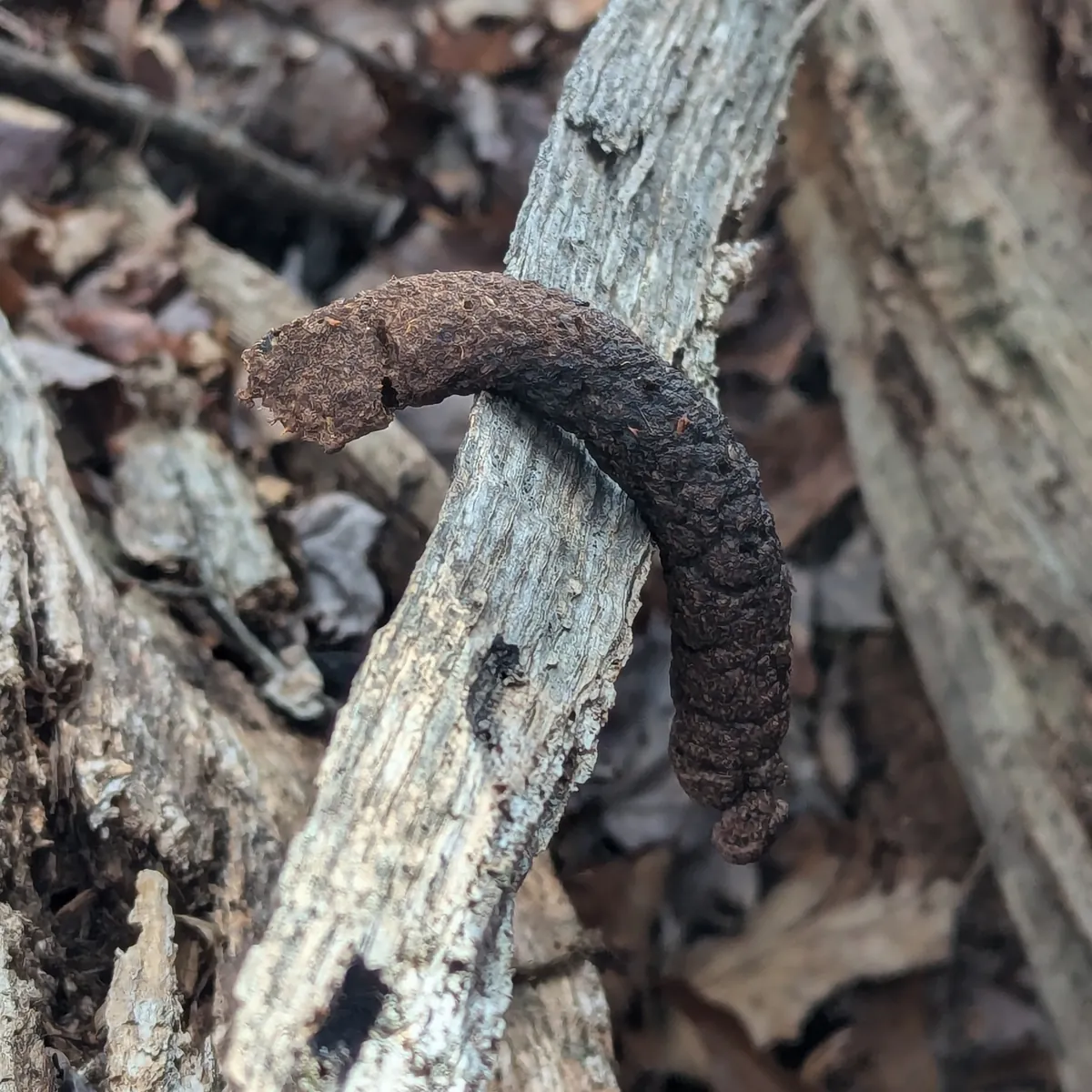
Raccoon poop is dark, tubular and blunt at the ends, about as wide as a dime or nickel, often flecked with seeds, and piled in one spot that raccoons use again and again, called a latrine.
How to recognize raccoon scat
Fresh raccoon droppings are tube-shaped with blunt, rounded ends and are about the same width as a dime or nickel, roughly 3/4 inch (18–21 mm). They are usually dark brown to black, but the color follows the menu: a raccoon eating berries or cherries leaves scat full of seeds and skins, and one raiding trash can leave almost anything. Fresh piles smell strongly. As droppings age, they weather and break down until old ones look like dried leaves or debris.
The best clue is not a single dropping but where it is. Raccoons are one of the few animals that use a shared toilet. They return to the same place night after night and deposit fresh scat on top of old scat, so you find a pile of droppings of different ages in one spot.
Where raccoon latrines turn up
Raccoons prefer flat, raised surfaces. Common latrine sites include:
- Roofs, decks and flat roof sections
- Unsealed attics, garages and haylofts
- The base of a tree or the fork where branches split
- Woodpiles, fallen logs, stumps, large rocks and fence lines
- Uncovered sandboxes
A latrine on a roof or in an attic usually means a raccoon is denning nearby. See how to get rid of raccoons for eviction and exclusion.
Why a latrine is a health concern
Raccoons are the main host of raccoon roundworm, Baylisascaris procyonis. One worm can produce more than 100,000 eggs a day, and the eggs pass in the scat. Fresh eggs are not yet infective. They take 2–4 weeks in the environment to become infectious, and then they can survive in soil for years. People get infected by swallowing eggs, usually by accident. Young children are at highest risk because they put dirt, fingers and objects in their mouths. Infection is rare, but larvae that travel through the body can cause serious eye, spinal cord or brain damage. That is why the CDC stresses prompt removal.
How to clean up raccoon droppings (CDC steps)
Do not handle droppings with bare hands, and do not sweep or vacuum them dry.
- Put on disposable gloves and rubber boots you can scrub, or disposable shoe covers. In an attic or other confined space, wear an N95 respirator.
- Lightly mist the droppings with water from a spray bottle so you do not raise dust.
- Lift the feces and any soiled material with a shovel or an inverted plastic bag. Burn it, bury it, or bag it and put it in the trash for the landfill.
- Most chemical disinfectants do not kill roundworm eggs. Heat does. Outdoors, treat soiled decks, patios, concrete and metal tools with boiling water or a propane torch. Call your local fire department about rules first, and never flame anything that can melt or catch fire.
- Indoors, never use a torch. Wipe the area with a damp, not wet, sponge and hot soapy water, rinsing the sponge often. Flush the dirty water down the toilet, disinfect the bucket with boiling water, and bag and discard the sponge.
- Wash your hands well with soap and warm water, and launder clothes in hot water with detergent.
Raccoon droppings vs other animals
Opossum scat is scattered rather than heaped. Skunk droppings are about 1/2 inch wide and look like a cat's. Rodent droppings are far smaller: compare rat droppings and squirrel droppings, or use the droppings comparison.
Where in the US
Raccoons live in nearly every part of the lower 48 states, from cities and suburbs to farms and woodland edges, and they do well wherever there is water, shelter and easy food such as trash and pet food. In the eastern US, from the Appalachians to the Atlantic coast and south to Florida, raccoons are also the main wild carrier of rabies (CDC).
Photos
Often mistaken for
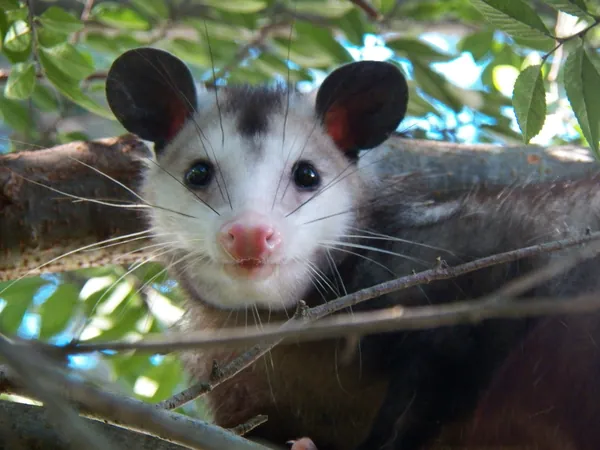
Photo: Diana Foreman via iNaturalist, CC0 1.0 (public domain dedication)
Virginia opossum
60–90 cm including the bare tail
Opossum scat is scattered, not piled in a latrine, and varies a lot in shape; firm pieces often have pointed ends.
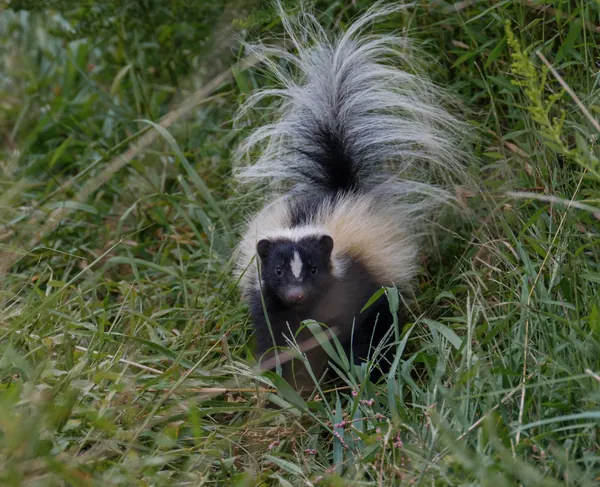
Photo: Mirko Schoenitz via iNaturalist, CC0 1.0 (public domain dedication)
Striped skunk
50–80 cm including the tail
Skunk droppings look like a cat's, about 1/2 inch thick and 2–4 inches long, left near digging or a den.
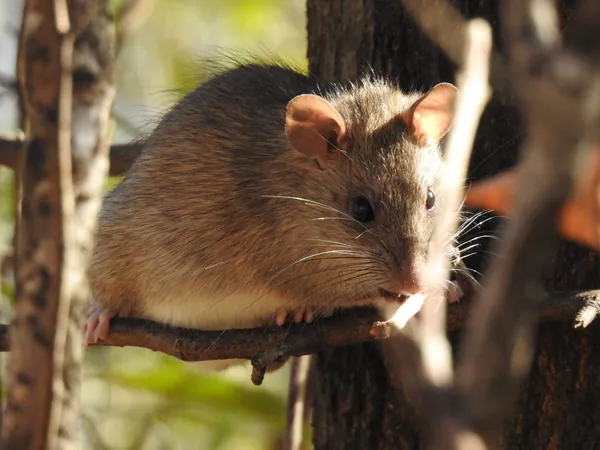
Photo: Laura Mae via iNaturalist, CC BY 4.0
Norway rat
Body 18–25 cm; tail shorter than the body (Norway rat)
Rat droppings are far smaller, 12–18 mm long, like a raisin or grain of rice, scattered along walls.

Photo: Mila C. via iNaturalist, CC BY 4.0
Eastern gray squirrel
40–50 cm including the bushy tail
Squirrel droppings are small pellets 8–10 mm long, scattered, never in a heap.
When to call a professional
Call a wildlife control operator or your local animal control office if the latrine is inside an attic or wall, if it is large or old, or if a raccoon may still be denning there. Remove the animal and seal the entry before cleanup, or the latrine will be back. If a child may have put latrine soil or scat in their mouth, call your doctor promptly and describe the exposure.
Questions
Can I get sick from touching raccoon poop?
The risk is from swallowing roundworm eggs, not from touch alone. Wear gloves, keep hands away from your mouth, and wash well afterward. Eggs in fresh scat take 2–4 weeks to become infectious, so prompt removal lowers the risk.
Will bleach kill raccoon roundworm eggs?
No. The CDC says most chemicals do not kill the eggs. Heat does, so use boiling water or, outdoors only, a propane torch on surfaces that cannot burn.
Why do raccoons keep pooping in the same spot?
Raccoons use communal latrines and return to them repeatedly. Clean the site, then block access or remove attractants so they do not rebuild it.
What do old raccoon droppings look like?
They weather, crumble and decompose. Old scat can look like dried leaves or debris, so a latrine may be bigger than it first appears.