Tiny bugs in house: what they are by color
Tiny bugs in a house are usually fungus gnats, fruit flies or drain flies if they fly, and booklice, carpet beetle larvae, pantry beetles or clover mites if they crawl. Color and the room you find them in narrow it down.
Quick ID table
Most tiny house bugs are 1/16 to 1/8 inch (1.5 to 3 mm), smaller than a sesame seed. Start with two questions: does it fly, and what color is it?
| Bug | Size | Color and shape | Where found | Page |
|---|---|---|---|---|
| Fungus gnat | 1/16–1/8 in | Dark, delicate fly, long legs | Houseplants, nearby windows | Gnats |
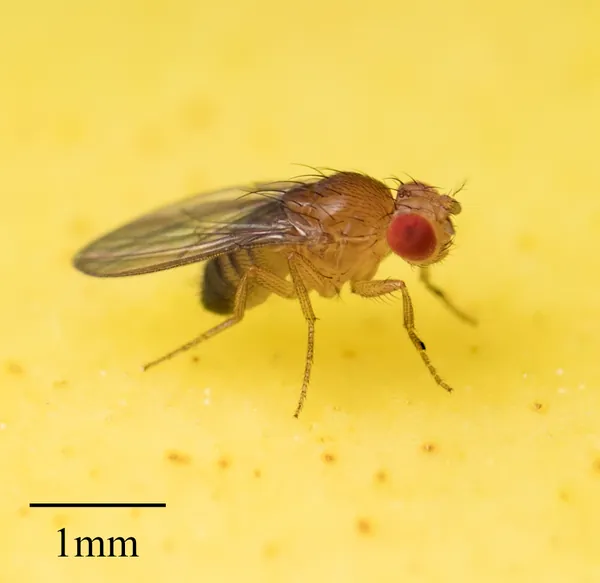
| Fruit fly | About 1/8 in | Tan fly, usually red eyes | Fruit bowl, trash, drains | Gnats |
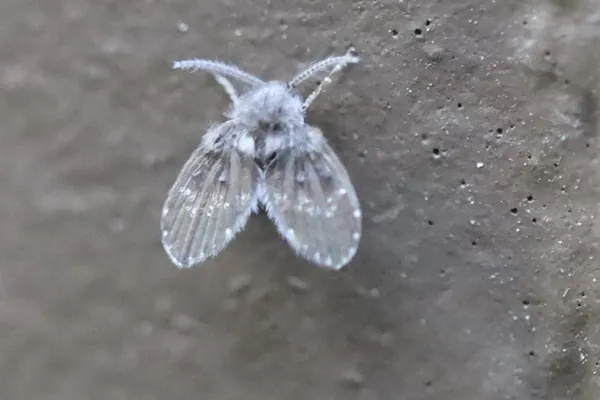
| Drain fly | About 1/8 in | Fuzzy, moth-like wings | Bathroom walls near drains | Drain flies |
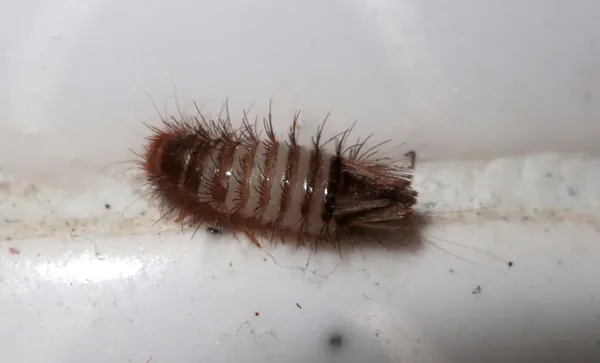
| Carpet beetle larva | Up to 5/16 in | Brown, hairy, banded | Closets, rugs, under furniture | Carpet beetles |
| Pantry beetle | About 1/8 in | Red-brown, hard-shelled | Flour, cereal, spices, pet food | none |
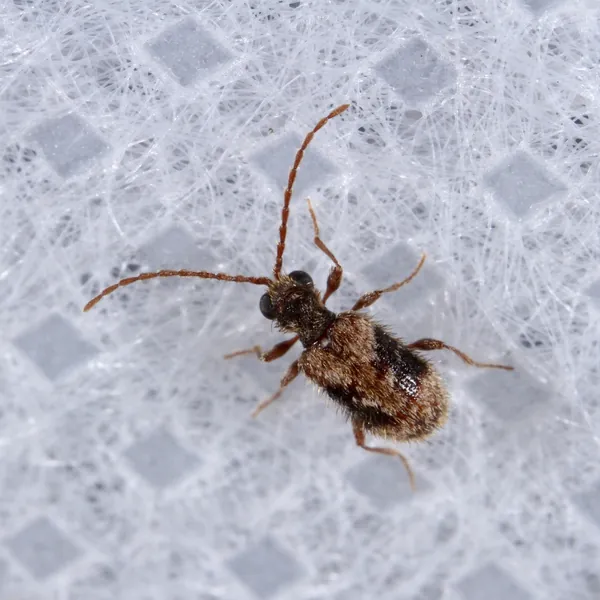
| Spider beetle | 2–5 mm | Brown, round, long legs | Pantry and stored food | Bugs like bed bugs |
| Booklouse | 1–2 mm | Pale tan, gray or nearly clear; soft | Damp paper, books, pantry | none |
| Mealybug | Small | White, waxy, cottony | Houseplant stems and leaf joints | none |
| Clover mite | Smaller than a pinhead | Red to red-brown, 8 legs | Sunny windowsills and walls | none |
Tiny flying bugs
Tiny bugs flying in the house are nearly always one of three small flies, and each one breeds somewhere different.
- Fungus gnats are dark, delicate flies 1/16 to 1/8 inch long that look like tiny mosquitoes. They rest on plant soil, leaves and windows. Their larvae live in wet potting mix. They don't bite. Let the top of the soil dry between waterings.
- Fruit flies are tan with red eyes and hover around ripe produce, trash and recycling.
- Drain flies are fuzzy, with moth-like wings, and sit on bathroom walls near sinks and tubs.
How to get rid of gnats covers all three, and drain flies has the drain-cleaning steps.
Tiny brown bugs
Tiny brown bugs that crawl are usually carpet beetle larvae or pantry beetles.
Carpet beetle larvae are brown, covered in bristly hair and banded light and dark; some are wider at the rear. They hide in dark, undisturbed spots and eat wool, silk, fur, feathers, pet hair and lint. Vacuum rugs, closets and under furniture often, and wash or dry-clean wool items. See carpet beetles.
Pantry beetles, including flour beetles, drugstore beetles and cigarette beetles, are about 1/8 inch and red-brown. Find and throw out every infested package, vacuum the shelves, and store dry food in tight-sealing jars. Spider beetles are also pantry pests: brown, rounded, with long legs that make them look like tiny spiders.
Tiny white bugs
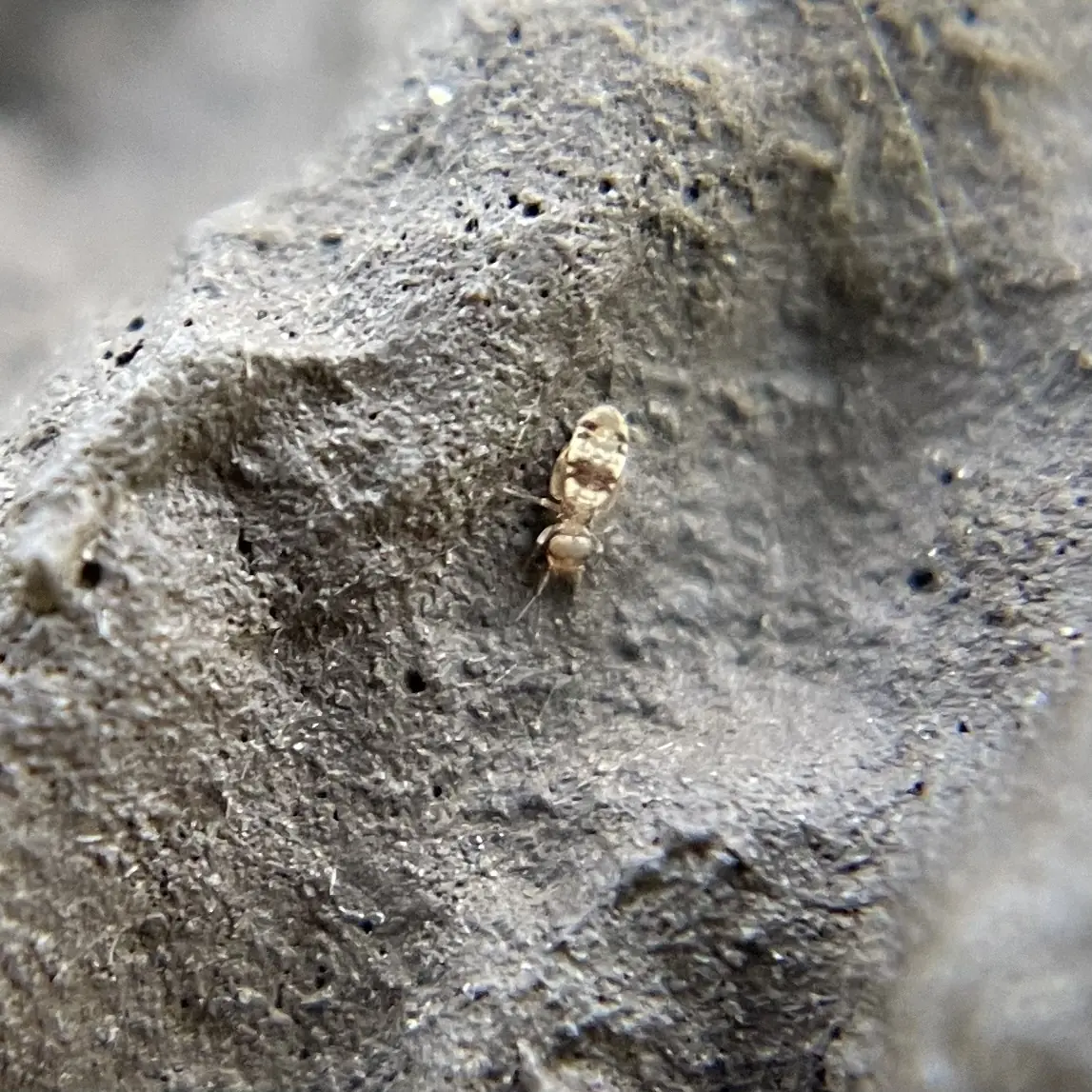
Tiny white or pale bugs crawling on paper, books, windowsills or food packages are usually booklice. They are 1 to 2 mm, soft, wingless and light tan, gray or nearly clear, with a broad head. They feed on mold, so they turn up in damp, humid rooms. They don't bite, spread disease or damage paper. Bringing indoor humidity below 50% stops the mold they eat and usually ends the problem; pesticides are rarely needed.
On houseplants, white specks that look like bits of cotton are mealybugs: small, soft insects covered in white wax. They cluster where leaves meet stems and lay cottony egg sacs. Wipe small numbers off with a cotton swab, and test insecticidal soap on a few leaves before spraying.
Tiny red bugs
Red tiny bugs in the house, especially on sunny windowsills in fall or spring, are almost always clover mites. They are smaller than the head of a pin, red to reddish-brown, and have eight legs because they are mites, not insects. They feed on grass and clover outdoors and don't bite people or pets. Crushed, they leave a rusty red smear, so vacuum them or wipe gently with a damp cloth. An 18 to 24 inch strip of bare soil along the foundation keeps them from climbing in. Tiny red specks with fine webbing on a houseplant are more likely spider mites.
Tiny black bugs
See small black bugs in the house for fleas, springtails, black carpet beetles and other dark ones.
Getting a firm ID
Catch a few on clear tape, note the room and what they were near, and bring them to your county extension office or try the identify tool.
Photos
When to call a professional
These tiny bugs rarely need a professional; drying out a damp room, cleaning out the pantry or fixing a drain usually ends them. Call one if pantry beetles return after every infested package is gone, if carpet beetle larvae are damaging rugs or stored wool, or if flies keep appearing with no plant, fruit or drain source, which can mean a hidden leak.
Questions
What are the tiny bugs flying in my house?
Usually fungus gnats around houseplants, fruit flies around produce and trash, or drain flies on bathroom walls. None of them bite, and each one stops when its breeding site is removed.
What are the tiny brown bugs in my house?
Most often carpet beetle larvae, which are hairy and banded and live in closets and rugs, or pantry beetles about 1/8 inch long in flour, cereal or spices.
What are the tiny red bugs on my windowsill?
Clover mites. They are smaller than a pinhead, don't bite, and leave a red smear when crushed, so vacuum them instead of swatting.
What are the tiny white bugs in my house?
On damp paper, books or windowsills, booklice; lowering humidity below 50% gets rid of them. White, cottony specks on houseplants are mealybugs.