What a tick looks like
A tick is a flat, oval arachnid with eight legs and no separate head section: unfed adults are about 2–5 mm long, the size of a sesame seed or apple seed, and nymphs are about 1 mm, the size of a poppy seed.
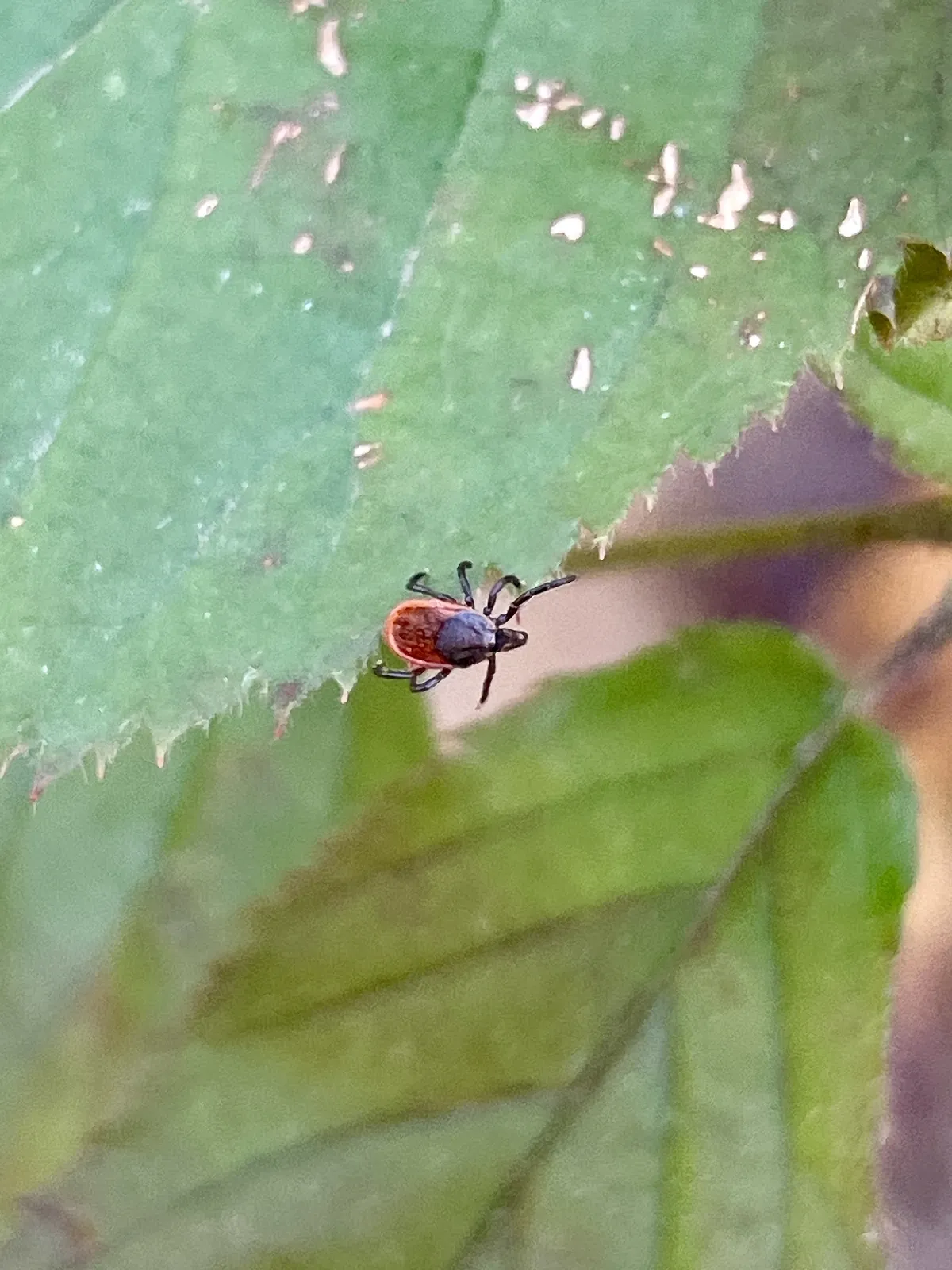
Shape, size and stages
Ticks are arachnids, related to mites and spiders, not insects. An unfed tick is flat and teardrop-shaped, with the mouthparts sticking out in front like a tiny beak. There is no separate head segment and no waist. The four common house-and-yard ticks in the US are hard ticks, with a hard shield (scutum) just behind the mouthparts. On males the shield covers almost the whole back; on females it covers only the front part.
Ticks have three active stages. Larvae have six legs and are very small. Nymphs and adults have eight legs. Nymphs are about the size of a poppy seed and are easy to miss, which is why they cause many tick-borne infections. After feeding, a female's body balloons and turns gray, and a fully fed female can be as large as a raisin.
Blacklegged (deer) tick
Ixodes scapularis. The adult female is about 3/32 inch (2–3 mm), with dark chocolate-brown legs and shield and a red-orange rear half. The male is just over 1/16 inch and all dark. Nymphs are translucent to gray-brown. Blacklegged ticks live across the eastern half of the US, mostly in humid forests and forest edges. They can spread Lyme disease, anaplasmosis, babesiosis, ehrlichiosis, hard tick relapsing fever and Powassan virus. The western blacklegged tick (Ixodes pacificus) plays the same role on the Pacific coast, especially northern California.
American dog tick
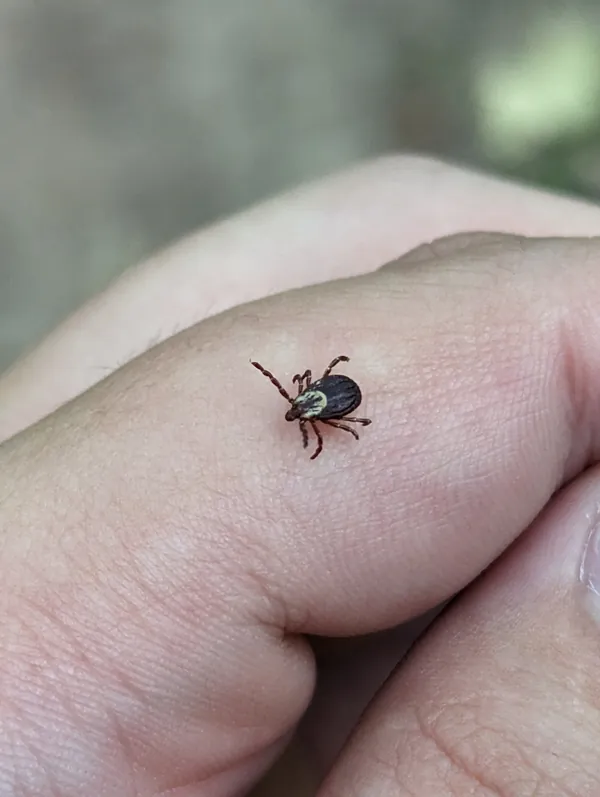
Dermacentor variabilis. Larger and flatter: unfed adults are about 3/16 inch (5 mm), reddish brown with gray-white mottling. The female has a cream-colored shield behind the head. Engorged females reach about 5/8 inch (16 mm) and turn gray. It is common east of the Rocky Mountains, in grassy, sunny places such as roadsides, trail edges and lawns. It can spread Rocky Mountain spotted fever and tularemia.
Lone star tick
Amblyomma americanum. The adult female is about 3/16 inch, brown, with one silvery-white spot in the middle of her back, the "lone star." Males have pale marks along the rear edge. It lives in the South, the Midwest and the Northeast, in a wide range of habitats. It can spread ehrlichiosis, tularemia, Heartland and Bourbon viruses, and its bite has been linked to the STARI rash and alpha-gal syndrome, a red meat allergy.
Brown dog tick
Rhipicephalus sanguineus. Unfed adults are about 1/8 inch, plain reddish brown with no markings; engorged females are about 1/2 inch and blue-gray. It is found across the US. Unlike the others, it can complete its whole life cycle indoors in homes with dogs and in kennels. In the southwestern US and along the US-Mexico border it can spread Rocky Mountain spotted fever.
| Tick | Field mark | Main US region |
|---|---|---|
| Blacklegged (deer) | Female: red-orange rear, black shield and legs | Eastern half; Pacific coast (western species) |
| American dog | Gray-white mottling, 5 mm | East of the Rockies |
| Lone star | Female: single white dot | South, Midwest, Northeast |
| Brown dog | Plain reddish brown; indoors with dogs | Nationwide |
How ticks find you
Ticks wait on the tips of grass and shrubs along paths, holding out their front legs in a posture called questing. They sense breath, body heat, odor and movement, and climb on when something brushes past. Some attach quickly; others wander toward thin skin such as behind the ears.
Found one?
Remove an attached tick right away with fine-tipped tweezers; the method and what to watch for afterward are on tick bites. CDC does not recommend sending the tick for testing.
Where in the US
Ticks live in every US state, but species differ by region. Blacklegged (deer) ticks cover the eastern half of the country and the western blacklegged tick lives along the Pacific coast. American dog ticks are widespread east of the Rocky Mountains, with a related species to the west. Lone star ticks range across the South, Midwest and Northeast. Brown dog ticks occur nationwide and can live indoors with dogs. The Rocky Mountain wood tick lives in the Rocky Mountain states at 4,000–10,500 feet, and the Gulf Coast tick in the Southeast.
Photos
Often mistaken for
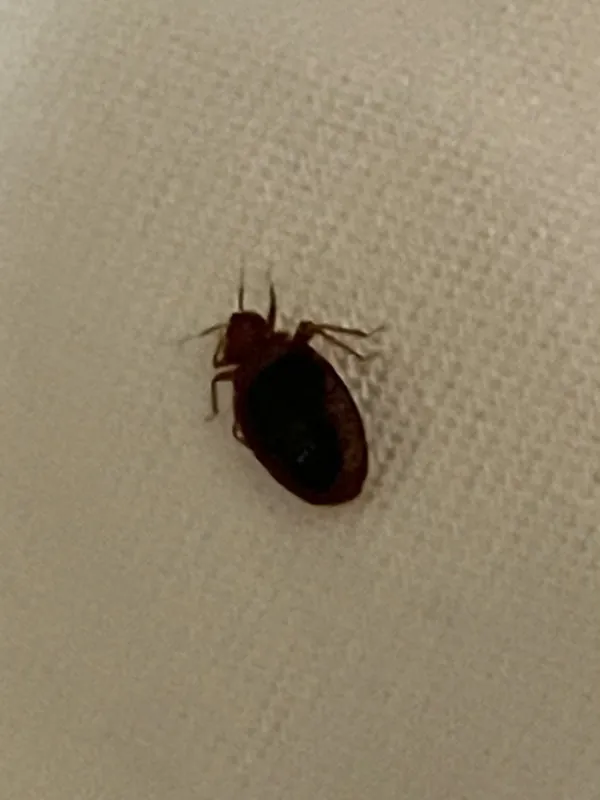
Photo: Evelyn Lazzaretti 🏳️⚧️ via iNaturalist, CC0 1.0 (public domain dedication)
Bed bug
5–7 mm adult, about the size of an apple seed
Six legs and a visible head and banded abdomen; hides in beds and does not stay attached.
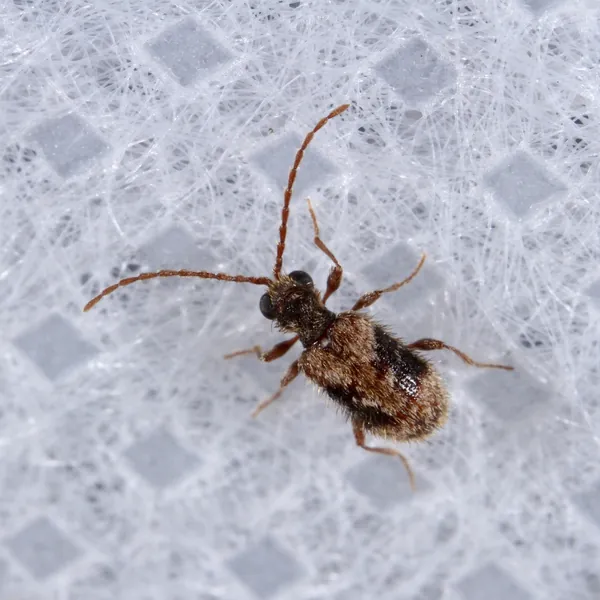
Photo: Joshua Ebright via iNaturalist, CC BY 4.0
Spider beetle
1–5 mm, round with long legs
Six legs and long antennae, round shiny body; found in pantries, not on skin.
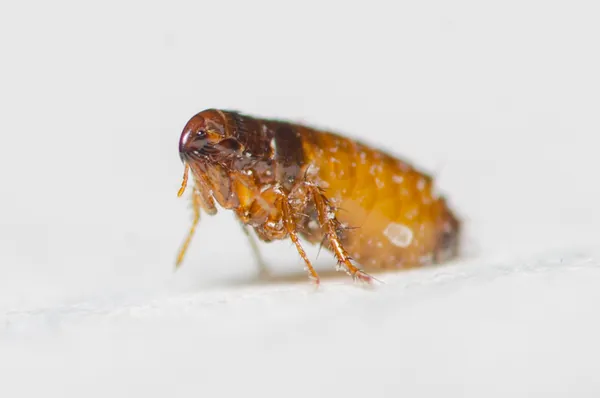
Photo: Justin Williams via iNaturalist, CC BY 4.0
Flea
1–3 mm, dark reddish brown, flattened side to side
Six legs, narrow from the side, and jumps; ticks crawl slowly and cling.
When to call a professional
If you find ticks on a dog again and again, or see ticks crawling on walls and furniture indoors, you may have brown dog ticks breeding inside. Have your veterinarian treat the dog and a pest professional treat the home at the same time. For yard ticks, clearing leaf litter and brush comes first; pesticides can reduce ticks but should not be your only protection, so follow the label and check local rules.
Questions
How big is a deer tick?
An adult female blacklegged (deer) tick is about 3/32 inch, roughly 2–3 mm. The nymph, which spreads most Lyme disease, is about the size of a poppy seed.
Can ticks jump or fly?
No. Ticks crawl. They wait on grass and shrubs and climb onto people or animals that brush past.
Do all ticks carry Lyme disease?
No. In the US, Lyme disease is spread by blacklegged ticks. American dog, lone star and brown dog ticks spread other diseases, and a tick being present does not mean it is infected.
Can ticks live in your house?
Most ticks dry out and die indoors. The brown dog tick is the exception: it can breed inside homes with dogs and in kennels.