What termites look like
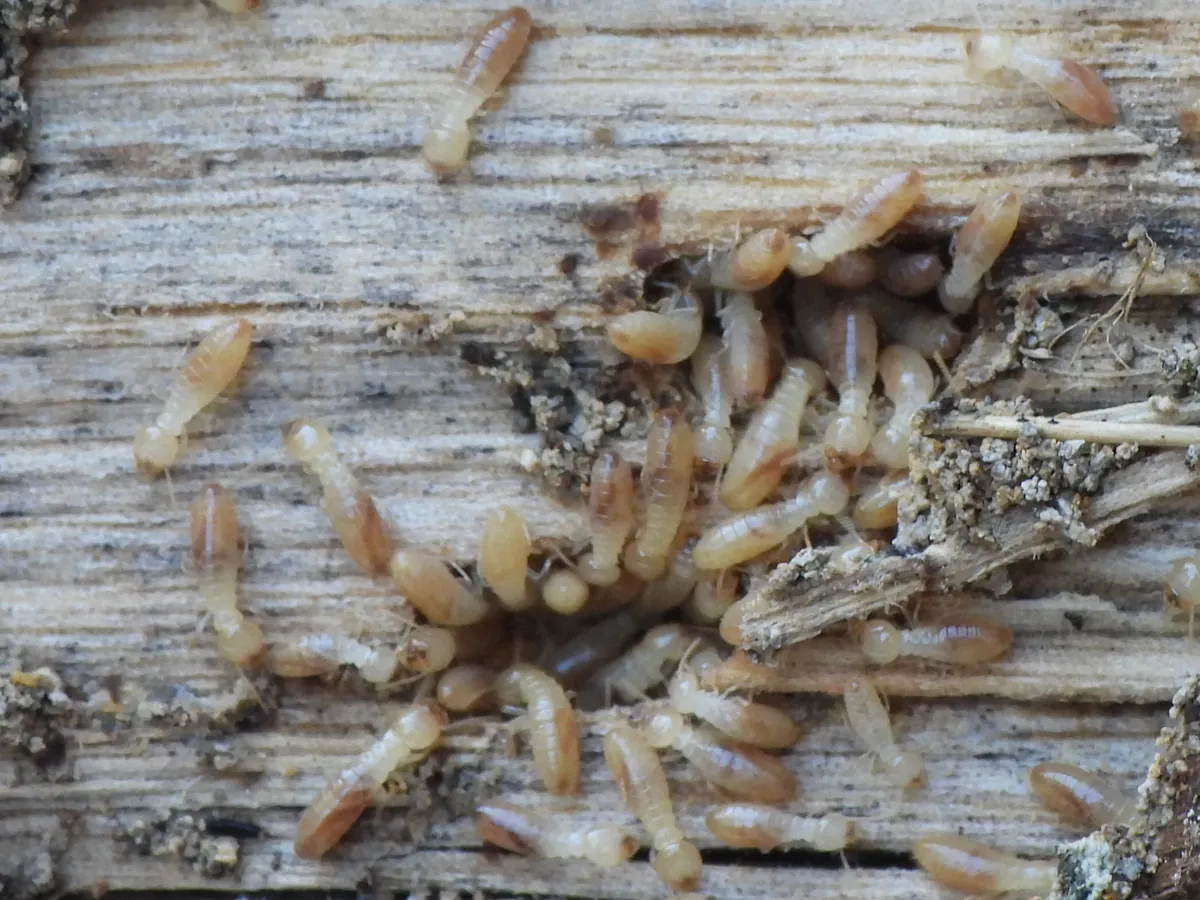
Termite workers look like small, soft, cream-white ants about 1/8 inch (3 mm) long, with a thick waist and straight antennae; winged swarmers are dark brown to black with four equal, milky wings.
Why termites are called white ants
"White ants" is a common name for termites. The workers you find in damaged wood are pale and soft, and they live in colonies, so people mistake them for ants. They are not ants. A termite worker has a thick body with no narrow waist, straight antennae that look like a string of tiny beads, and no eyes. Ants have a pinched waist, bent (elbowed) antennae and a harder, darker body.
The three forms you might see
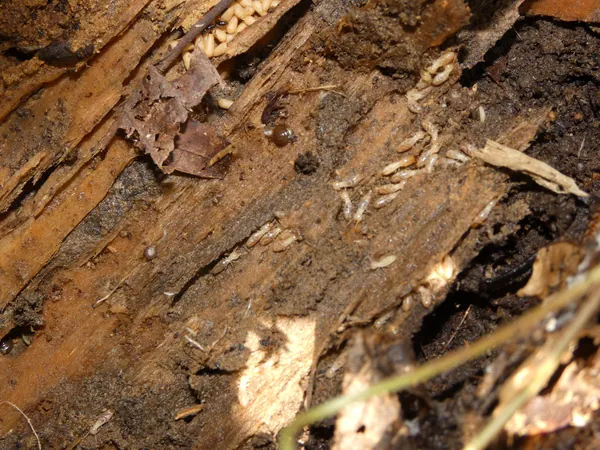
- Workers are the termites inside infested wood. They are about 1/8 inch (3 mm) long, milky white and wingless. They do all the feeding and tunneling.
- Soldiers look like workers with a large, hard, yellowish-brown head and long jaws. They guard breaks in tubes and galleries.
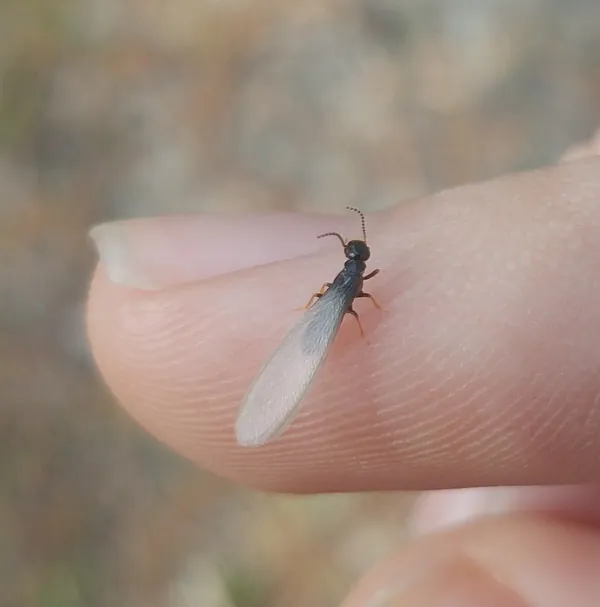
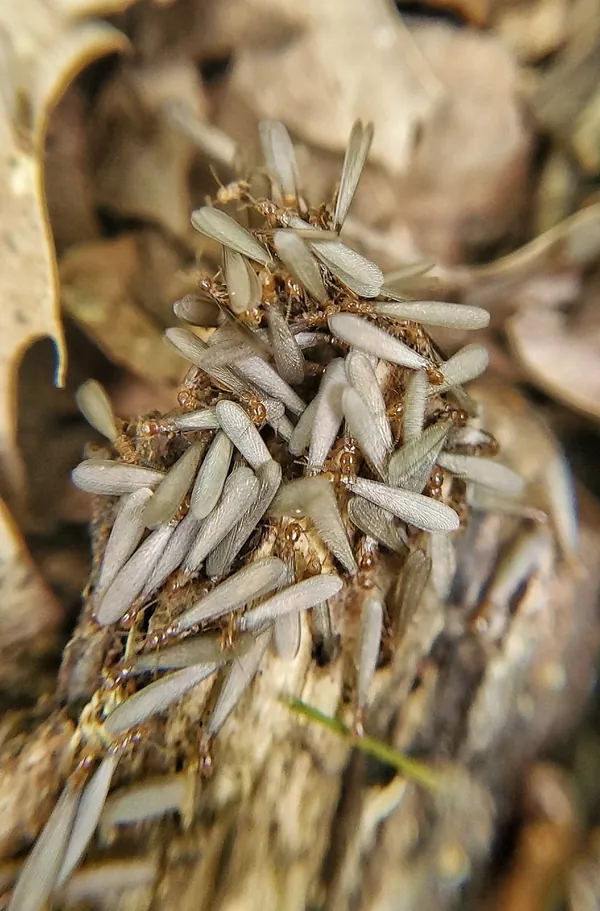
- Swarmers (winged reproductives) are dark brown to nearly black with two pairs of wings of equal size. The wings reach well past the tip of the body and break off easily. Swarmers are the termites most people see, because they fly out in daylight and gather at windows.
Swarmers cannot damage wood and die within about a day. A pile of shed wings on a windowsill is often the first sign of a colony nearby. Swarms that come from a stump or woodpile in the yard do not by themselves mean the house is infested; swarms right next to the foundation or indoors are a stronger warning.
Subterranean termites
Subterranean termites are the most common type in the United States. They nest in the soil and travel up into wood through pencil-width mud tubes built on foundations, piers and walls. Inside wood they eat along the grain, leaving the hard layers and lining the galleries with soil. Eastern subterranean termites swarm in the daytime in spring, usually after a warm rain; in Arkansas, for example, that is March through May.
Drywood termites
Drywood termites live entirely inside dry, sound wood and never need soil. Their colonies are small, usually a few hundred to a few thousand termites. The surest sign is little piles of hard, six-sided fecal pellets pushed out of tiny holes. They swarm in the daytime in summer and fall. See termite droppings for how to recognize the pellets.
Formosan termites
The Formosan termite is an introduced subterranean species. Its swarmers are pale yellow to yellowish brown, fly at dusk in late spring or early summer, and are drawn to lights. Colonies are very large, averaging hundreds of thousands of workers, and can build carton nests above ground where moisture is steady.
What to do if you think you have termites
- Catch a few swarmers or wings in a sealed bag. Compare them with winged ants using flying ants vs termites.
- Look for mud tubes, hollow wood and pellets. The signs of termites page walks through each one.
- Book an inspection by a licensed company. Damage is often hidden inside walls and under floors.
- Read how to get rid of termites before agreeing to a treatment plan. Structural termite control is professional work.
Where in the US
Subterranean termites live in every state except Alaska and are most common in the warm, moist South; colonies are patchy in the far North. Drywood termites are mostly a problem along the Pacific coast and in the Southern California deserts, and in warm, humid coastal areas of the Southeast. Formosan termites are established in Hawaii and the South from the Carolinas and Florida to Texas, with smaller pockets in Tennessee and California.
Photos
Often mistaken for
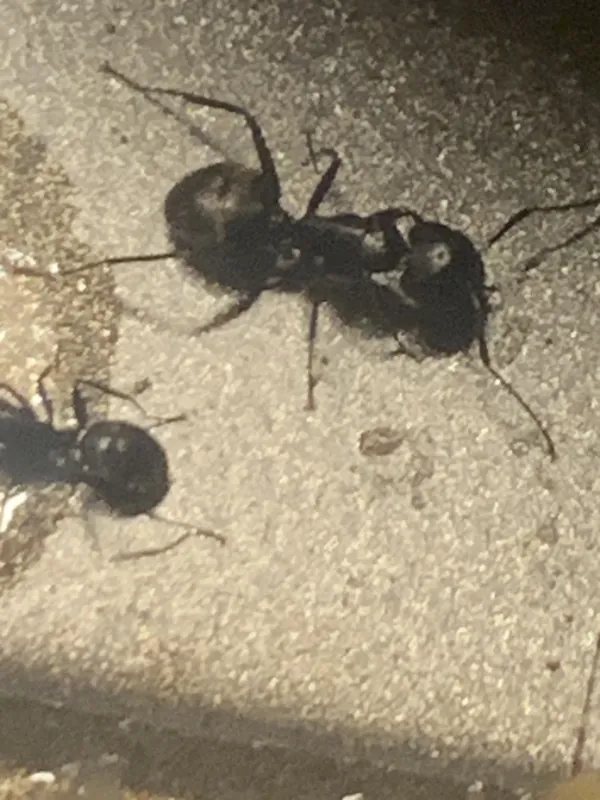
Photo: Chandler Beaty via iNaturalist, CC BY 4.0
Carpenter ant
Workers 6–13 mm, black or black and red
Pinched waist, elbowed antennae, front wings longer than hind wings; black or red and black.
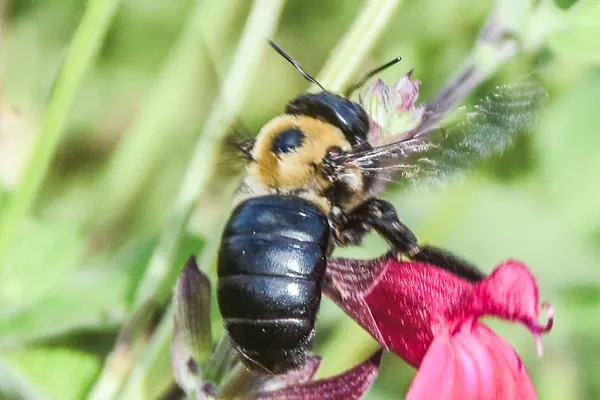
Photo: Jay Pruett via iNaturalist, CC BY 4.0
Carpenter bee
19–25 mm, like a bumble bee with a shiny bare abdomen
Large, fat, bee-shaped and hairy; bores round, finger-width holes in wood.
When to call a professional
Call a licensed termite company if you find swarmers indoors, mud tubes on the foundation, or six-sided pellets under wood. Home-use products rarely stop an existing infestation, and the most effective soil termiticides, baits and fumigants are applied only by licensed professionals. Get inspections from more than one company before you sign.
Questions
Are white ants the same as termites?
Yes. White ants is a common name for termites, taken from the pale, soft workers. They are not true ants and are easy to tell apart by the thick waist and straight antennae.
Do termite swarmers damage wood?
No. Swarmers do not chew wood and die within about a day. They do mean a mature colony is somewhere nearby.
What color are termites?
Workers and soldiers are cream to milky white; soldiers have a yellowish-brown head. Eastern subterranean swarmers are dark brown to black, and Formosan swarmers are yellowish brown.
Can you see termites in your house?
Usually not, except during a swarm. Workers stay inside wood, soil and mud tubes, so most people find shed wings, tubes or damage first.