Signs of termites in a house
The clearest signs of termites are winged swarmers or piles of shed wings indoors, pencil-width mud tubes on the foundation, wood that sounds hollow or is packed with soil, and, for drywood termites, small piles of six-sided pellets.
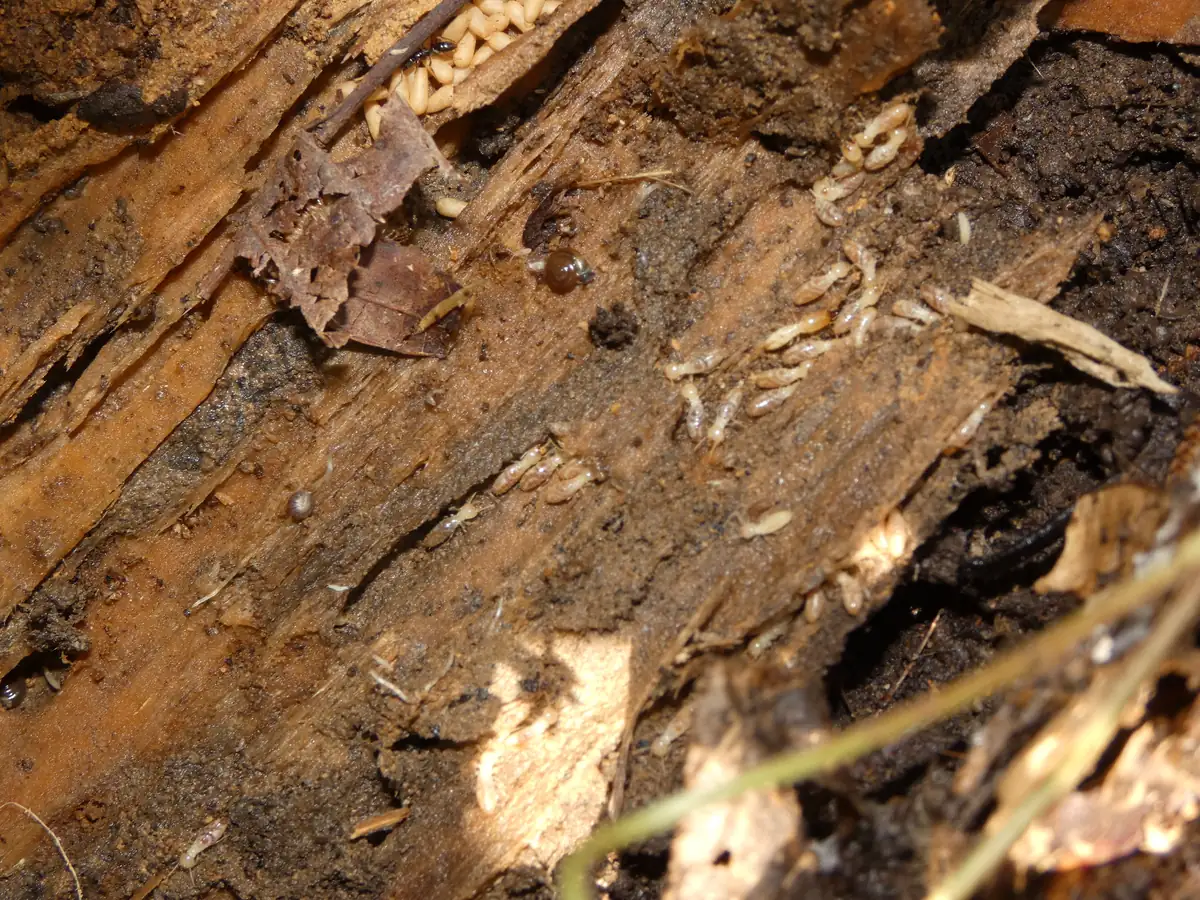
Swarmers and shed wings
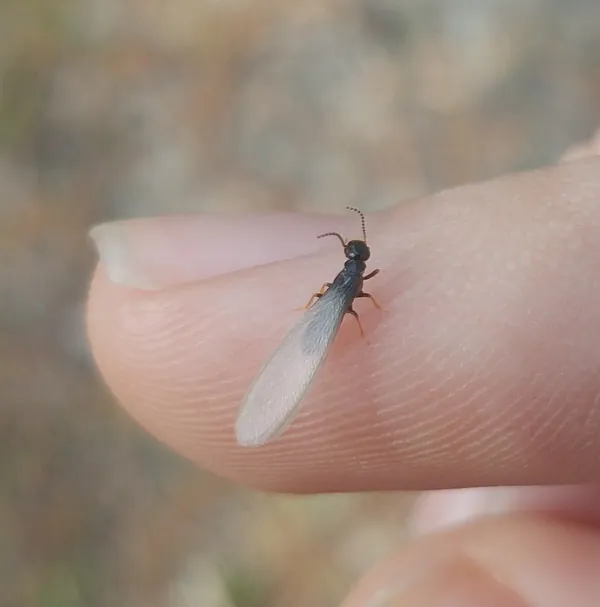
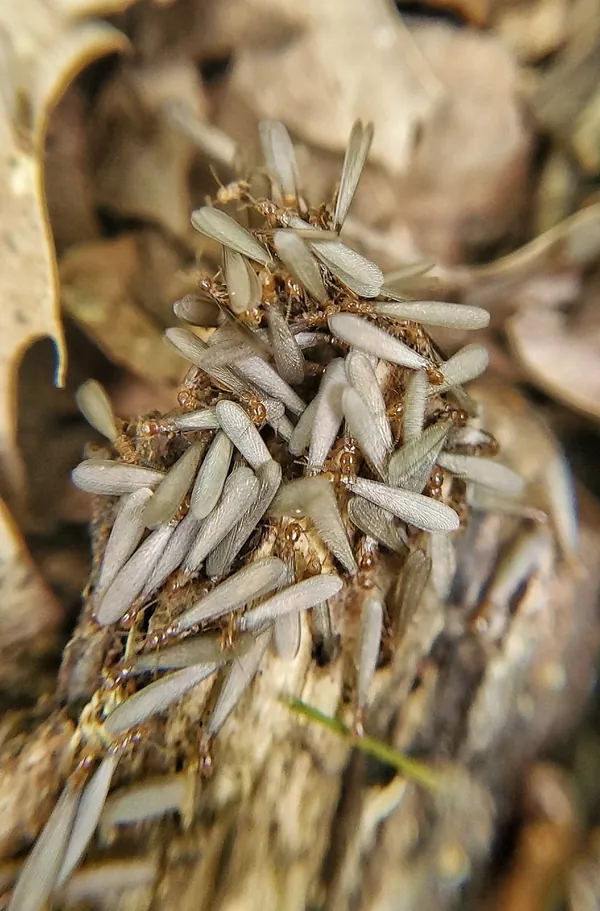
For many homeowners the first sign is a swarm: dozens or hundreds of dark, winged insects at a window or light. Eastern subterranean termites swarm in daylight in spring, usually after a warm rain. Swarmers cannot damage wood and die within about a day, but they come from a mature colony. Swarmers shed their wings soon after flying, so a pile of identical, milky wings on a windowsill means the same thing.
Where the swarm came from matters. Termites swarming from a stump or woodpile in the yard do not prove the house is infested. A swarm indoors, or out of a porch, slab edge or the soil against the foundation, is a strong warning. Make sure they are termites and not ants with flying ants vs termites.
Mud tubes
Subterranean termites must stay in contact with moist soil, so they build earthen shelter tubes to reach wood above ground. Tubes are about the width of a pencil and are made of soil, chewed wood and termite feces. Look on foundation walls, piers, sill plates, the inside of crawl spaces, basement walls and the edges of slabs. Some tubes run up from the soil to the wood; others hang down from the wood back to the ground.
Break off a short piece of tube. Live, pale workers inside mean an active infestation. An empty tube does not rule one out; the termites may have moved on to another route, or they may rebuild it. Termites can build tube at roughly 2 1/2 inches per hour, so a tube you scrape off can be back within days.
Damaged wood
Termite damage is often invisible from outside because the surface of the wood stays intact. Signs include:
- Wood that sounds hollow when tapped, or that a flathead screwdriver pushes into easily
- Wood that looks darkened or blistered, or paint that bubbles as if it were water damaged
- Galleries that follow the grain, eating the softer wood and leaving thin hard layers
- Galleries packed or lined with dried soil (subterranean termites)
- Pinholes in drywall with bits of soil around them, or wallpaper and paint that ripple
Probe wood in the crawl space, around door and window frames near the ground, under porches and anywhere wood touches soil.
Pellets from drywood termites
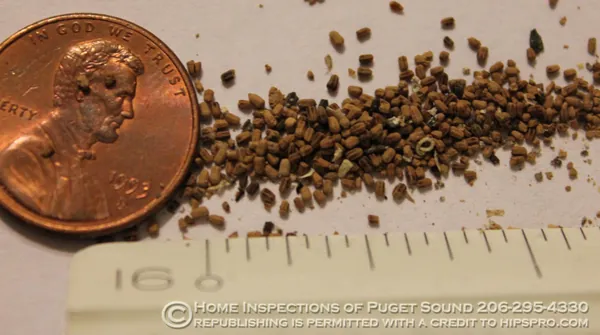
Drywood termites live inside dry wood and push their droppings out of tiny holes. The result is small piles of hard, six-sided pellets about 1 mm long below trim, sills and furniture. Sweep up the pile and check again in a few days; new pellets suggest an active colony. The termite droppings page shows how to tell pellets from sawdust.
Conditions that invite termites
These are not signs of termites, but inspectors look for them because they raise the risk:
- Wood that touches soil, including siding, steps, fence posts and stored lumber
- Damp crawl spaces, leaks and poor drainage against the foundation
- Wood debris, stumps and buried scrap near the house
- Stucco that runs down to the soil, which can hide tubes between it and the foundation
Termites can enter through a crack as narrow as 1/32 inch in a mortar or expansion joint, so a sound-looking foundation is not proof of protection.
What to do when you find a sign
Do not spray store-bought insecticide into tubes or wood. It rarely reaches the colony and can make the infestation harder to find. Save a few insects, photograph the tubes or damage, and book an inspection. Then compare treatment options.
Photos

When to call a professional
Call a licensed termite company if you find live termites, mud tubes, swarmers indoors or fresh pellets. Much of the evidence is in crawl spaces, attics and under slabs, which are hard and sometimes unsafe to inspect yourself. Inspectors can still miss hidden damage, so ask what areas they could not reach.
Questions
What are the first signs of termites?
Most people first notice swarmers or shed wings near windows, or mud tubes on the foundation. Damage inside wood usually shows up later.
Does termite damage look like water damage?
It can. Termite-damaged wood may darken or blister, and paint can bubble. Probe the wood; termite galleries are packed with soil or pellets.
If a mud tube is empty, are termites gone?
Not necessarily. Termites abandon and rebuild tubes, and an empty tube does not rule out an active infestation elsewhere.
Can you hear termites in walls?
Sound is not a reliable termite sign. A dry rustling sound in a wall is a known sign of a carpenter ant nest; termites are usually found by tubes, wings and damaged wood.
Sources
- Termite Control (University of Kentucky Entomology, EF604)
- Subterranean and Other Termites (UC IPM)
- Subterranean Termite Identification and Biology (University of Arkansas, FSA7061)
- A Home Buyer's Guide for Wood Destroying Insect Information Report (NCDA&CS)
- Drywood Termites (UC IPM)
- Carpenter Ants (Penn State Extension)