Carpenter ants: identify them and find the nest
To get rid of carpenter ants, find and treat the nest, both the indoor satellite and the outdoor parent colony, and fix the moisture that drew them; spraying the ants you see does not end an infestation.
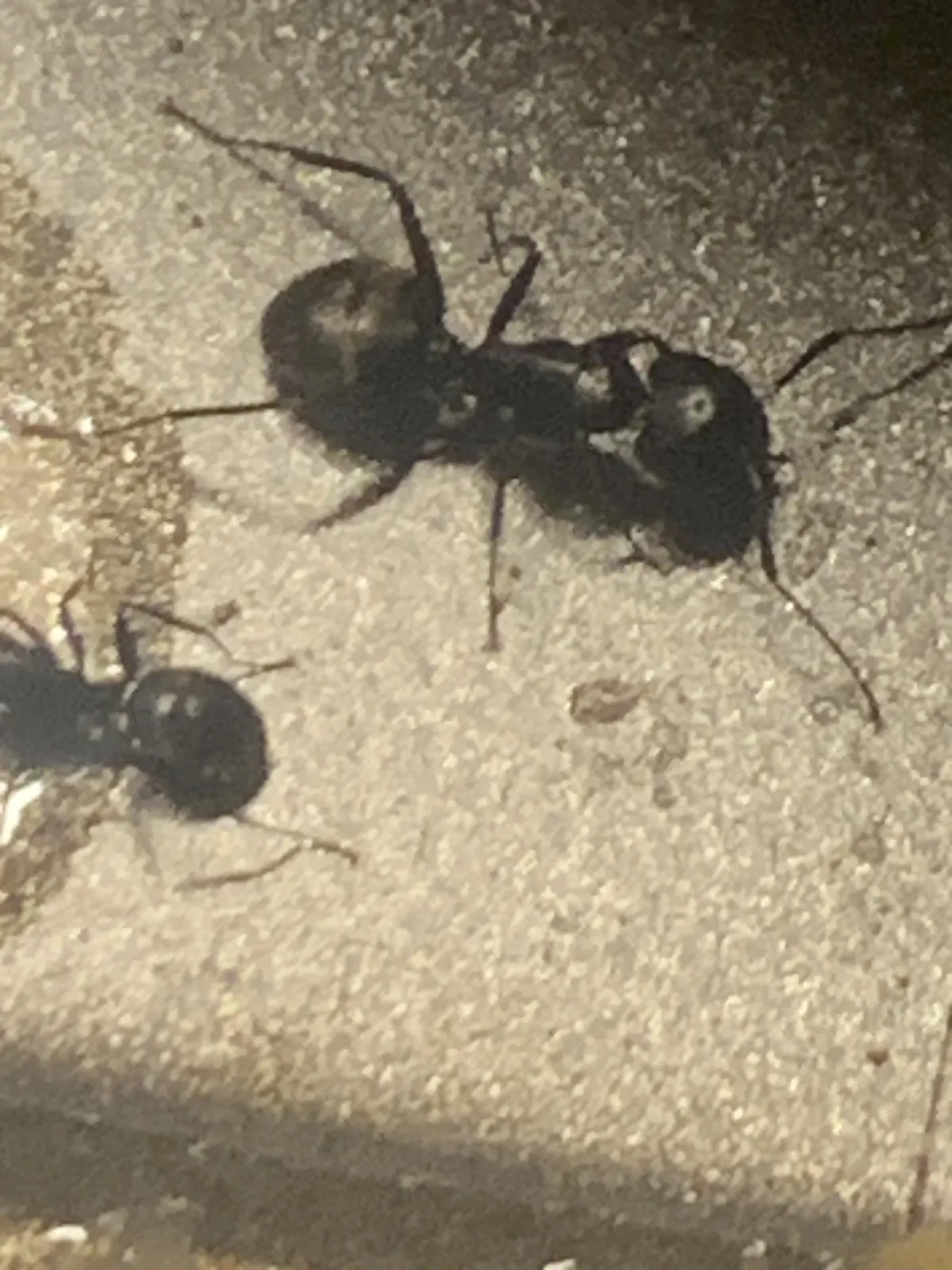
What carpenter ants look like
Carpenter ants are the largest ants most people see indoors. Workers are 1/4 to 1/2 inch (6–13 mm) long, about the length of a pencil eraser or a bit more, and workers in the same colony come in different sizes. They are shiny black, or red and black. Viewed from the side, the back of the thorax is one smooth, even curve, and the waist has a single node. Antennae bend at an elbow. Winged queens and males are larger, up to about 3/4 inch, with front wings longer than the hind wings.
Most other household ants are much smaller, have an uneven or bumpy thorax outline, or have a two-node waist.
Carpenter ants vs termites
Carpenter ants are often confused with termites. Termite workers are small, pale and soft with a thick waist and straight antennae, and termite swarmers have four equal wings. Carpenter ants do not eat wood; they excavate it to nest and push the shavings out. Termite galleries are lined with soil or contain pellets, while carpenter ant galleries are smooth and clean, almost sanded. See ant vs termite and flying ants vs termites.
Signs of a nest in the house
- Piles of coarse, stringy wood shavings mixed with dead insect parts and bits of insulation, below cracks, behind moldings, in basements and attics or under porches
- Twenty or more workers seen indoors regularly
- Large numbers of winged ants indoors in late winter or spring
- A dry rustling sound in a wall or ceiling, which can get louder if you tap the spot
- Workers indoors in winter, which suggests a nest inside
A few ants indoors in spring and summer may simply be foragers from an outdoor nest. Carpenter ants forage up to 300 feet from home.
Parent and satellite nests
A carpenter ant colony often has one parent nest, with the queen, and several satellite nests holding workers, larvae and pupae. The parent nest is usually outdoors in a tree, stump, log or rotting fence post, often within 100 yards of the house, because it needs steady moisture. Satellites can be in drier places: wall voids, hollow doors, foam insulation and sound wood. Indoors, nests usually start where wood is wet from leaks, condensation, poor ventilation or bad flashing: around tubs, sinks, dishwashers and windows, under roofing and in porch pillars and sills.
Both the parent and satellite nests must be found and treated. Otherwise ants come back within days or weeks.
How to get rid of carpenter ants
- Find the nest. Watch at night with a dim or red-filtered flashlight and follow workers. Tuna packed in water or a sweet set out where you see ants makes the trail easier to follow.
- Fix the moisture. Repair leaks, improve ventilation and replace water-soaked wood. Wood below about 15 percent moisture is rarely infested.
- Bait the trails. Place a bait labeled for carpenter ants where workers travel. It can take weeks or months, and you should not spray insecticide near the bait.
- Treat exposed nests directly with a labeled ready-to-use product. Read and follow the label; the label is the law.
- Remove the outdoor colony. Take out infested stumps, logs and firewood, trim branches that touch the house, and store firewood away from the walls.
Spraying the ants you see does not eliminate the nest. Use the chooser below to match the plan to what you are seeing.
Damage
Carpenter ant damage develops slowly, often over years. Most damage is to wood already softened by water. A colony left for years can tunnel into sound wood and weaken it, so treat a confirmed indoor nest rather than waiting.
Where in the US
Carpenter ants live throughout the United States and are most common in the northern states. Different species occur in the East and West, including the western black carpenter ant. Problems are most frequent near woods, trees and stumps, and wherever house wood stays damp from leaks or poor ventilation.
Often mistaken for
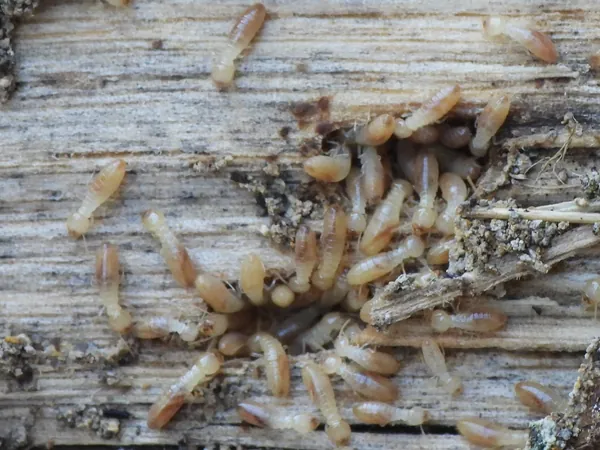
Photo: Sam Kieschnick via iNaturalist, CC BY 4.0
Termite
Workers 3–4 mm; winged swarmers about 10 mm with wings
Pale, soft workers with no waist and straight antennae; swarmers have four equal wings.
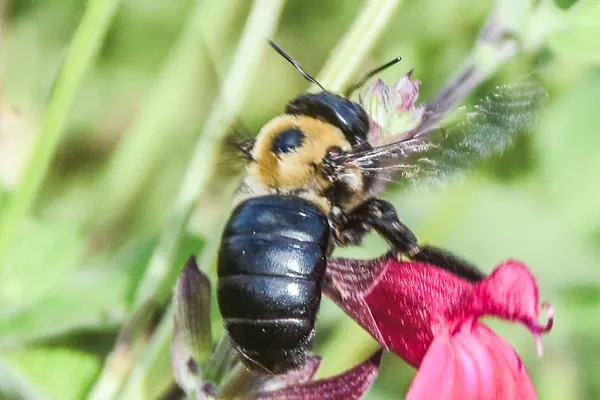
Photo: Jay Pruett via iNaturalist, CC BY 4.0
Carpenter bee
19–25 mm, like a bumble bee with a shiny bare abdomen
Fat, hairy bee that bores round holes in bare wood; flies, does not trail on floors.
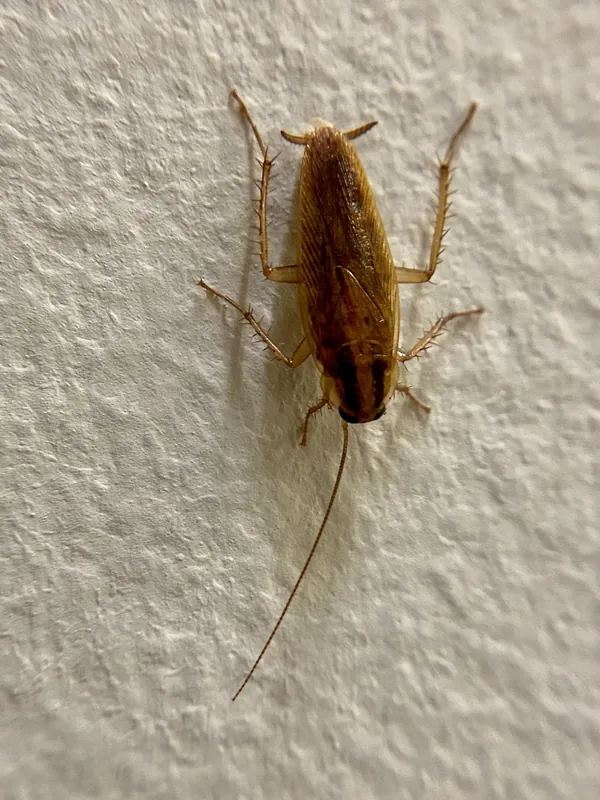
Photo: Sandra H Statner via iNaturalist, CC BY 4.0
Cockroach
German 12–16 mm; American 35–40 mm
Flat oval body with long antennae and no waist; runs fast and hides in cracks.
Choose a treatment
The plan depends on whether the ants are visiting from an outdoor colony or living in your walls, so the first job at every level is finding the nest.
Track them, fix moisture
Do it yourself
- Watch at night, roughly 10 p.m. to 2 a.m., with a dim or red-filtered flashlight and follow workers back to where they enter.
- A bit of tuna packed in water, or a sweet, set out where you see ants helps you follow the trail.
- Fix leaks, improve airflow in damp spots, and replace water-soaked wood. Wood below 15 percent moisture is rarely infested.
- Trim branches touching the house, move firewood away, and remove nearby stumps.
Professional
A professional is not usually needed at this stage. Call one if ants keep coming in after you have dealt with moisture and outside nests.
Bait the trails, find the nest
Do it yourself
- Place an ant bait labeled for carpenter ants right on the trails you see. Check it after 24 hours; replace bait they ignore and add more if they eat it.
- Baits can take weeks or months. Do not spray insecticide near the bait, which kills the workers that would carry it back.
- Spraying the ants you see does not eliminate the nest.
- If you find an exposed nest, a ready-to-use liquid or aerosol labeled for carpenter ants indoors can be applied to it. Read and follow the label; the label is the law.
- Look for the parent colony outside in stumps, trees, rotting fence posts or landscape timbers. It is often within 100 yards of the house.
Professional
A professional can track ants to hidden satellite nests with moisture meters and stethoscopes, and treat the outside of the house and the trails ants use to enter.
Treat the nest; usually a pro
Do it yourself
- Mark where the debris piles up and where you hear rustling; tapping a wall can make the colony louder.
- Drilling into wall voids to apply dust is best left to a professional.
- Treating only the indoor nest may not last. Ants from an outdoor parent colony can move back in.
Professional
A professional injects a dust such as boric acid, silica or diatomaceous earth into the void that holds the nest, treats the parent colony outside, and may seal gaps where ants enter. Both the parent and satellite nests need treatment or the ants can return within days or weeks.
Pest pro plus repairs
Do it yourself
- Find and fix the water source first: roof flashing, plumbing, windows, condensation.
- Plan to replace soft or water-damaged wood once the colony is treated.
Professional
The pest professional treats the nest and any outdoor colonies. A carpenter or contractor replaces damaged wood. Carpenter ants that have nested in a building for years can hollow out enough wood to weaken it.
Tell your landlord in writing, with where you see the ants and any sawdust piles. Leaks and wet wood that attract carpenter ants are usually the owner's repair.
Keep baits off counters and food surfaces and away from where you prepare food; set them on the floor or in cabinets along the trail, where the label allows.
Use enclosed bait stations, place them where children and pets cannot reach, and keep pets out of rooms where dusts have been applied until the label says it is safe.
When to call a professional
Call a pest professional when you find sawdust piles, hear rustling in a wall, or ants keep returning after baiting. Satellite nests inside walls are hard to reach without drilling and injecting dust, and professionals can trace nests with moisture meters and stethoscopes and treat the outside of the house. If wood is damaged, also call a carpenter to replace it once the ants are controlled.
Questions
Do carpenter ants eat wood?
No. They chew out galleries to nest and push the shavings out, but they eat insects, honeydew and sweet or greasy foods.
Does one carpenter ant mean an infestation?
Not necessarily. A few in spring or summer may be foragers from outside. Twenty or more regularly indoors, ants in winter, or sawdust piles point to an indoor nest.
Why do carpenter ants keep coming back?
Usually because only part of the colony was treated. The outdoor parent nest or another satellite can resupply workers within days or weeks.
Do carpenter ants bite?
They can bite when handled and may spray formic acid, but the bite is not a significant health threat.