Signs of bed bugs
The clearest signs of bed bugs are dark fecal spots that bleed into fabric like a marker, rusty smears on sheets, pearl-white eggs about 1 mm long, pale shed skins, and the bugs themselves, usually in mattress seams and the bed frame.
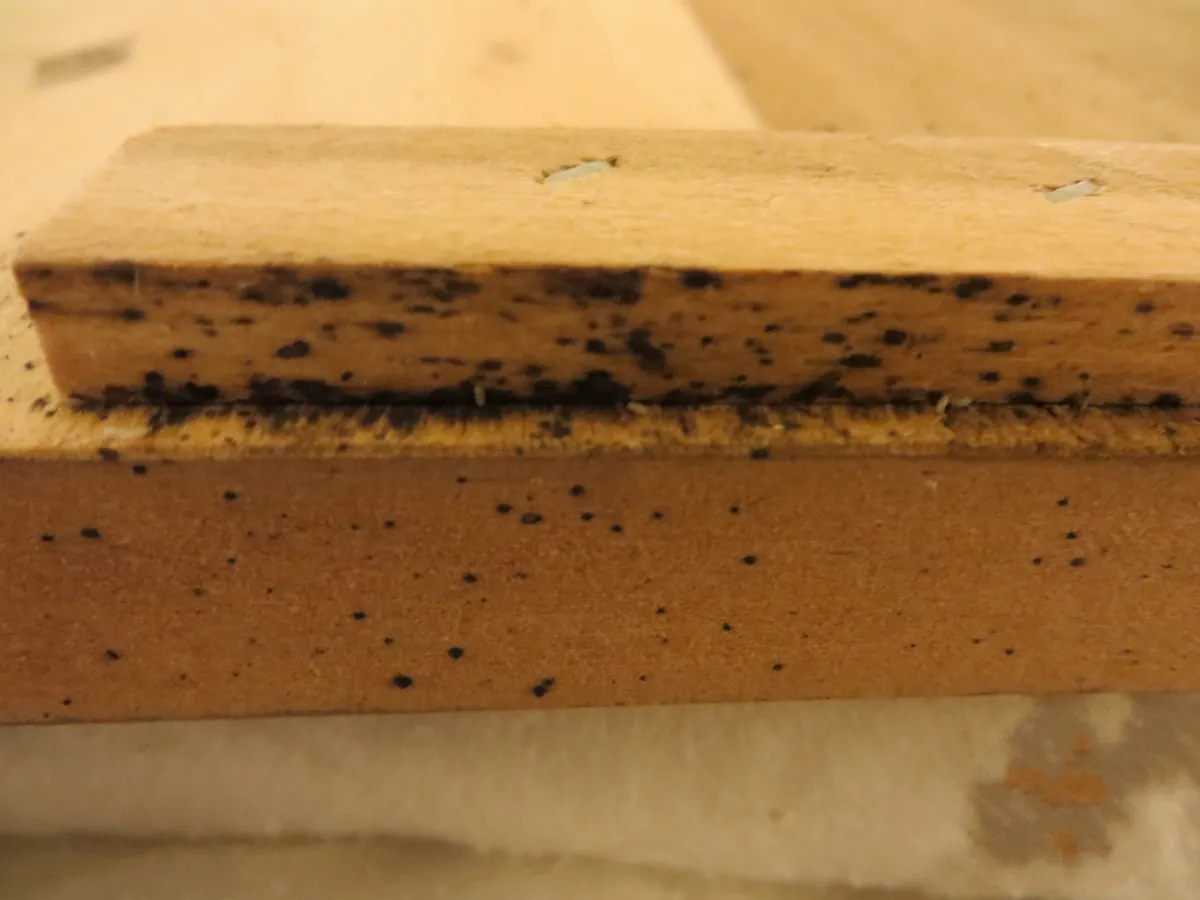
Fecal spots: bed bug poop
The most common sign is bed bug excrement. It is digested blood, so it dries as black or dark brown dots about the size of a printed period. On fabric it soaks in and spreads slightly, like a dot from a felt-tip marker. On hard surfaces such as a bed frame it sits on top as a tiny raised bead. Look for clusters of these spots along mattress seams, on the corners of the box spring, behind the headboard and in the joints of the frame.
Rusty blood smears
Reddish or rust-colored streaks on sheets and pillowcases come from bugs that were crushed after feeding, often when you rolled over. One smear could be from anything. A pattern of small rusty marks near where you sleep, together with dark spots on the mattress, is a strong sign.
Bed bug eggs
Eggs are about 1 mm long and pearl-white to pale yellow, roughly the size of a pinhead or a grain of salt. They are glued in place, so they don't brush off easily, and they sit in tight spots: mattress seams, screw holes, the underside of the box spring, and the rough edges of wood. Eggs older than five days show a dark eye spot. A hand lens and a bright flashlight make eggs much easier to see.
Shed skins
Nymphs molt five times on the way to adulthood and leave behind each skin. These cast skins are pale tan, empty and shaped like a bed bug, and they collect in the same hiding spots as the bugs. Finding skins of several sizes means bugs have been growing there for weeks.
Live bugs and nymphs
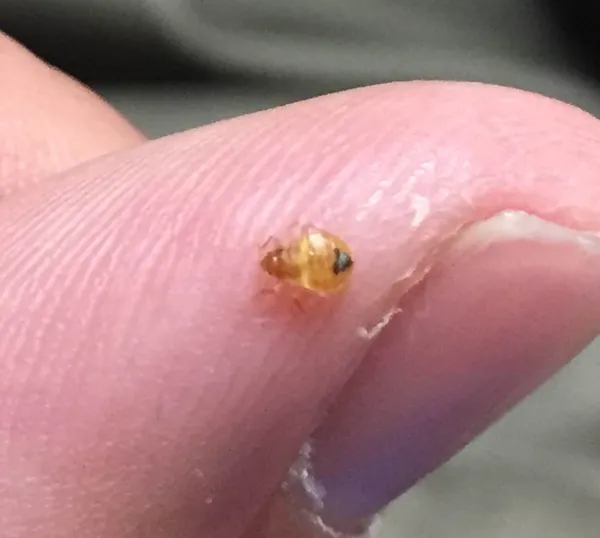
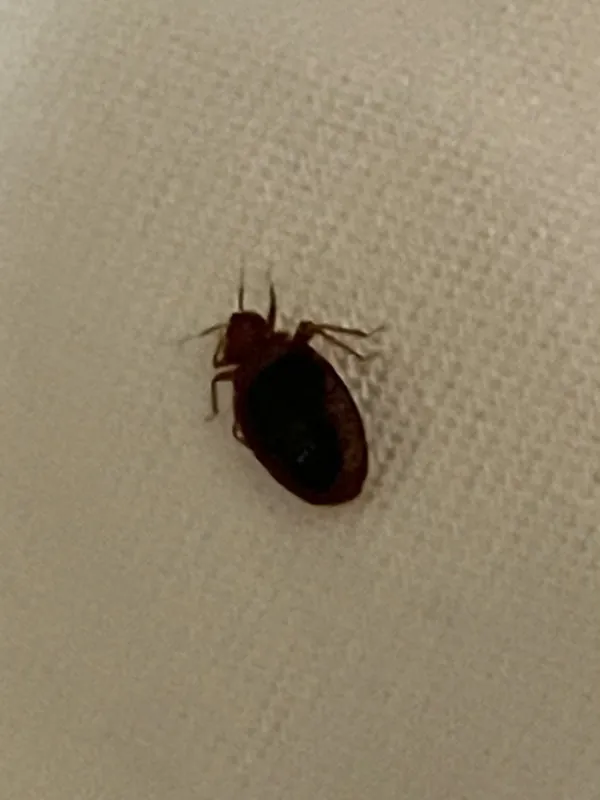
Adults are flat, oval and rusty brown, about 5 to 7 mm, or the size of an apple seed. Nymphs are 1.5 to 4.5 mm and translucent or whitish-yellow unless they have just fed, when a red gut shows through. Where you find one, look closely for more. See what a bed bug looks like for pictures of each stage.
Where to look first
Research in apartments found about 85% of bed bugs in or near the bed. Start with:
- Mattress piping, seams and tags, top and bottom
- The box spring, especially under the fabric dust cover
- Bed frame joints, slats and screw holes
- The headboard, which is best taken off the wall
- Nightstands, then sofas and chairs where people nap
In heavier infestations, check curtain folds, drawer joints, outlets, under loose wallpaper, and where the wall meets the ceiling. Anything that will take the edge of a credit card can hide a bed bug. Our inspection guide gives the full routine.
Signs that mislead
Bites are a poor sign on their own: they look like other insect bites, rashes and hives, and many people never react. The often-mentioned sweet, musty odor is rarely noticeable except in large infestations. And several insects get mistaken for bed bugs. Low-level infestations are especially easy to confuse with carpet beetles, whose larvae also leave shed skins (see bed bugs vs carpet beetles).
Keep the evidence
Pick up a suspect bug with clear tape and stick it to an index card, or seal it in a zip bag or a small jar with rubbing alcohol. Photograph spots and eggs with a coin for scale. A pest professional or your county extension office can confirm the identification, which matters before anyone treats.
Photos

When to call a professional
If you find live bugs, eggs, or clusters of dark fecal spots in more than one place, call a licensed pest management professional with bed bug experience. Do the same if you live in an apartment, where the source may be a neighbouring unit. A good inspector will confirm the identification and show you what they found.
Questions
What does bed bug poop look like?
Small black or dark brown dots, about the size of a period, that soak into fabric like marker ink. On wood or plastic they sit as tiny raised beads.
What do bed bug eggs look like?
Pearl-white to pale yellow, about 1 mm long, and glued into seams and crevices. Older eggs show a dark eye spot.
Can you have bed bugs and see no signs?
Early on, yes. A few bugs leave few spots, and many people don't react to bites. Interceptor traps under the bed legs catch far more bugs than looking alone.
Do bed bugs smell?
Large infestations can give off a sweet, musty odor, but it is rarely noticeable and is not a reliable sign.