What a house mouse looks like
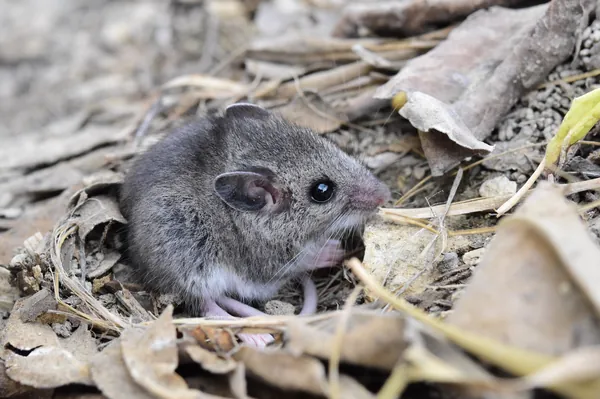
A house mouse is a slender, light brown to gray rodent 5 to 7 inches long including its nearly hairless 3 to 4 inch tail, with large ears and small black eyes.

How to recognize a house mouse
An adult house mouse weighs about half an ounce and measures 5 to 7 inches from nose to tail tip. The tail makes up 3 to 4 inches of that and has almost no fur. The coat is light brown to gray. The ears are large for the head, and the eyes are small and black.
Mice are mostly active at night, so the first thing most people see is not the animal but what it leaves behind. If you do see one in daylight, that does not by itself mean the house is overrun, but it is a reason to look for droppings and nests.
Mouse, deer mouse, or rat
Three animals get called "a mouse" in US homes.
| House mouse | Deer mouse | Norway rat | |
|---|---|---|---|
| Adult weight | About 1/2 oz | Similar to house mouse | 7–18 oz |
| Body color | Even gray-brown | Dark above, white belly, sharp line between | Brown or gray, gray belly |
| Eyes | Small | Large | Small |
| Tail | Nearly hairless | Furred, dark on top, light underneath | Scaly, dark above, pale below |
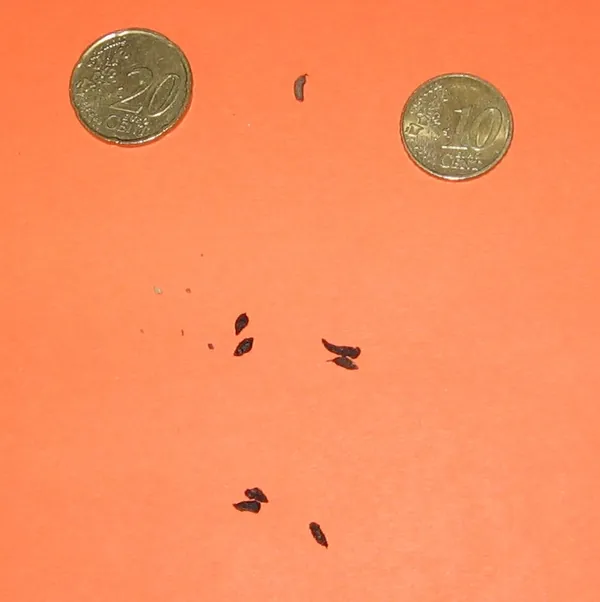
| Droppings | 1/8–1/4 in, pointed | Similar to house mouse | 3/4–1 in, blunt |
The deer mouse matters because the CDC names it as the most common source of hantavirus pulmonary syndrome in the US. Treat any mouse droppings with the same care, since you usually cannot tell whose they are. A half-grown rat can pass for a big mouse; droppings are the easier check. See rats for the full rat ID.
Signs mice are living in the house
- Droppings along walls, in drawers, under sinks and behind appliances. One mouse can leave 50 to 75 pellets a day, so a few days of activity produces a lot. See mouse droppings.
- Fresh gnaw marks on food packages, baseboards and wiring.
- Nests of finely shredded paper, fabric or insulation in sheltered spots: behind boxes, in drawers, inside wall voids.
- A musky, stale odor in long-running infestations.
- Dark, greasy smudges along routes they run every night, such as where a pipe enters a wall.
- Scratching or scurrying in walls and ceilings after dark. See sounds in walls.
Why one mouse becomes many
A female house mouse can have 5 to 10 litters a year with 5 or 6 pups each. Young mice can breed at 5 to 6 weeks old, and indoors they breed year-round. Mice also stay close to home, usually within about 30 feet of the nest, so the droppings you find are a good guide to where the nest is.
What to do next
Clean droppings with a wet method, never a broom or vacuum (the steps are on the droppings page). Then seal gaps larger than 1/4 inch and set snap traps along walls. The full plan, by how bad the problem is, is in how to get rid of mice.
Where in the US
House mice live throughout the United States, from cities to farms, and depend on buildings for food and shelter. The deer mouse, the main US hantavirus carrier, also comes into buildings, and it is often mistaken for a house mouse. Its sharply two-toned body and furred, bicolored tail set it apart.
Photos

Often mistaken for

Photo: Laura Mae via iNaturalist, CC BY 4.0
Norway rat
Body 18–25 cm; tail shorter than the body (Norway rat)
Bigger and heavier, with a large head and feet; droppings 1/2 inch or longer.

Photo: Mila C. via iNaturalist, CC BY 4.0
Meadow vole
9–13 cm, short tail, small ears
Stocky with a short tail and small ears; lives in lawns and gardens, rarely indoors.
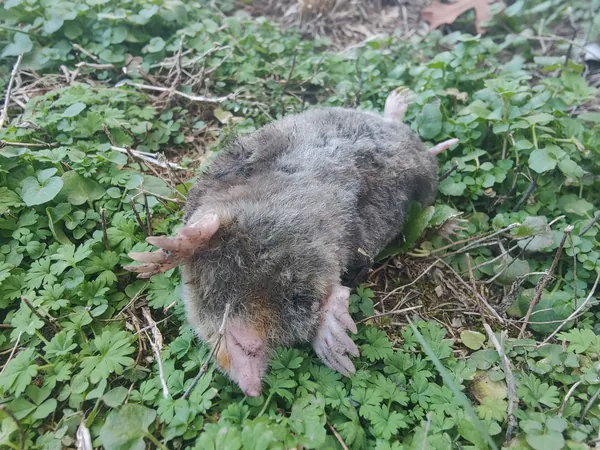
Photo: Siddarth Machado via iNaturalist, CC BY 4.0
Eastern mole
14–20 cm, velvety, huge front feet
Velvety, with huge front feet and no visible ears; stays underground.
When to call a professional
Call a professional if you are catching mice for more than a few weeks after sealing and trapping, if droppings keep turning up in a kitchen or food business, or if you cannot find where they are getting in. A good technician will inspect the whole exterior for gaps, seal them with metal or concrete, and set traps or tamper-resistant bait stations according to the label.
Questions
Does one mouse mean more?
Often, yes. Mice breed quickly and live in family groups, so a single sighting plus fresh droppings usually means a nest nearby. Set several traps and check for droppings for a week or two.
How small a hole can a mouse get through?
UC IPM says mice can squeeze under a gap 1/4 inch tall and through openings 3/8 inch wide. Penn State puts it at about the size of a dime or a pencil.
Are house mice dangerous?
They contaminate food and surfaces with droppings and urine. The CDC lists the deer mouse as the main US carrier of hantavirus, so clean up any mouse droppings with a wet disinfectant method, not a broom or vacuum.
When are mice most active?
Mostly at night. They can be seen during the day, especially when the population is large.