Bugs that look like roaches
The bugs most often mistaken for roaches are ground beetles, giant water bugs, June beetles, camel crickets, earwigs and, when small, bed bugs. A roach has a flat oval body, long antennae and a shield that hides its head from above.
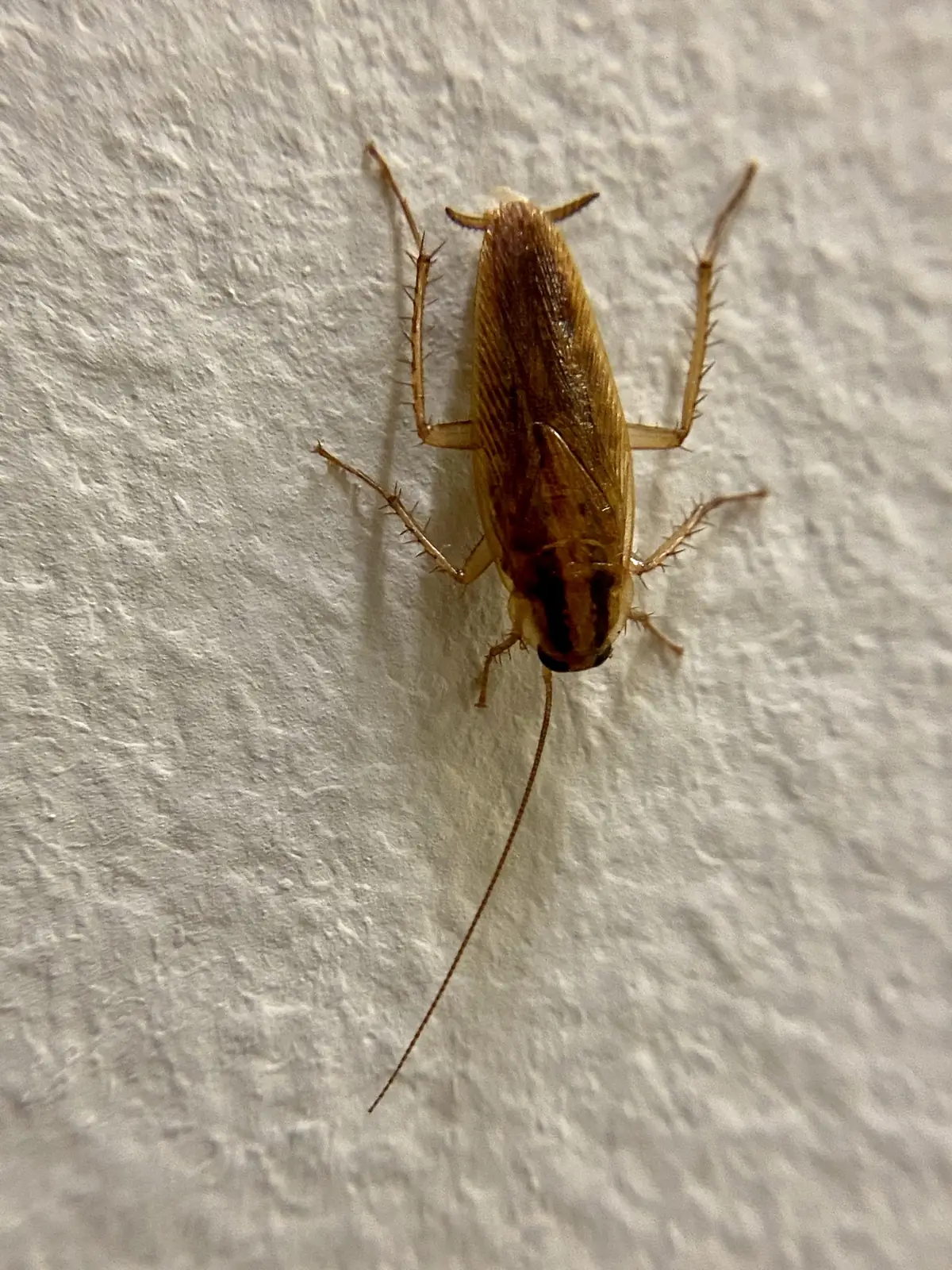
What makes a roach a roach
Cockroaches are flat and oval, with long, thread-like antennae and a shield-like plate that covers the head when you look from above. Adults of most species have leathery wings that lie flat on the back; nymphs look like small adults without full wings. The common house species range from the German cockroach, 1/2 to 5/8 inch and tan with two dark stripes behind the head, to the American cockroach, 1 1/2 to 2 inches and reddish brown.
| Bug | Size | Color and shape | Where found | Page |
|---|---|---|---|---|
| Oriental cockroach ("water bug") | About 1 1/4 in | Nearly black, greasy sheen, short or no wings | Basements, drains, crawl spaces | Cockroaches |
| American cockroach ("palmetto bug") | 1 1/2–2 in | Reddish brown, winged | Basements, kitchens, outdoors | Cockroaches |
| Giant water bug | 2–4 in | Very large; lives in water, flies | Ponds, porch lights, parking lots | none |
| Ground beetle | Varies | Shiny black, hard ridged wing covers, jaws visible | Under doors, ground floor | none |
| June beetle | About 1/2–1 in | Heavy, rounded, brown | Porch lights, window screens | none |
| Camel cricket | Varies | Humpbacked, wingless, very long legs | Basements, garages, laundry rooms | none |
| Earwig | About 5/8 in | Slim, reddish brown, pincers at the tail | Damp spots, under objects | none |
| Bed bug | About 3/16 in | Flat, oval, reddish brown, wingless | Mattress seams, beds | Bed bugs |
"Water bugs": usually a roach
When people say they have water bugs in the basement or a drain, they usually mean the Oriental cockroach. "Water bug" is one of several common names for cockroaches, along with palmetto bug. Oriental roaches are about 1 1/4 inches, very dark brown to nearly black, with a greasy sheen. They prefer cool, damp places at or below ground level: basements, drains and crawl spaces, rarely cupboards or upper floors.
True giant water bugs are a different insect. They are the largest true bugs in the US and Canada, 2 to 4 inches long, and live in ponds and slow water. Adults fly and are drawn to lights at night, so they turn up in parking lots and by porch lights. They can give a painful bite, which earned them the name toe-biter. One on the patio near a light is likely a water bug; one in a drain or basement is a roach.
Palmetto bugs
"Palmetto bug" is not one species. University of Florida entomologists use it for the larger roaches, American, Australian, brown and smokybrown, which are 1 1/4 to 2 inches long. They usually live outdoors but come inside when they migrate or are carried in.
Ground beetles and June beetles
Ground beetles are the beetles most often confused with Oriental roaches because both are shiny and dark. Look at the back: a beetle has hard front wings that meet in a straight line down the middle, while a roach's wings are leathery or missing. A ground beetle's head and jaws are easy to see from above; a roach's head is tucked under its shield. Ground beetles wander in under doors, don't stay, and are worth sweeping back outside. June beetles are heavier and rounder, with the same hard wing covers, and they show up at porch lights in early summer.
Camel crickets and earwigs
Camel crickets have a humpbacked look, very long legs and no wings, and they jump. They live in cool, damp basements, crawl spaces, garages and laundry rooms, and are mostly a nuisance, though large numbers can soil stored linens. Earwigs are slim and reddish brown with a pair of pincers at the tail end; no roach has pincers.
Small ones on the bed
A small, flat, reddish-brown bug in bed may be a bed bug, not a young roach. Bed bugs are about 3/16 inch as adults and wingless, and newly hatched nymphs are straw-colored and pinhead-sized. They are often mistaken for cockroaches. Check mattress seams for live bugs and dark spots; see signs of bed bugs.
Next step
Roach confirmed? Start with how to get rid of roaches, and use cockroach droppings to judge how big the problem is.
Photos
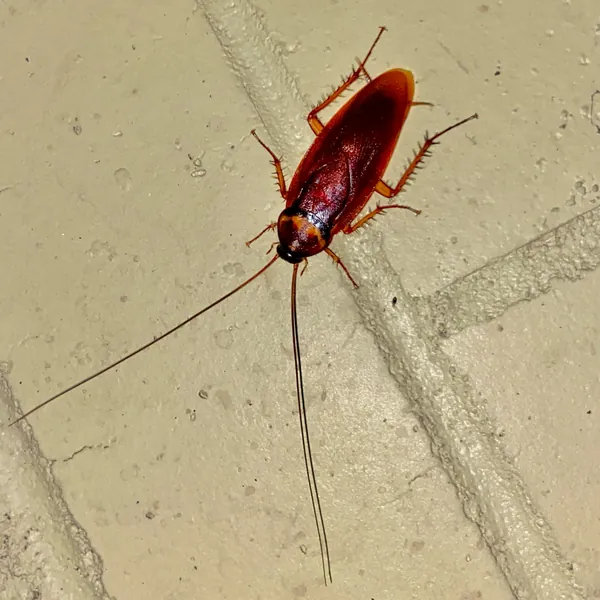
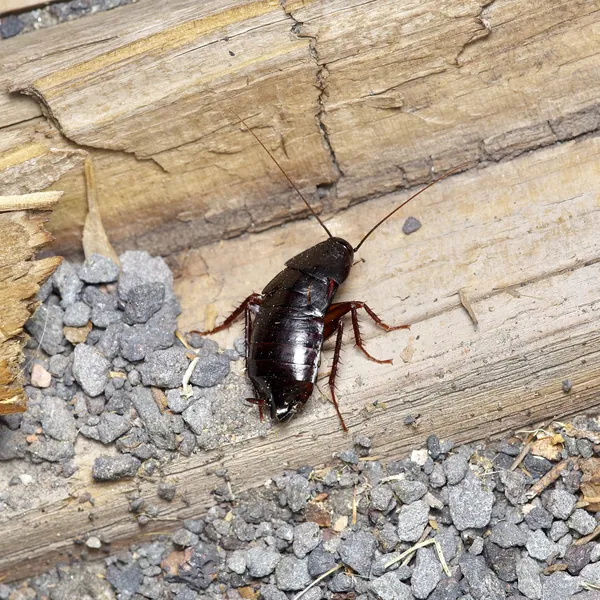
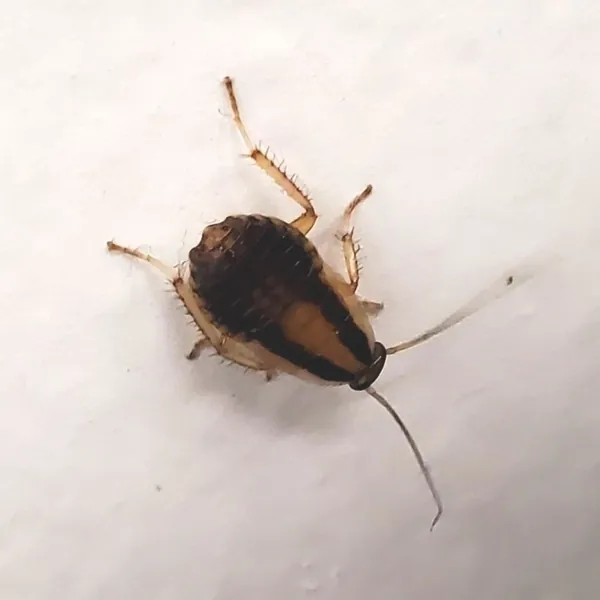
Side by side
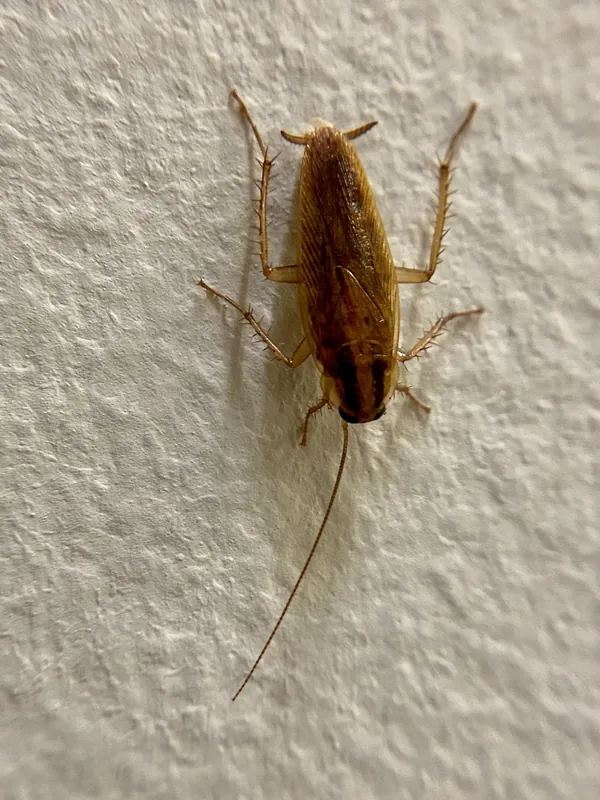 Cockroach | 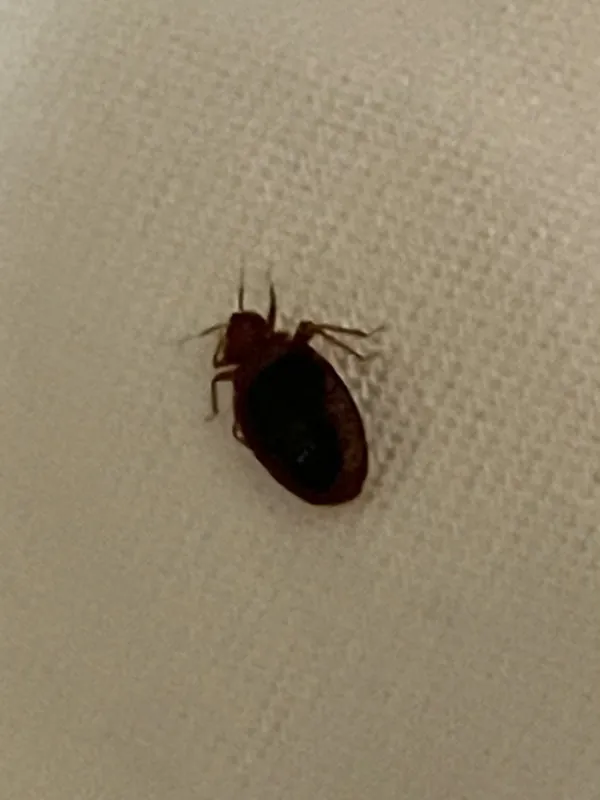 Bed bug | |
|---|---|---|
| Size | German 1/2–5/8 in; American 1 1/2–2 in | About 3/16 in, a lentil |
| Shape | Flat, oval; shield hides the head | Flat, oval; head visible |
| Color | Tan to reddish brown; Oriental nearly black | Reddish brown; nymphs straw-colored |
| Wings | Most adults winged; nymphs not | None; crawls fast, can't fly or jump |
| Where found | Kitchens, bathrooms, basements, drains | Mattress seams, beds, sofas |
| Feeds on | Food scraps and decaying matter | Human blood |
Photo credits: Cockroach: Photo: Sandra H Statner via iNaturalist, CC BY 4.0; Bed bug: Photo: Evelyn Lazzaretti 🏳️⚧️ via iNaturalist, CC0 1.0 (public domain dedication).
When to call a professional
Call a professional if you see live roaches in daylight, find droppings in several rooms, or have German cockroaches in an apartment building, where units share walls and pipes. Ground beetles, June beetles, earwigs and giant water bugs don't need pest control indoors. If you suspect bed bugs, have the bug identified before anyone treats.
Questions
Is a water bug the same as a cockroach?
Usually, yes. Most "water bugs" found indoors are Oriental cockroaches. True giant water bugs are 2 to 4 inch aquatic insects that fly to lights and rarely come inside.
What is a palmetto bug?
A name for the larger roaches, including American, Australian, brown and smokybrown cockroaches, which are 1 1/4 to 2 inches long.
What beetle looks like a cockroach?
Ground beetles. They are shiny and dark like Oriental roaches, but have hard wing covers that meet in a line down the back and a head you can see from above.
Can a bed bug look like a baby roach?
Yes. Both are small, flat and brownish. A bug found in a mattress seam or on the bed is more likely a bed bug; one in the kitchen or bathroom is more likely a roach nymph.
Sources
- Common Urban Pests (Penn State Extension)
- Cockroaches and Their Management, ENY-214 (UF/IFAS)
- Ground Beetles, ENTFACT-706 (University of Kentucky Entomology)
- Giant Water Bug (University of Maine Cooperative Extension)
- Camel Crickets (NC State Extension)
- Bed Bugs, ENTFACT-636 (University of Kentucky Entomology)