Carpet beetles: pictures, larvae and how to get rid of them
Carpet beetles are small, round beetles, 2 to 5 mm long, often mottled white, brown and yellow, whose hairy, banded larvae chew wool, fur, feathers and lint. To get rid of them, remove the infested source, vacuum thoroughly, and launder or freeze what you keep.
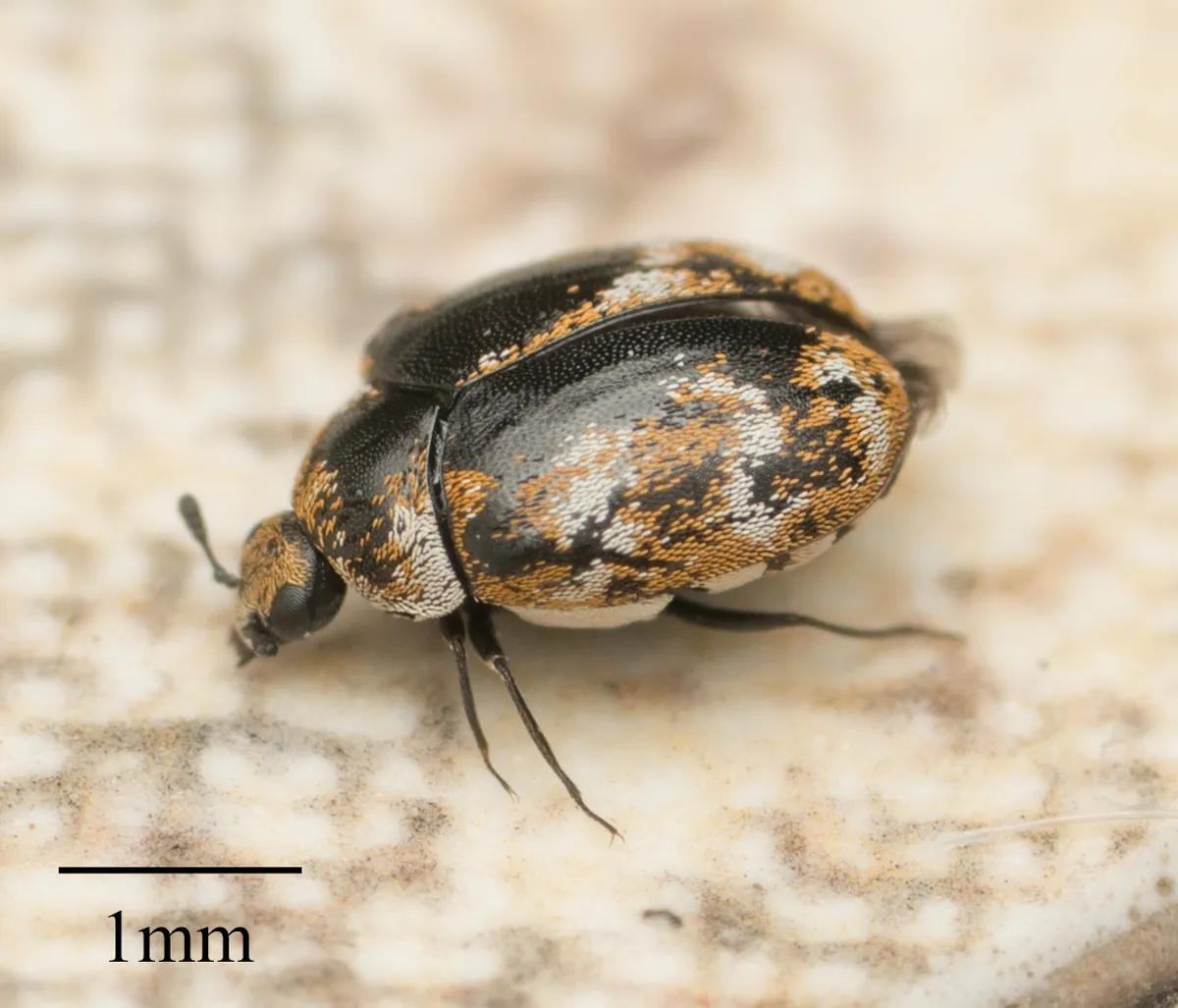
What carpet beetles look like
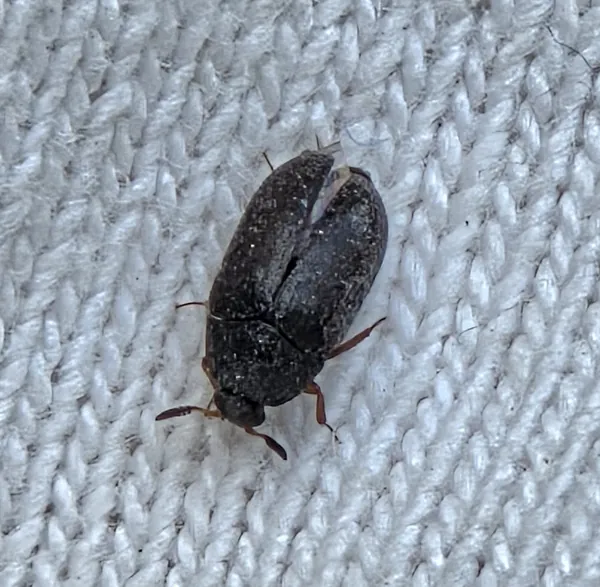
Three species cause most household problems. The varied carpet beetle is about 2 to 3.5 mm, round and black with an irregular pattern of white, brown and dark yellow scales; old, worn adults can look plain brown or black. The furniture carpet beetle is slightly larger and rounder, mottled with black spots among white and yellow-orange scales, with a white underside. The black carpet beetle is longer, 2.8 to 5 mm, and shiny black to dark brown with brownish legs. All three have short antennae and look like tiny, dull ladybugs.
The larvae do the damage
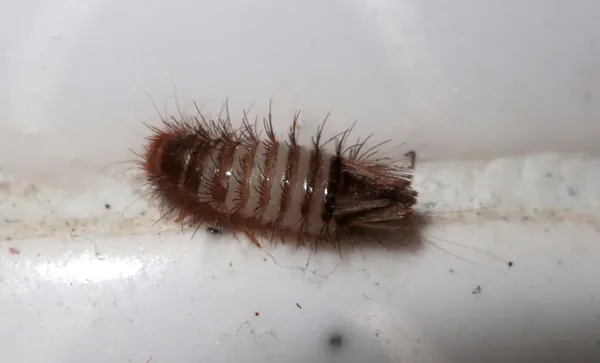
Carpet beetle larvae are slightly longer than the adults and covered in bristly hairs, which is why they are called woolly bears. Varied carpet beetle larvae are striped light and dark brown, broader at the rear, about 4 mm long, and raise a tuft of hair when disturbed. Black carpet beetle larvae are carrot-shaped, golden to chocolate brown, shiny and up to about 12 mm, with a long tail tuft.
Larvae feed on animal products: wool, silk, fur, feathers, leather, felt, pet hair, natural-bristle brushes, mounted animals and dead insects. Some eat spices, grains and dried pet food. They do not feed on synthetic fibers. A larva may take from a few months to nearly two years to mature, depending on species and food.
Signs of carpet beetles
- Bristly, brown, shell-like cast skins in closets, drawers and along baseboards
- Tiny fecal pellets about the size of a grain of salt
- Irregular holes concentrated in one area of a sweater, rug or felt, rather than scattered (clothes moths scatter holes and leave silk webbing; carpet beetles leave no webbing)
- Small adult beetles on window sills, curtains and panes in spring and early summer
Where they come from
Adults feed on pollen and nectar outdoors, on flowers such as crape myrtle and spiraea, and fly indoors through open doors and windows or ride in on cut flowers. Females lay eggs on lint, wool and debris in dark, undisturbed places. Common sources inside are closets with stored woolens, under heavy furniture and rugs, along carpet edges, and old bird, rodent, bee or wasp nests in attics and walls, where dead insects collect. Finding adults at a window doesn't tell you where they bred, because adults move far from the source.
Carpet beetles and your skin
Carpet beetles do not bite. In some people, though, long-term contact with larval hairs causes an itchy rash of red bumps that is easily mistaken for bed bug or flea bites, usually on skin under clothing. If you have an unexplained rash, see a healthcare provider. Compare the two insects on bed bugs vs carpet beetles.
How to get rid of carpet beetles
- Find the source. Check stored wool, fur, felt, down, rugs, closets and pet food. Discard heavily infested items.
- Vacuum rugs, carpet edges, closets, upholstered furniture, drapes and the cracks along baseboards. Empty the vacuum into an outdoor trash can right away; it can hold eggs and larvae.
- Wash washable items in hot water or have them dry cleaned. Both kill all stages.
- Freeze items that can't be washed: seal in a plastic bag and hold below 18°F for 2 weeks, or below 0°F for 3 days or more.
- Heat works too: 120°F or more for at least 30 minutes in an oven for items that tolerate it, or above 130°F for several hours. Test first.
- Store clean woolens in airtight bins or chests. Cedar is unreliable because its oil fades.
- Remove dead insects from window sills and old animal nests from attics, and seal gaps around windows, doors and vents.
Insecticides are a supplement, not a fix. If needed, use a product labeled for carpet beetles as a spot treatment on floor edges, under rugs and in closet cracks, never on clothing or bedding. Read and follow the label; the label is the law. The chooser below matches the plan to what you are seeing.
Where in the US
Carpet beetles turn up in homes across the country, indoors and out; extension services from California to Utah, Colorado and Pennsylvania all publish guidance on them as household pests. Adults live outdoors on flowering shrubs in spring and early summer and fly in through open windows and doors, so sightings peak then; indoors, larvae feed year-round in heated homes.
Photos
Often mistaken for
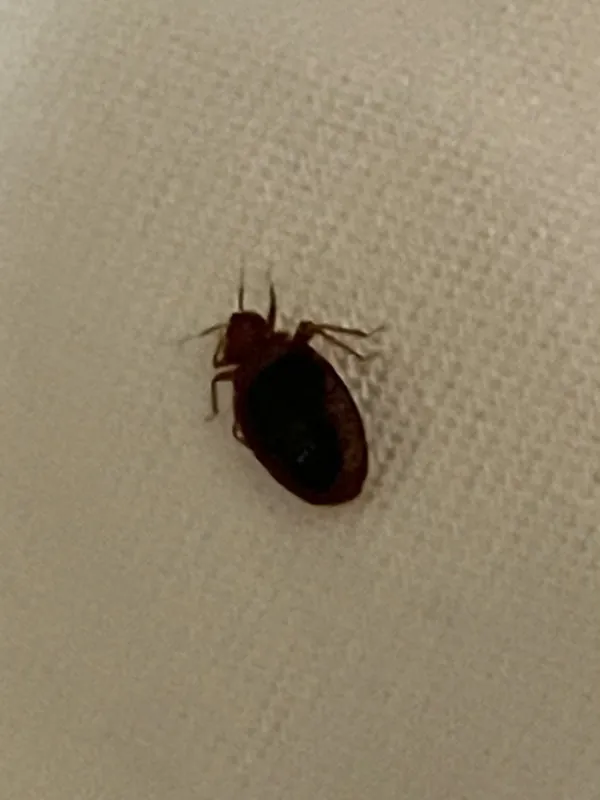
Photo: Evelyn Lazzaretti 🏳️⚧️ via iNaturalist, CC0 1.0 (public domain dedication)
Bed bug
5–7 mm adult, about the size of an apple seed
Flat, oval, rusty brown and wingless; found in mattress seams and feeds on blood.
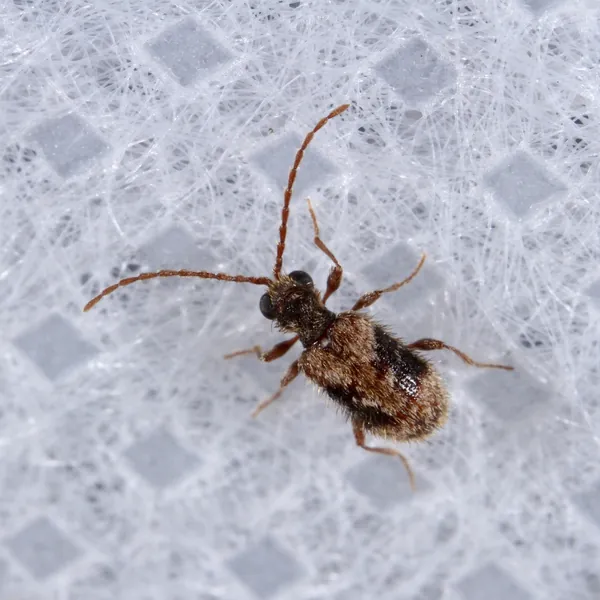
Photo: Joshua Ebright via iNaturalist, CC BY 4.0
Spider beetle
1–5 mm, round with long legs
Round and shiny with long, spidery legs; lives in pantry food.
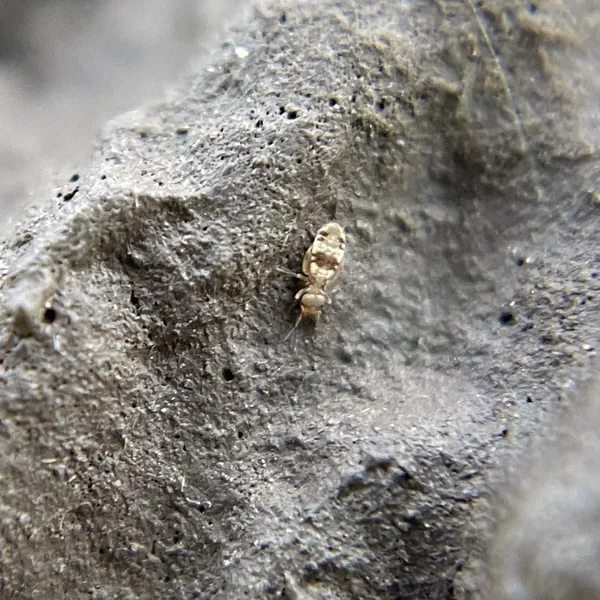
Photo: northerly via iNaturalist, CC BY 4.0
Booklouse
About 1 mm, pale and soft
About 1 mm, soft and pale; lives on mold in damp paper.
Choose a treatment
A few adults at the window call for cleaning and checks; larvae and damage mean finding the source; repeat problems after a cleanout point to hidden breeding sites a professional can reach.
Clean up and check closets
Do it yourself
- Vacuum the beetles and any dead insects from sills, tracks and curtains; empty the vacuum outside.
- Check cut flowers before bringing them in, and keep window and door screens in good repair.
- Look through closets, wool rugs and stored woolens for larvae, cast skins or holes.
- A sticky trap on a sill, checked once or twice a week, shows whether numbers are growing.
- No insecticide is needed at this stage.
Professional
A professional is not usually needed. If beetles keep appearing for weeks, an inspection can look for an old bird, rodent or insect nest in the attic or walls.
Find the source, deep clean
Do it yourself
- Trace the larvae to what they are eating: wool, fur, felt, feathers, silk, pet hair, dried pet food or spices. Discard badly infested items.
- Vacuum thoroughly: rugs on both sides, carpet edges, closet floors and shelves, upholstered furniture, drapes, and baseboard cracks.
- Wash washable items in hot water or have them dry cleaned; both kill all stages.
- Freeze items that can't be washed: bag and hold below 18°F for 2 weeks, or below 0°F for at least 3 days.
- Store clean woolens in airtight containers. Cedar is unreliable.
Professional
Most people can handle this level themselves. Call a professional if you can't find the source or if larvae keep coming back after cleaning.
Clean out, then spot-treat
Do it yourself
- Do everything in the previous step for every affected room.
- Pull furniture away from walls and vacuum under it and along baseboards; larvae feed in dark, undisturbed places.
- Have valuable rugs, furs and textiles cleaned or treated by a specialist cleaner.
- If needed, apply an insecticide labeled for carpet beetles as a spot treatment on floor edges, under rugs and furniture, and in closet cracks. Never spray clothing or bedding.
- Read and follow the label; the label is the law.
Professional
A professional can treat cracks, under carpets and furniture, and can fumigate infested items that cannot be cleaned. Fumigation does not prevent reinfestation, so the cleanout still matters.
Call a pest professional
Do it yourself
- Check the attic, wall voids and chimney areas for old bird, rodent, bee or wasp nests and dead insects, and remove what you safely can.
- Seal gaps around windows, doors, vents and eaves.
- Keep a note of where and when you see adults and larvae; it helps locate the source.
Professional
Hidden breeding sites in walls and attics are a professional job. Expect an inspection, removal of old nests and debris, and targeted dust treatment of voids, with follow-up monitoring using sticky or pheromone traps.
Larval hairs can cause an itchy rash or eye and airway irritation in sensitized people. Wear gloves and a dust mask when vacuuming heavily infested areas, and see a healthcare provider about a persistent rash.
Cleaning, laundering and freezing are pesticide-free and solve most carpet beetle problems. If you use an insecticide, keep children and pets away until it has dried and the label says it is safe.
If larvae are in the pantry or in dried pet food, discard the infested food, vacuum the shelves, and store new food in sealed glass, metal or heavy plastic containers. Don't spray insecticide on food shelves.
When to call a professional
Call a pest management professional if carpet beetles keep turning up after a thorough cleanout and you can't find the source, if larvae are in wall voids, ducts or the attic, or if a valuable collection, rug or piano felt is at risk. Professionals can treat voids and can fumigate infested items that can't be cleaned.
Questions
Are carpet beetles harmful?
They don't bite or spread disease. Larvae damage wool, fur and other animal-based materials, and their hairs can cause an itchy rash in some people.
Why do I keep finding carpet beetles on my window sills?
Adults are drawn to light, so they gather at windows, mostly in spring and early summer. The larvae are breeding somewhere dark nearby, such as a closet, rug or old nest.
Do carpet beetles live in beds?
Larvae can feed on wool blankets, down or feather bedding and lint under the bed. They don't feed on people.
How long does it take to get rid of carpet beetles?
Longer than most people expect. Varied carpet beetle larvae can take 220 to 630 days to mature, so keep vacuuming and checking for several months after the cleanout.