Flying ants vs termites
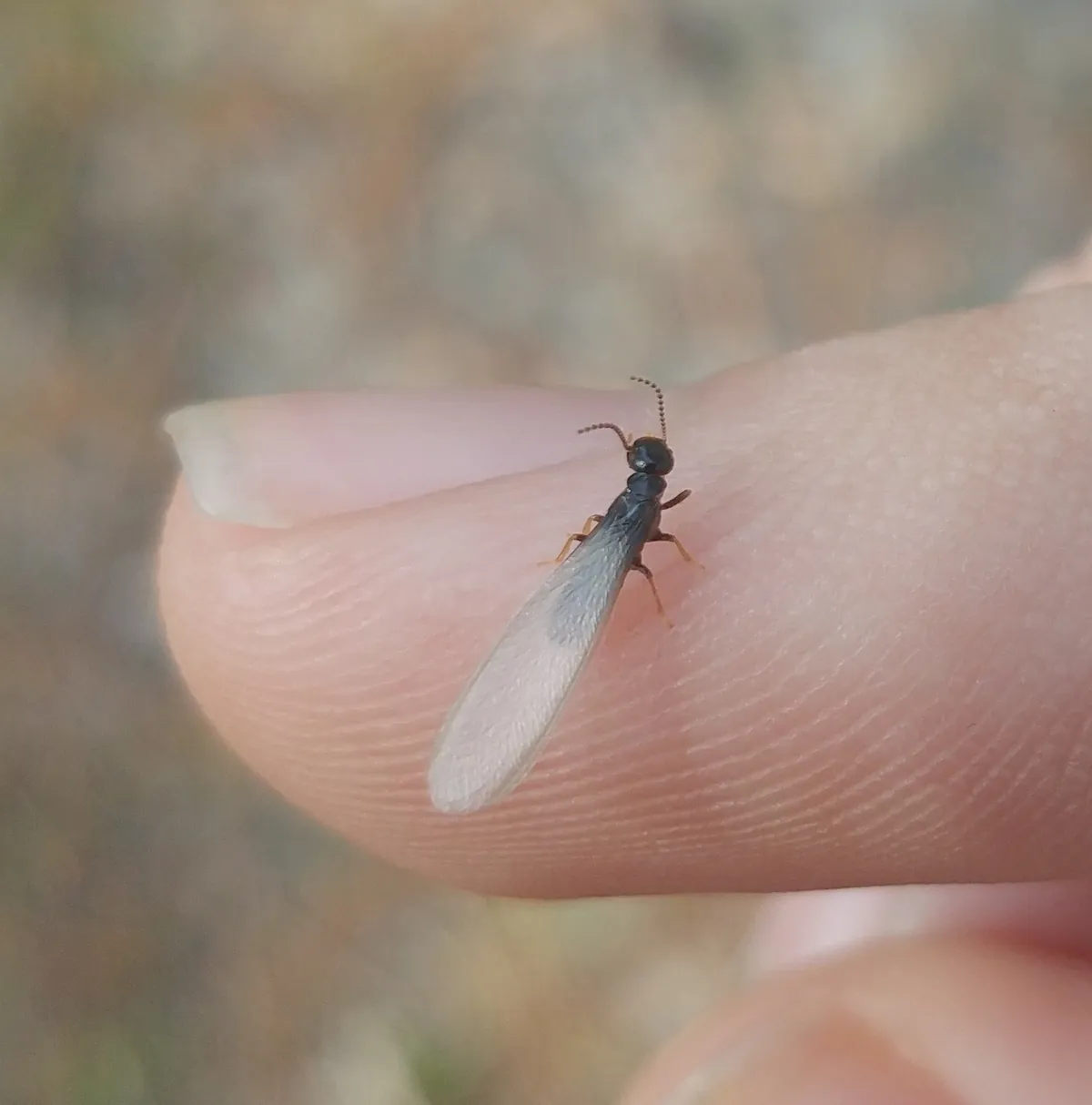
A termite swarmer has a thick waist, straight beaded antennae and four wings of equal length that reach well past its body; a flying ant has a pinched waist, elbowed antennae and front wings longer than the hind wings.
Check three things
A swarm of winged insects at a window in spring is either termites or ants most of the time. Trap one under a clear glass or tape it to a card, then look with a magnifier at three features.
- The waist. A termite is roughly the same width from head to tail. An ant pinches in sharply between the chest and the abdomen, like an hourglass.
- The antennae. Termite antennae stick out straight and look like a string of tiny beads. Ant antennae bend at a sharp elbow.
- The wings. A termite has two pairs of wings that are the same size and shape, about twice as long as its body. An ant's front wings are clearly longer than its hind wings, and the wings are shorter overall.
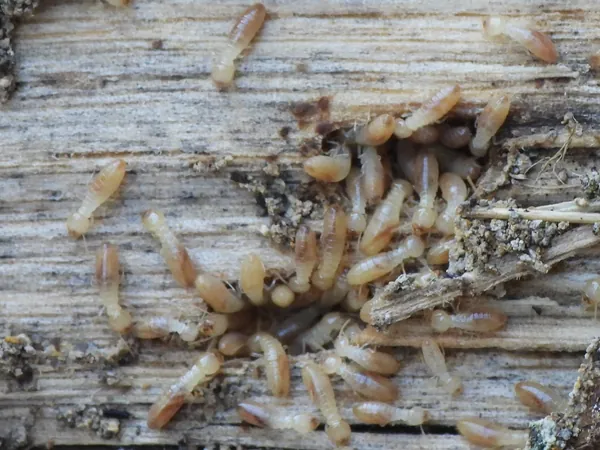
If you only find loose wings on a sill, compare them. A pile of identical, milky, rounded wings points to termites. Termite wings break off easily, so swarms leave many wings behind. Ant wings are clear to brownish and stay attached more firmly.
Size helps less than you might expect. Eastern subterranean termite swarmers are about 3/8 inch (10 mm) to the wing tips, roughly the length of a grain of rice plus a little. Winged carpenter ants are larger, up to 3/4 inch (19 mm), but many smaller ant species swarm too, so always check the waist and antennae as well.
Swarm season and time of day
Eastern subterranean termites swarm in daylight in spring, often the morning after a warm rain. In Arkansas that is March through May; in Florida swarms start in late winter. Formosan termites swarm at dusk in late spring and early summer and fly to lights. Drywood termites swarm in the daytime in summer and fall.
Carpenter ant swarmers leave the nest on warm days in spring and early summer. Winged carpenter ants indoors from late winter through spring suggest a nest inside the house, especially if there are many of them.
What a swarm tells you
Neither swarmer damages wood. Termite swarmers die within about a day. A swarm in the yard from a stump or woodpile does not prove the house is infested. A swarm indoors, or from a porch or slab edge, means a colony is close and the house should be inspected.
If they are termites, read the termite signs page and book an inspection. If they are carpenter ants, the carpenter ant page explains how to find the nest. For wingless workers, see ant vs termite.
Side by side
 Termite | 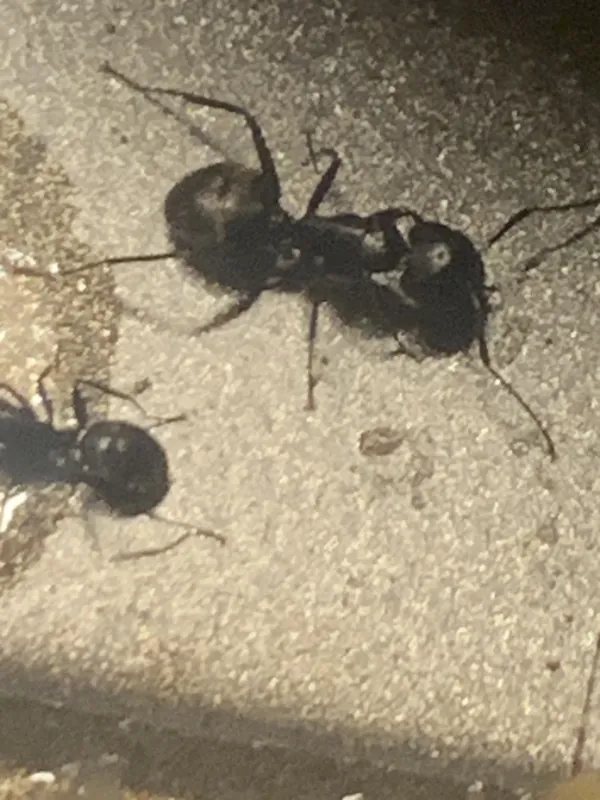 Carpenter ant | |
|---|---|---|
| Waist | Thick, no pinch; same width end to end | Narrow, pinched waist |
| Antennae | Straight, like a string of beads | Elbowed (bent) |
| Wings | Four, equal size and shape | Four; front wings longer than hind wings |
| Wing length | Longer than the body; about twice body length | Shorter; extend only a little past the body |
| Wing color | Milky white or gray, translucent | Clear to brownish |
| Wings shed | Break off easily; piles of wings at windows | Firmly attached; also shed after mating |
| Body color | Dark brown to black (Formosan: yellowish brown) | Black, or red and black |
| Size with wings | About 3/8 inch (10 mm) | Up to 3/4 inch (19 mm) |
| Swarm season | Spring (subterranean); summer and fall (drywood) | Spring and early summer |
Photo credits: Termite: Photo: Sam Kieschnick via iNaturalist, CC BY 4.0; Carpenter ant: Photo: Chandler Beaty via iNaturalist, CC BY 4.0.
When to call a professional
Call a licensed pest company if termite swarmers come out indoors or next to the foundation, or if winged ants keep appearing inside. Bring a few specimens in a sealed bag; an inspector can confirm the identification in seconds.
Questions
Do flying termites mean I have an infestation?
Not always. A swarm from a stump or woodpile in the yard can be unrelated to the house. Swarmers indoors or right at the foundation usually mean a colony in or under the building.
What time of year do termites swarm?
Subterranean termites swarm in spring, usually in daylight after a warm rain, and as early as late winter in Florida. Drywood termites swarm in summer and fall.
Can flying termites bite?
Termite swarmers do not bite people or chew wood. They die within about a day.
Why are there only wings on my windowsill?
Termite swarmers shed their wings soon after flying. A pile of equal-sized, milky wings is a common sign that termites swarmed indoors.
Sources
- Subterranean Termite Identification and Biology (University of Arkansas, FSA7061)
- How to Distinguish Termites from Ants (Mississippi State Extension)
- Ants and Termites: How to Tell the Difference (University of Maryland Extension)
- Carpenter Ants (Penn State Extension)
- Termite Control (University of Kentucky Entomology, EF604)
- Subterranean Termites (NPMA)