How to get rid of skunks
To get rid of a skunk under a deck, porch or shed, wait until kits can follow their mother, fit a one-way door over the den hole, confirm with a flour track test that it has left, then seal the gap with buried wire mesh.
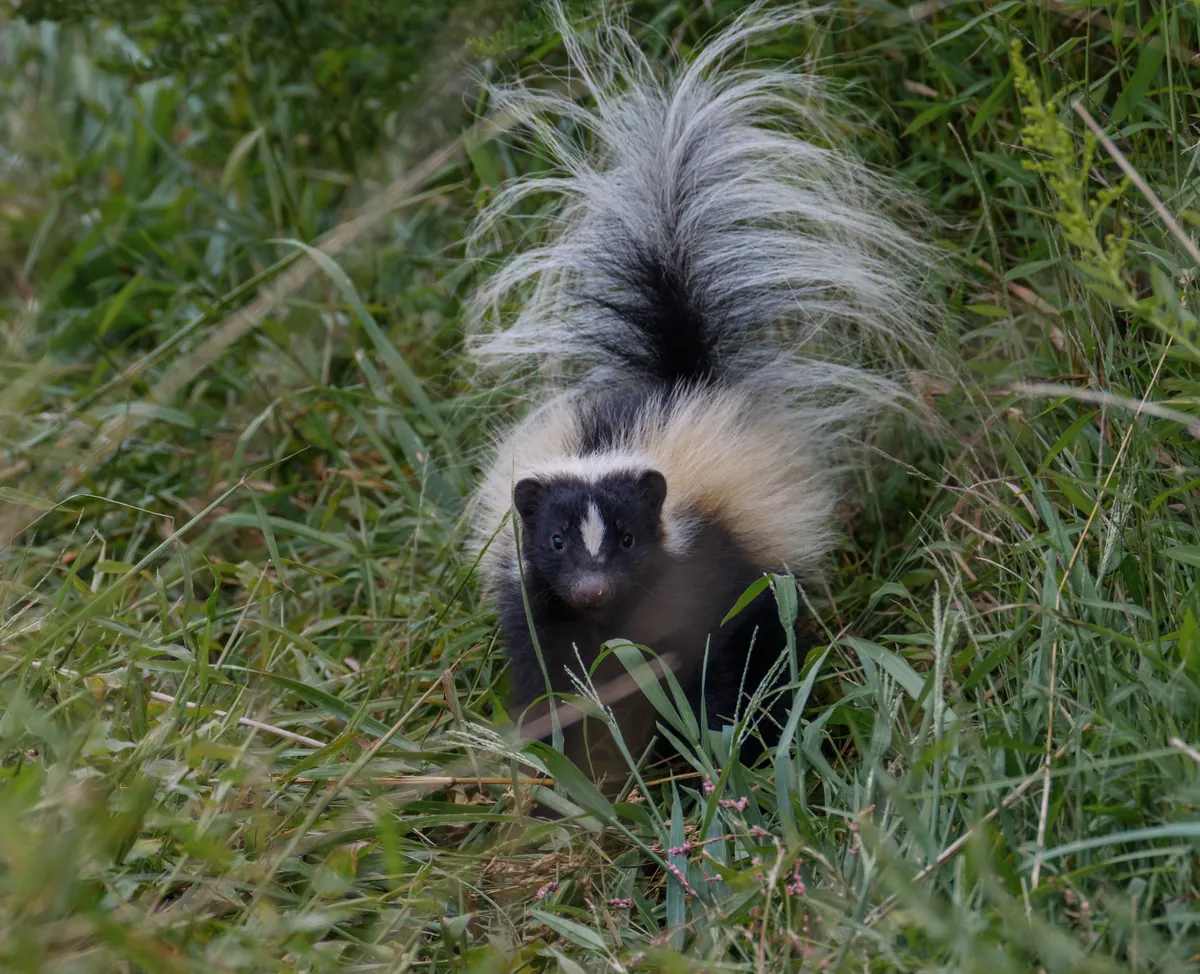
Signs you have a skunk
Striped skunks are about the size of a house cat, black with two white stripes down the back. They forage after dark along regular routes and are usually back in a den before daylight. Common signs:
- Small, cone-shaped holes 3–5 inches across in the lawn, or sod rolled back where a skunk dug for grubs and insects
- A faint musky smell around the yard or a strong one near a hole under a porch, deck, shed or slab, often with freshly dug soil
- Dogs barking at night
- Tracks like a cat's but with five toes and claw marks, about 2 inches long
- Droppings that look like a cat's, about 1/2 inch wide and 2–4 inches long with blunt ends, holding insect parts, seeds or hair
Skunks den under porches, decks, sheds, buildings, concrete slabs and woodpiles, and in drainpipes and culverts. They breed from February to March, and kits are born in late April and May. At about 60 days the mother starts leading them out at dusk.
Remove what attracts them
- Bring in pet food and birdseed at night and use tight trash lids.
- Pick up fallen fruit and keep compost covered.
- Stack woodpiles tightly and clear brush and debris piles.
- If skunks keep digging the lawn for white grubs, treating a confirmed grub problem removes the food. Read and follow the label; the label is the law.
Evict a skunk from under a deck or shed
- Check timing. From late April into July, assume kits may be in the den. A one-way door does not work for kits too young to walk out. Wait until you see the young following the mother at night, or call a professional.
- Find every opening, and seal all but the main one. Do not plug all the holes at once.
- Fit a one-way door over the main hole: a flap of 1/2-inch hardware cloth hinged at the top and loose on the other three sides, larger than the opening so it can swing out but not in.
- After two or three nights, sprinkle flour on both sides of the door and check after dark. Tracks should lead only outward. If unsure, smooth the flour and repeat.
- Seal the gap permanently with 1/4-inch hardware cloth. Where there is soil, bury it at least 6 inches deep so the skunk cannot dig under.
Relocation and trapping
Many states ban or restrict live-trapping and relocating skunks because they are a rabies vector species. In California, moving a skunk requires written permission from the state, and rabies is a major reason such requests are denied. Exclusion and removing attractants should come first. Check your state wildlife agency before setting any trap.
Commercial repellents are not very effective. A rag soaked in household ammonia has had some reported success, but never place strong-smelling repellents under an occupied building, where fumes can enter the home.
If you or your dog gets sprayed
UC IPM's de-skunking mix: 1 quart of 3% hydrogen peroxide, 1/4 cup baking soda and 1 teaspoon liquid soap. Mix it fresh and use it right away; never store it in a closed container. Keep it out of eyes and rinse pets thoroughly.
Rabies
More than 1 in 5 skunks that bite or scratch people or pets has rabies, according to the CDC. A skunk that is active in daylight and seems tame, listless, disoriented or aggressive may be sick: keep away and call animal control. Any skunk bite needs prompt medical attention and a report to the health department. Keep dogs and cats vaccinated.
Where in the US
Striped skunks are widespread across the US, from farmland and woodland edges to suburbs and city neighborhoods, wherever there are den sites and insects to dig for. The smaller spotted skunk, about half the size, is more of a woodland animal and a better climber. In the Midwest and much of the West, skunks are a main wild reservoir of rabies.
Photos
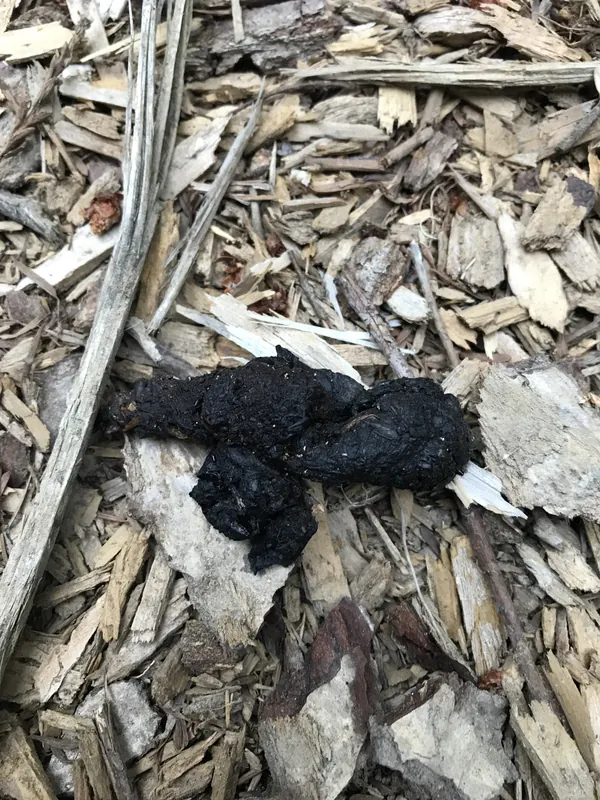
Often mistaken for
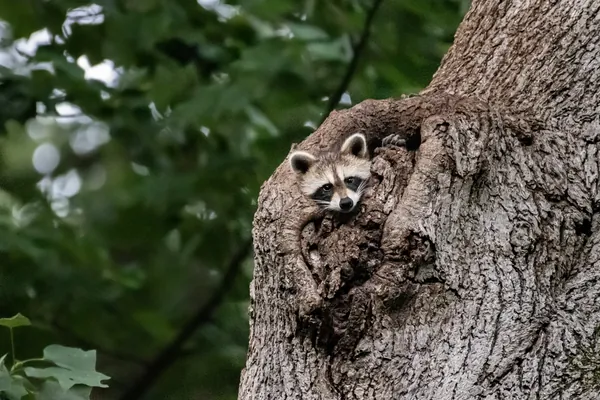
Photo: Troy B via iNaturalist, CC BY 4.0
Raccoon
60–95 cm including the ringed tail
Raccoons tear up larger patches of sod and leave blunt scat piled in latrines; they climb, skunks rarely do.
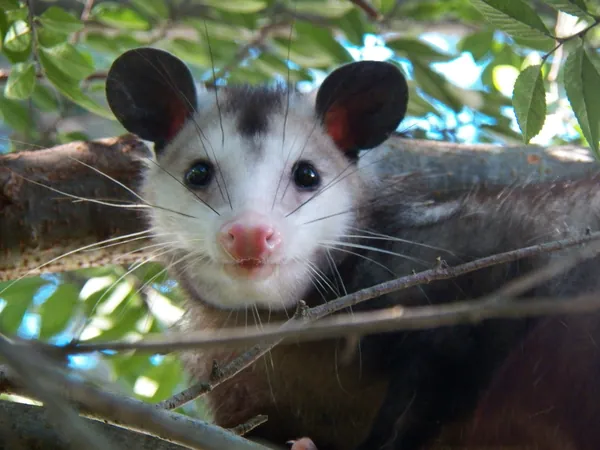
Photo: Diana Foreman via iNaturalist, CC0 1.0 (public domain dedication)
Virginia opossum
60–90 cm including the bare tail
Opossums have a white face and bare, ratlike tail, and leave scattered droppings with pointed ends.
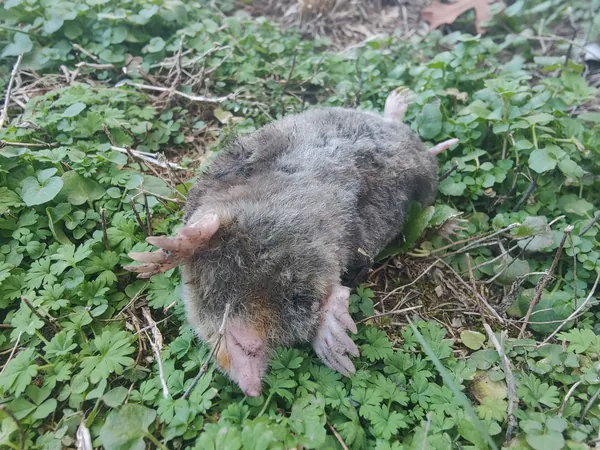
Photo: Siddarth Machado via iNaturalist, CC BY 4.0
Eastern mole
14–20 cm, velvety, huge front feet
Moles leave raised ridges and volcano-shaped mounds, not small open cone-shaped holes.
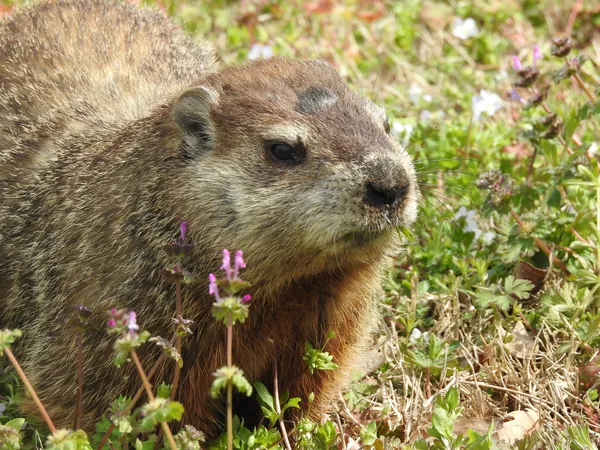
Photo: Laura Mae via iNaturalist, CC BY 4.0
Groundhog
40–65 cm, 2–6 kg
Groundhog burrows are 10–12 inches wide with a big dirt mound, dug by an animal active in daylight.
Choose a treatment
A skunk passing through needs only cleanup of attractants; a den under your house needs a timed eviction, and any bite or sick-looking skunk goes straight to animal control.
Remove food sources
Do it yourself
- Bring in pet food and birdseed at night, use tight trash lids, and pick up fallen fruit.
- Small cone-shaped holes 3–5 inches across mean a skunk is digging for grubs and insects. If you confirm a grub problem, treating it removes the food; read and follow the label, the label is the law.
- Block gaps under decks, porches and sheds with 1/4-inch hardware cloth after checking nothing is inside.
Professional
Usually not needed. If digging continues, a lawn care professional can confirm whether grubs are the draw.
One-way door, then seal
Do it yourself
- From late April into July, assume there are kits. Wait until they follow the mother at night before evicting.
- Seal every opening except the main one. Fit a one-way door of 1/2-inch hardware cloth hinged at the top, larger than the hole.
- After two or three nights, check flour on both sides after dark: tracks should lead only out.
- Seal with 1/4-inch hardware cloth buried at least 6 inches deep.
- Do not trap and relocate without checking your state wildlife agency; many states ban or restrict moving skunks because of rabies.
Professional
A wildlife control operator can install one-way doors and buried wire skirts and knows your state's trapping rules.
Call a wildlife professional
Do it yourself
- Do not seal anything yet; trapped kits will die under the house.
- Do not put mothballs, ammonia or other strong-smelling repellents under an occupied building, where fumes can enter the home.
- Keep pets inside at night to avoid getting sprayed.
Professional
A pro can remove kits by hand, reunite or manage the family under state rules, and exclude the whole structure with buried wire.
Call animal control now
Do it yourself
- Keep people and pets away; do not approach it.
- Wash any bite or scratch with soap and water and get prompt medical care. Any skunk bite needs medical attention and a report to the health department.
- Call your veterinarian if a pet had contact.
Professional
Animal control or the health department captures the animal and decides on rabies testing; more than 1 in 5 skunks that bite or scratch people or pets has rabies.
If a dog is sprayed, mix 1 quart 3% hydrogen peroxide, 1/4 cup baking soda and 1 teaspoon liquid soap, use it at once, keep it out of the eyes, and rinse well. Never store the mix in a closed container.
Tell your landlord in writing. Excluding skunks from under a building is usually the owner's job.
When to call a professional
Call a wildlife control operator if a skunk is denning under your house or a slab, if there may be kits, or if you are not sure the den is empty. Pros can remove young by hand, install one-way doors and buried wire skirts, and know your state's trapping and release rules. Call animal control right away for a skunk that seems sick or unafraid.
Questions
What will make a skunk leave from under my deck?
A one-way door over the den hole, once any kits are old enough to follow the mother, then a buried wire skirt. Use a flour track test to confirm it is gone before you seal.
Can I trap a skunk and release it elsewhere?
Often not legally. Skunks are a rabies vector species, and many states ban or restrict relocating them. Check your state wildlife agency first.
Why are there small holes all over my lawn?
Small cone-shaped holes 3–5 inches across are usually a skunk digging for grubs and other insects at night.
Do mothballs get rid of skunks?
They are not a reliable fix, and strong-smelling repellents should not be used under an occupied building because fumes can enter the home.