How to get rid of raccoons
To get rid of raccoons, take away food and shelter first: lock down trash and pet food, cap the chimney, trim limbs off the roof, then evict any denning raccoon and seal the opening once it and its young have left.
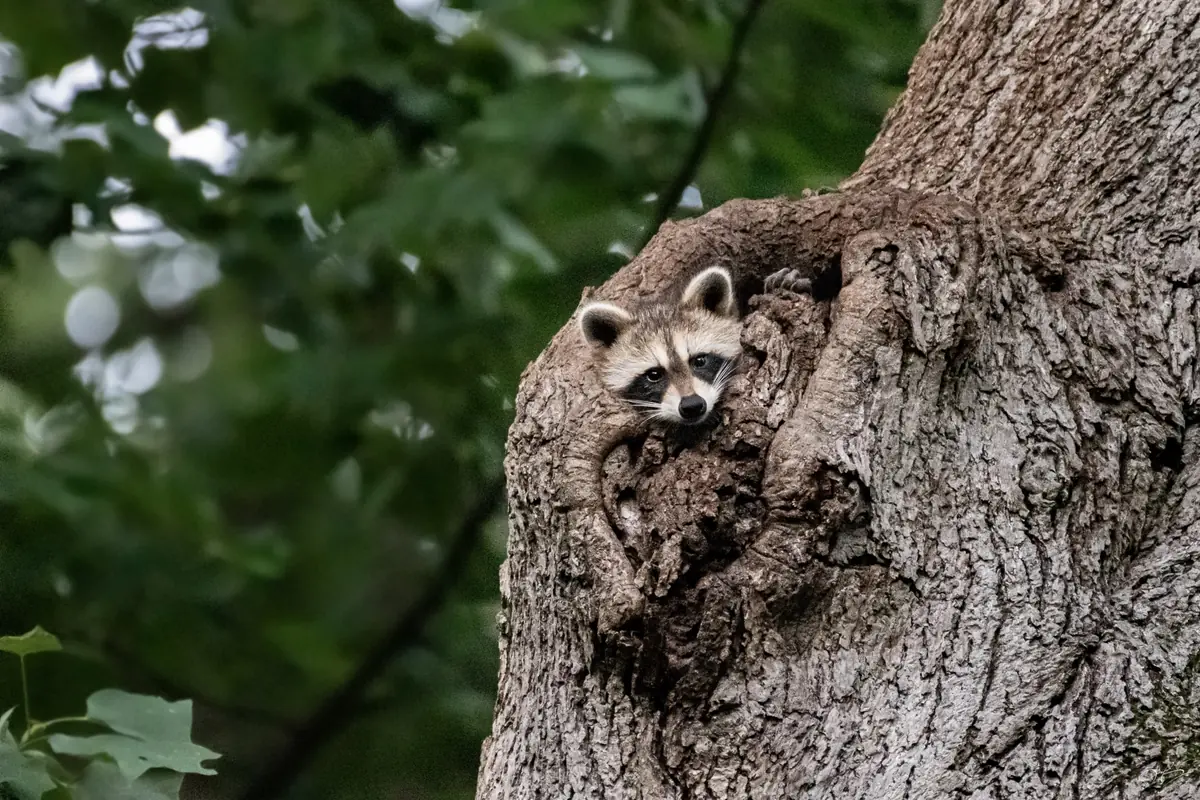
Start with what draws them in
Raccoons are omnivores that eat garbage, pet food, fruit, garden crops, birdseed, fish from ponds and poultry. A yard that feeds them will keep attracting new ones no matter how many you remove. Before anything else:
- Use trash cans with tight lids and strap or weight them down, or store them in a closed garage until pickup.
- Bring pet food and water bowls in at night.
- Remove bird feeders, pick up fallen fruit, and cover fish ponds or remove them.
- Close poultry houses at night and seal openings over 3 inches.
- Cover sandboxes when not in use. Raccoons will use them as latrines.
- Clear brush piles and stack woodpiles neatly so there are fewer den sites.
Community-wide trash control works better than one house acting alone.
Close off the house
Raccoons den in chimneys, attics, wall spaces and under decks. Signs include torn shingles or fascia, a plugged chimney, tipped trash cans, and growling or whining from a den. A pile of scat on the roof or in the attic is a raccoon latrine.
- Cap the chimney with a heavy metal screen or sheet metal cap made for the purpose.
- Trim tree limbs that overhang the roof.
- Screen roof vents and repair damaged soffits and fascia with sturdy metal, not plastic.
- Skirt decks and porches with heavy wire mesh, buried and bent outward at the base so raccoons cannot dig under.
Do this work only after you are sure no raccoon is inside, or you will trap an animal in your attic.
Evict a raccoon that is already inside
Raccoons breed January to March, and kits are born in April or May. If a female is denning in your chimney or attic in spring or early summer, assume there are young.
- Find every opening. Watch at dusk, or loosely plug holes with newspaper and see which ones get pushed out.
- If kits are present, wait. Young are weaned at 2–4 months; sealing or evicting before they can follow the mother leaves them to starve inside.
- Once the young can travel, a one-way door over the main entry lets raccoons leave but not return.
- Confirm the den is empty before sealing. Sprinkle flour at the opening and check for tracks, and listen for several nights.
- Seal the opening permanently with sturdy metal.
A cornered mother with young may attack. Do not reach into a den, and keep pets away.
Why trapping and relocating is not the first answer
Many states ban or restrict live-trapping and relocating raccoons because they are a rabies vector species. In the eastern US, raccoons are the main wild reservoir of rabies, and about 10% of raccoons that expose people or pets have the disease. Moving a raccoon can spread rabies, and relocated raccoons often cause new problems or die. Before you set any trap, check your state wildlife agency for the rules on trapping, permits, release and euthanasia. In many places a licensed wildlife control operator is the legal route.
What does not work
No chemical repellents are registered for raccoons, and lights, noise makers and scarecrows are generally ineffective. Do not use poisons or mothballs as a fix. Poison bait kills pets and other wildlife, and a raccoon that dies in a wall leaves a worse problem.
Health precautions
- Never handle a raccoon, even one that seems tame or sick. Report raccoons acting strangely, or out in daylight and unafraid, to animal control.
- If you or a pet is bitten or scratched, wash the wound with soap and water and get medical care right away.
- Keep dogs and cats current on rabies vaccines.
- Treat raccoon scat as hazardous. Follow the CDC latrine cleanup steps on the raccoon droppings page.
Choose a treatment
The more a raccoon has settled in, from raiding trash to denning with kits in your attic, the more the answer shifts from cleanup to professional removal under your state's rules.
Remove the food, then watch
Do it yourself
- Use trash cans with tight lids, and strap or weight them down or keep them in a closed garage until pickup.
- Bring pet food and water in at night, take down bird feeders, and pick up fallen fruit.
- Cover sandboxes and fish ponds.
- Clear brush piles and stack woodpiles neatly.
- No repellents are registered for raccoons, and lights and noise makers are generally ineffective, so put your effort into food and access.
Professional
Usually not needed. If raccoons keep coming back after food is secured, a wildlife control operator can look for a nearby den under a deck or shed.
Clean the latrine safely
Do it yourself
- Follow the CDC latrine steps: disposable gloves, scrubbable boots, an N95 respirator in confined spaces.
- Mist the droppings, lift them with a shovel or inverted bag, and burn, bury or bag them for the landfill.
- Most chemicals do not kill roundworm eggs. Treat outdoor concrete, decks and tools with boiling water, or a propane torch on surfaces that cannot burn, after checking with your fire department.
- Then remove whatever draws the raccoon to that spot, and block access to roofs by trimming overhanging limbs.
Professional
A wildlife control operator or cleanup service can remove large or indoor latrines and find the den the raccoon is using.
Evict, then seal it out
Do it yourself
- From April through July, assume there are kits. Do not seal the opening until the young can follow the mother out.
- Once they can travel, a one-way door over the entry lets raccoons leave but not return. Confirm the den is empty with flour tracks before sealing.
- Cap the chimney with a heavy metal cap and repair vents, soffits and fascia with sturdy metal.
- Do not trap and relocate without checking your state wildlife agency: many states ban or restrict moving raccoons because they carry rabies.
Professional
A licensed wildlife control operator finds every entry, uses one-way doors or removes kits by hand, seals the house with metal, and cleans any attic latrine. They know your state's trapping, release and euthanasia rules.
Call animal control and a doctor
Do it yourself
- Keep people and pets away. Do not try to catch or corner the animal.
- Wash any bite or scratch with soap and water right away and get medical care.
- Call your veterinarian if a pet had contact, and keep pet rabies vaccines current.
Professional
Animal control or the health department will capture the animal and decide on rabies testing. Your doctor will decide whether rabies treatment is needed.
Tell your landlord in writing. Chimney caps, attic repairs and wildlife removal are usually the owner's responsibility.
Keep children away from raccoon latrines and the soil around them; young children are at highest risk from roundworm eggs. Keep dogs and cats current on rabies vaccines.
When to call a professional
Call a licensed wildlife control operator if a raccoon is in your chimney, attic or walls, especially from April through July when kits may be present. A pro can find every entry, use one-way doors or hand-remove young, and do the repairs, and they know your state's trapping and release rules. Call animal control right away for any raccoon that is acting sick, aggressive or unafraid.
Questions
What smell will keep raccoons away?
No repellent is registered for raccoons, and scent tricks rarely last. Removing food and sealing den sites works far better.
Can I trap a raccoon and release it somewhere else?
Often not legally. Many states ban or restrict relocating raccoons because they carry rabies. Check your state wildlife agency before trapping.
How do I get a raccoon out of my chimney?
Keep the damper closed and wait for the raccoon, or a mother and kits, to leave, then install a chimney cap. A wildlife control operator can remove them if you cannot wait.
Is a raccoon out during the day rabid?
Not necessarily; mothers sometimes forage by day. A raccoon that staggers, circles, seems unafraid or acts aggressive should be reported to animal control.