Bugs that look like ticks
The bugs that most often look like ticks are bed bugs, spider beetles, bat and swallow bugs, carpet beetles and clover mites. Count the legs first: ticks have eight, insects have six.
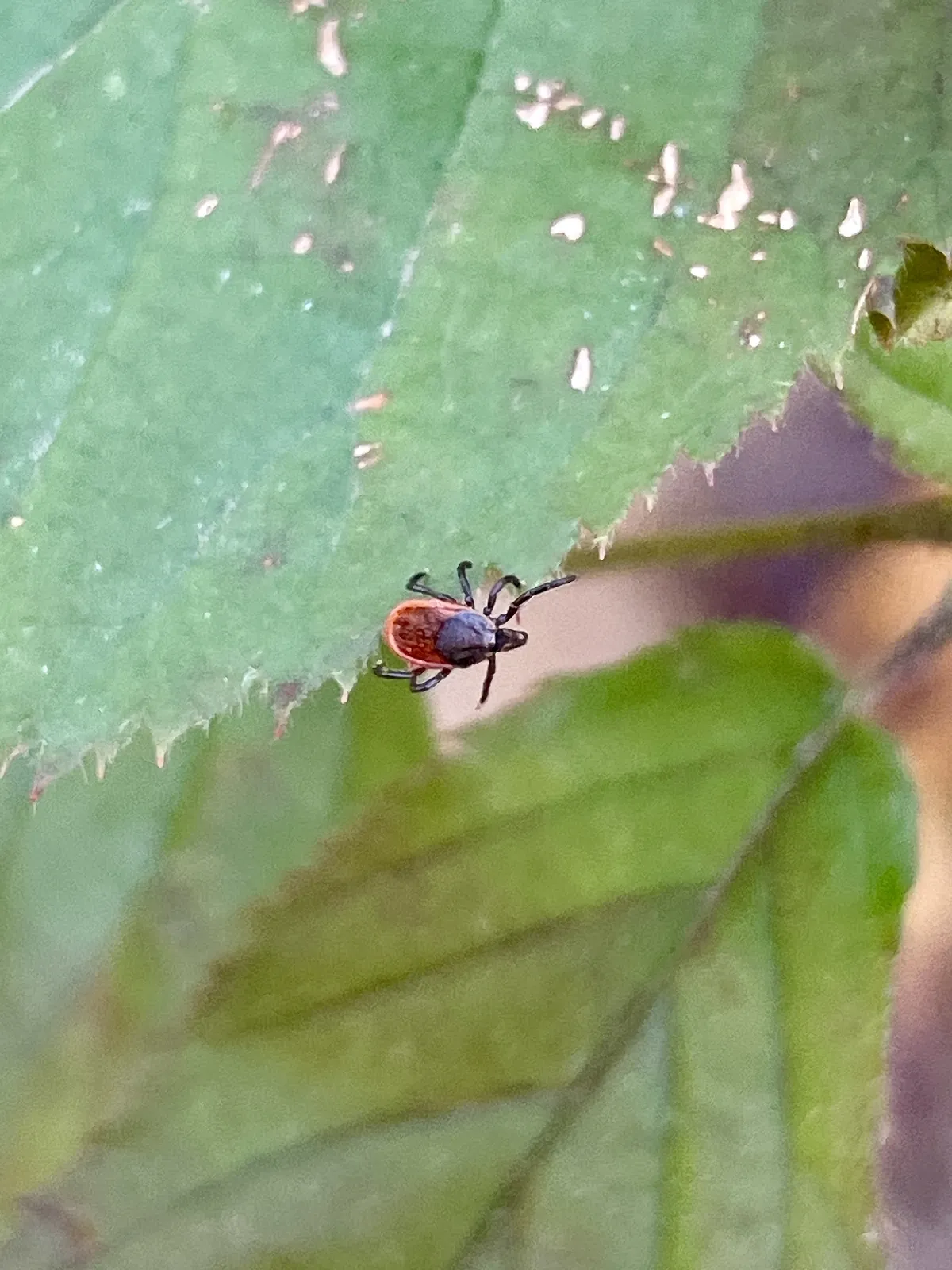
Count the legs
The fastest check is the leg count. Ticks are arachnids, related to spiders and mites, and nymphs and adults have eight legs. Bed bugs, bat bugs, beetles and every other insect have six. Use a hand lens or a phone camera zoomed in. One exception: newly hatched tick larvae, called seed ticks, have only six legs. They gain the fourth pair after their first blood meal.
The second check is behavior. A tick that has bitten stays attached to the skin while it feeds, and the bite may not be felt. Bed bugs and their relatives feed and leave.
| Bug | Size | Color and shape | Where found | Page |
|---|---|---|---|---|
| Tick | 1/16–1/4 in unfed | Flat, teardrop, 8 legs; gray and swollen when fed | On skin, pets, grass and brush | Ticks |
| Seed tick (larva) | Poppy-seed size | Tiny, 6 legs | On skin after time outdoors | Ticks |
| Bed bug | About 3/16 in | Flat, oval, reddish brown, 6 legs | Mattress seams, beds | Bed bugs |
| Bat bug or swallow bug | About bed bug size | Same as a bed bug | Near bat roosts or swallow nests | Bugs like bed bugs |
| Spider beetle | 2–5 mm | Brown, round, long legs | Pantry and stored food | none |
| Carpet beetle | 2–4 mm | Round, domed, mottled or black | Windowsills, closets | Carpet beetles |
| Clover mite | Smaller than a pinhead | Red to red-brown, 8 legs | Sunny windowsills and walls | Tiny bugs |
Bed bugs
Bed bugs are often mistaken for ticks. Both are flat, wingless, brownish blood feeders that swell after a meal. Adult bed bugs are about 3/16 inch long, the size of a lentil, and reddish brown, with six legs and a visible head. Newly hatched nymphs are straw-colored and pinhead-sized. They hide in mattress seams and bed frames and leave dark spots of droppings. A bug crawling on the sheets at night is far more likely a bed bug than a tick. See what a bed bug looks like.
Bat bugs and swallow bugs
These close relatives of bed bugs look almost identical to them, and so to ticks. Bat bugs feed on roosting bats and show up in attics, wall voids, chimneys and upper floors, usually one at a time. Swallow bugs live around cliff swallow mud nests and may bite people in spring or fall when the birds are gone. Control means dealing with the roost or nest; check your state wildlife agency before removing bats or nests.
Spider beetles
Spider beetles are 2 to 5 mm, brown, oval or cylindrical, with long legs, and some look like tiny spiders or ticks. They are six-legged beetles that live in pantries and feed on grain products, seeds, dried fruit, pet food and similar stored items. They don't bite. Find and throw out the infested food and vacuum the shelves.
Carpet beetles
Carpet beetles are round and domed with a hard shell, black or mottled white, brown and yellow. They collect on windowsills and in closets. Unlike ticks, they never attach to skin.
Clover mites
Clover mites are true mites, so they also have eight legs, but they are much smaller than a tick, red to reddish-brown, and swarm on sunny windowsills in fall and spring. They feed on plants and don't bite people or pets. Crushed, they leave a red smear.
Seed ticks
A cluster of tiny specks on your legs after walking through brush may be seed ticks, each about the size of a poppy seed. Remove them like any tick. Tiny insects in the hair rather than on the skin call for a different check; ask a doctor or school nurse.
If it is a tick
Remove it promptly and see what a tick bite looks like for when to call a doctor. Compare it with the photos on what a tick looks like to name the species.
Photos
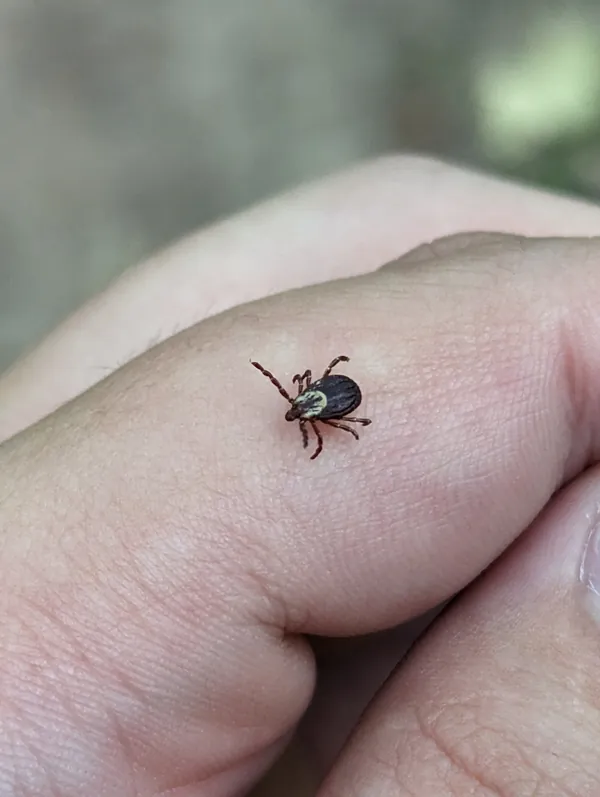
Side by side
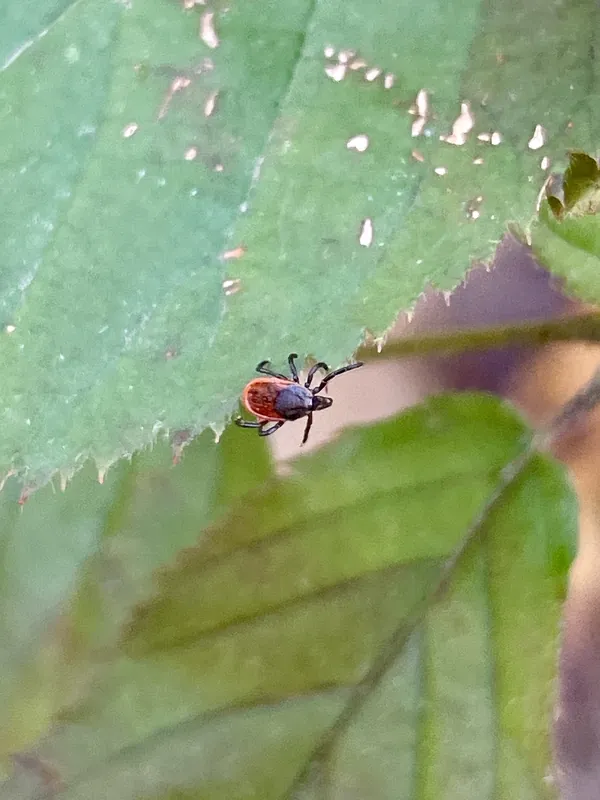 Tick | 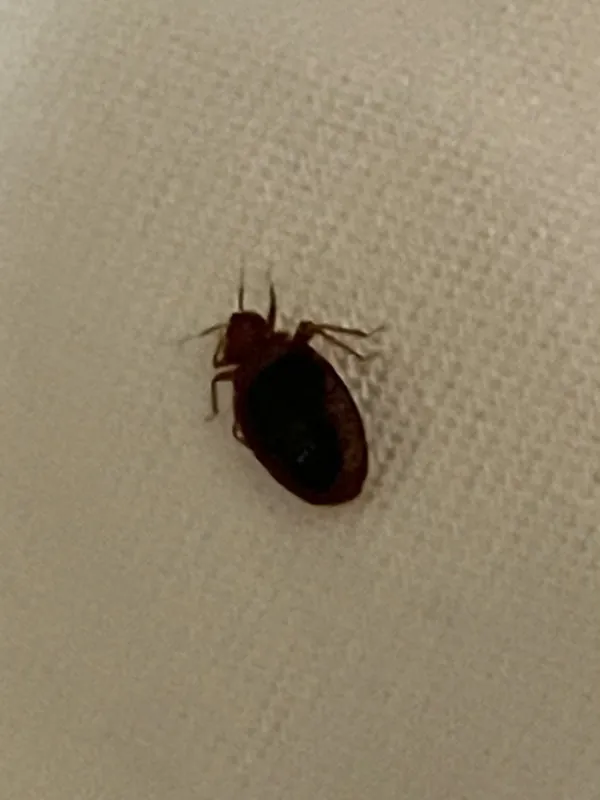 Bed bug | 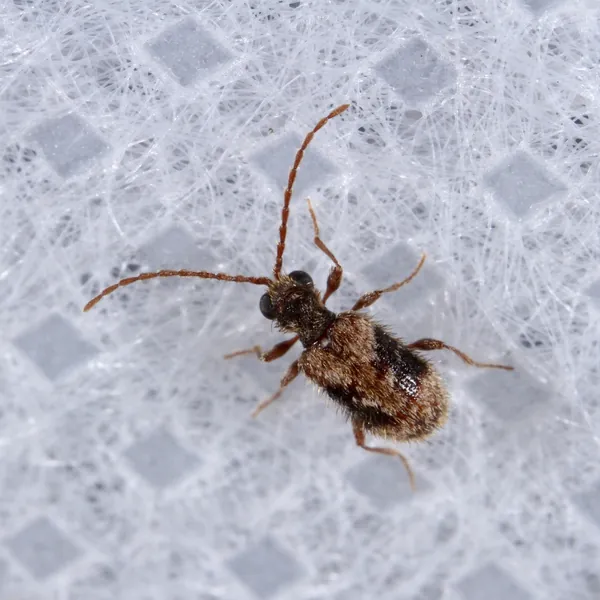 Spider beetle | 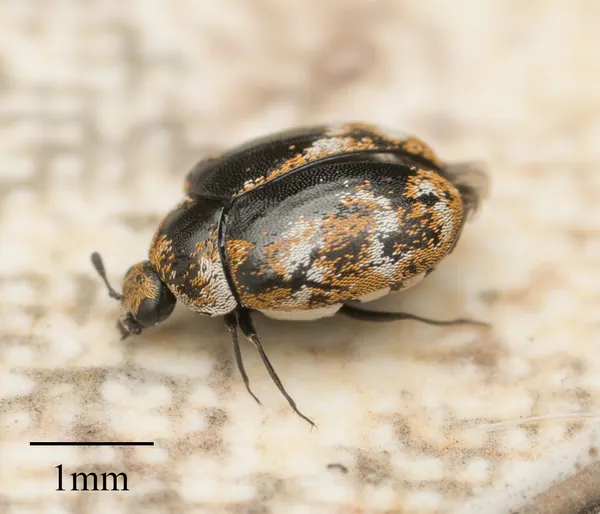 Carpet beetle | |
|---|---|---|---|---|
| Legs | 8 (larvae 6) | 6 | 6 | 6 |
| Size | 1/16–1/4 in; 3/8 in engorged | About 3/16 in | 2–5 mm | 2–4 mm |
| Shape | Flat teardrop; swells when fed | Flat, oval | Round or cylindrical, long legs | Round, domed |
| Body | No separate head; plate on back | Head, thorax, abdomen visible | Hard shell, small head | Hard shell, patterned scales |
| Where found | Attached to skin, pets, outdoors | Mattress seams, beds, sofas | Pantry and stored food | Windowsills, closets, rugs |
| Feeds on | Blood; stays attached while feeding | Blood, then leaves | Stored food, debris | Pollen (adults); wool, lint (larvae) |
Photo credits: Tick: Photo: infiniteuniverse via iNaturalist, CC0 1.0 (public domain dedication); Bed bug: Photo: Evelyn Lazzaretti 🏳️⚧️ via iNaturalist, CC0 1.0 (public domain dedication); Spider beetle: Photo: Joshua Ebright via iNaturalist, CC BY 4.0; Carpet beetle: Photo: Jesse Rorabaugh via iNaturalist, CC0 1.0 (public domain dedication).
When to call a professional
Ticks found on people rarely need a pest professional; check with a doctor about any bite you are worried about. Call a professional if you confirm bed bugs, or if bat bugs or swallow bugs point to a roost or nest that needs legal exclusion. Ticks that keep turning up indoors on pets call for a talk with your veterinarian about tick control.
Questions
What bug looks like a tick but isn't?
Most often a bed bug, which is flat, brown and about 3/16 inch but has six legs. Spider beetles, bat bugs, carpet beetles and clover mites are also mistaken for ticks.
How many legs does a tick have?
Eight as a nymph or adult. Newly hatched larvae, called seed ticks, have six and gain the fourth pair after their first blood meal.
Is it a tick or a bed bug?
Count the legs: eight for a tick, six for a bed bug. A tick also stays attached to the skin; a bed bug feeds and hides in mattress seams.
What tiny red bug looks like a tick?
Probably a clover mite. It has eight legs like a tick but is smaller than a pinhead, gathers on sunny windowsills and doesn't bite.