Bugs that look like bed bugs
The bugs most often mistaken for bed bugs are bat bugs, which are nearly identical, carpet beetles, booklice, spider beetles, fleas and young ticks. Shape, legs, hairiness and where you found the bug usually settle it.
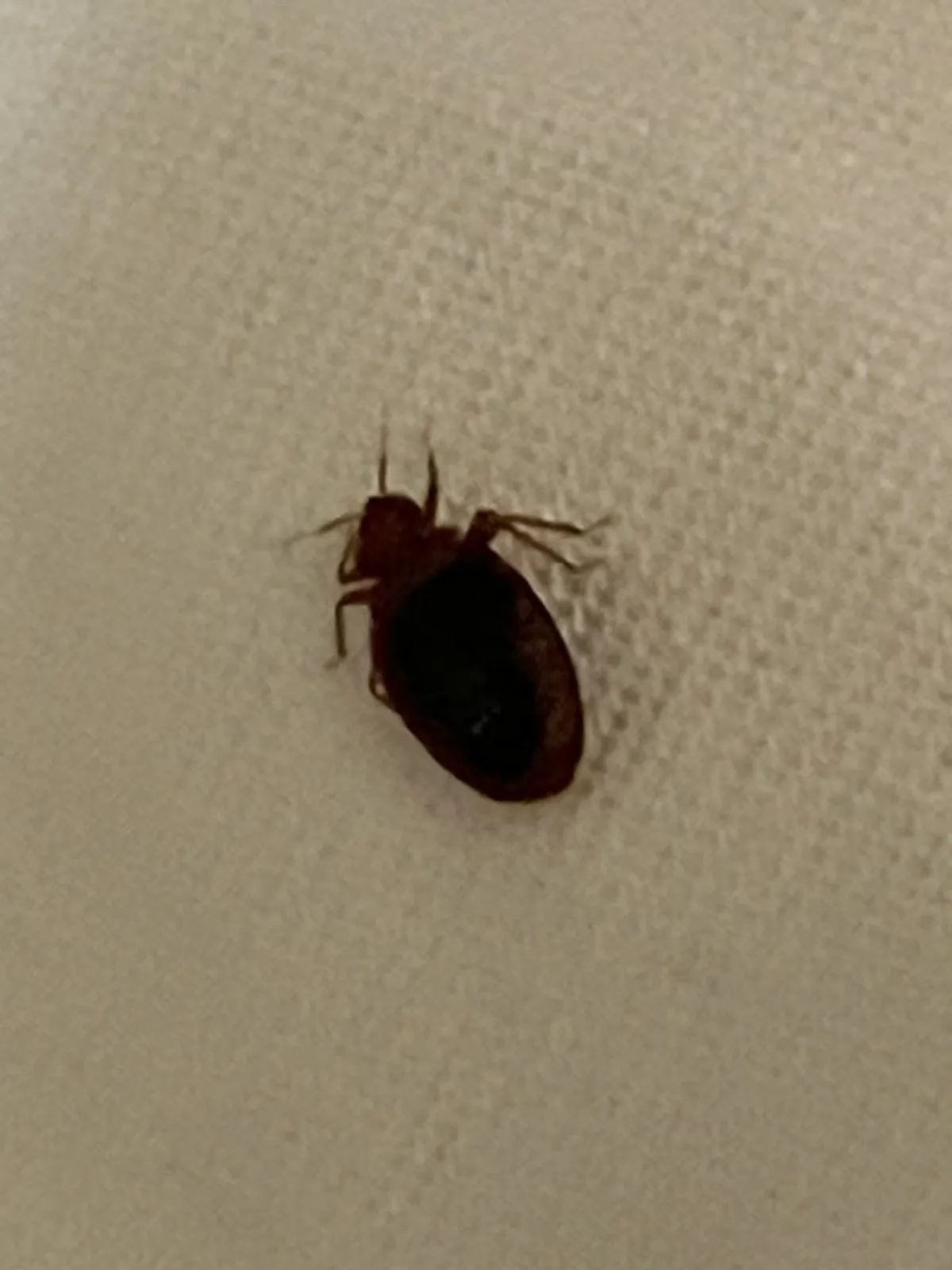
Bat bugs: the near-twin
Bat bugs are close relatives of bed bugs and look the same to the naked eye: flat, oval, wingless and rusty brown. The difference is the fringe of hairs on the plate just behind the head. On a bat bug those hairs are longer than the width of its eye; on a bed bug they are shorter. You need a hand lens or microscope.
The location is the real clue. Bat bugs live in bat roosts in attics, wall voids and chimneys, and they show up in homes on upper floors, often singly, and especially after bats leave or are excluded. The fix is different, too: the bats have to be excluded, and the bugs die out once their hosts stop returning, though they can survive 7 to 8 months without a meal. Bats are protected in many places, so read how to get rid of bats and check your state wildlife agency before you act.
Carpet beetles
Adult carpet beetles are round and domed like a tiny ladybug, 2 to 5 mm long, and mottled with white, brown and yellow scales or plain black. Their larvae are hairy, banded and shaped like a small carrot or wedge. Neither looks flat. The EPA notes that early bed bug infestations are often confused with carpet beetles, partly because both leave shed skins, and the larvae's hairs can cause a rash that feels like bites. See bed bugs vs carpet beetles.
Booklice
Booklice are about 1 to 2 mm long, soft, pale and wingless, with a broad head. Penn State Extension notes they are often mistaken for bed bugs, but bed bugs are larger and rounder with a narrower head. Booklice feed on mold in damp paper, books, wallpaper and stored food. They don't bite. Lowering indoor humidity below 50% is usually enough to clear them.
Spider beetles
Spider beetles are 2 to 5 mm, brown, rounded or cylindrical, with long legs that make them look a bit like tiny spiders. They have six legs, not eight. They live in pantries and stored food, dried fruit, seeds, pet food and even rodent droppings, not in beds. Finding and throwing out the infested food is the fix.
Fleas
Adult fleas are reddish-brown, wingless and no more than 1/8 inch long. Seen from the side they are thin, as if squeezed flat from left to right, while a bed bug is flattened top to bottom. Fleas jump and gather where pets sleep. Their bites cluster around the ankles and lower legs, while bed bug bites tend to be on skin uncovered in bed. See what a flea looks like.
Tick nymphs
Small ticks are among the insects the University of Kentucky lists as commonly confused with bed bugs. Count the legs: ticks have four pairs, bed bugs three. A tick also stays attached to the skin for hours or days with its mouthparts buried, while a bed bug feeds for about 10 minutes and leaves. See what a tick looks like.
Cockroach nymphs
Small cockroaches are also regularly confused with bed bugs. If yours came from the kitchen rather than the bed, compare it on cockroaches.
How to get a firm ID
Catch the bug on clear tape or in a sealed bag, note where you found it, and have your county extension office identify it, or try the identify tool. Bed bugs confirmed? Start with how to get rid of bed bugs.
Photos
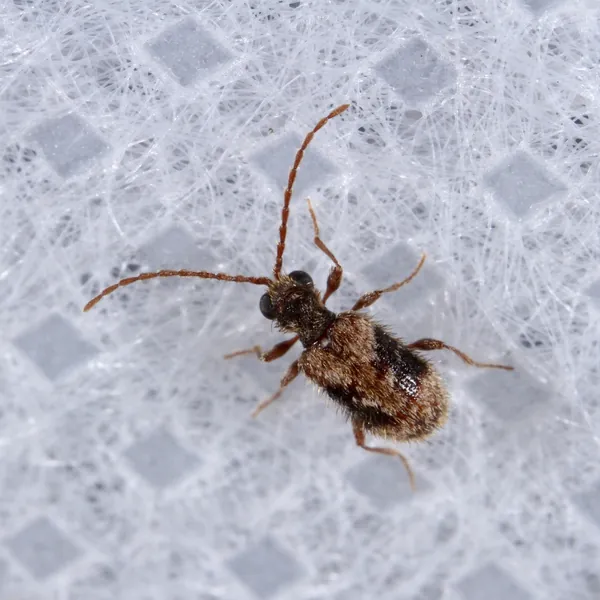
Side by side
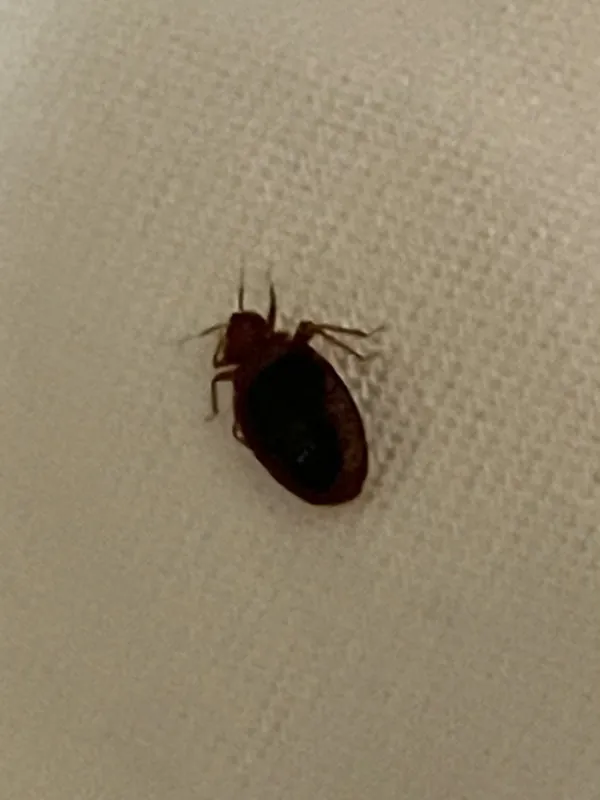 Bed bug | 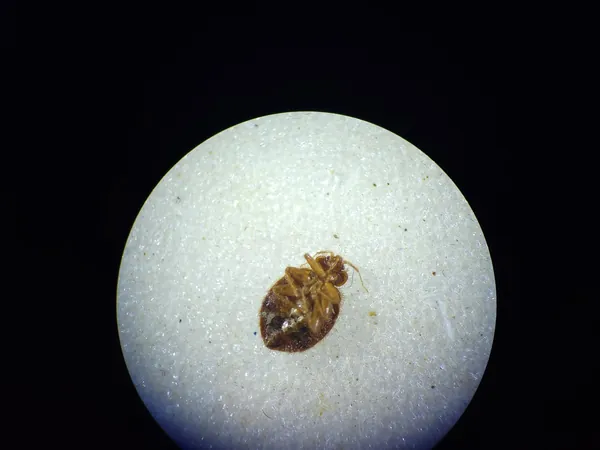 Bat bug | 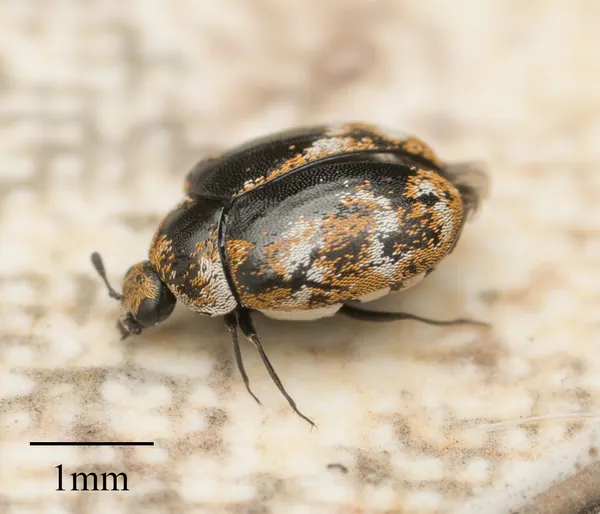 Carpet beetle | 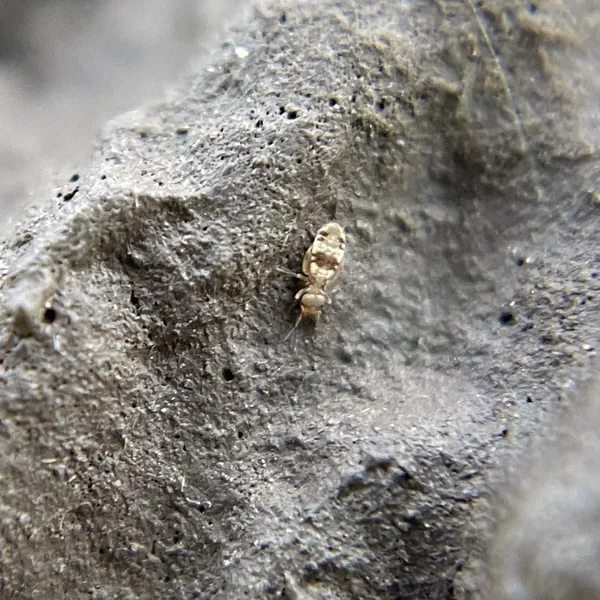 Booklouse | |
|---|---|---|---|---|
| Size | 5–7 mm, an apple seed | Same as a bed bug | 2–5 mm by species | 1–2 mm, a pinhead |
| Shape | Flat, oval, wingless | Flat, oval, wingless | Round, domed, hard wing covers | Soft, flattened, wide head |
| Colour | Brown to rusty red | Brown to rusty red | Mottled white, brown, yellow; or black | Pale tan, grey or almost clear |
| Key tell | Short hairs behind the head (lens needed) | Hairs behind the head longer than the eye is wide | Larvae hairy and banded | Tiny, quick, fragile; often in damp paper |
| Feeds on | Human blood | Bat blood; will bite people | Wool, fur, lint (larvae); pollen (adults) | Mold on paper, wallpaper, stored food |
| Where found | Beds, sofas, near sleepers | Near bat roosts: upper floors, attics, walls | Closets, rugs, window sills | Books, boxes, pantry, damp rooms |
Photo credits: Bed bug: Photo: Evelyn Lazzaretti 🏳️⚧️ via iNaturalist, CC0 1.0 (public domain dedication); Bat bug: Photo: Matt Pelikan via iNaturalist, CC BY 4.0; Carpet beetle: Photo: Jesse Rorabaugh via iNaturalist, CC0 1.0 (public domain dedication); Booklouse: Photo: northerly via iNaturalist, CC BY 4.0.
When to call a professional
Get a professional or extension identification before any bed bug treatment. Treating for bed bugs when the real problem is bat bugs, booklice or carpet beetles fails and wastes money. If bat bugs are confirmed, hire a wildlife or pest professional who handles bat exclusion legally in your state.
Questions
What bug looks exactly like a bed bug?
The bat bug. It looks identical to the naked eye; only the longer hairs behind its head, seen under magnification, tell it apart. It points to bats in the attic or walls.
Is it a flea or a bed bug?
Fleas are thin from side to side and jump; bed bugs are flat from top to bottom and crawl. Fleas are found where pets rest, bed bugs in mattress seams.
What are the tiny pale bugs that look like baby bed bugs?
Often booklice, which are about 1 to 2 mm, soft and pale and live on mold in damp paper and stored food. Bed bugs are larger and rounder, with a narrower head.
Can a tick be mistaken for a bed bug?
Yes, especially a small one. Count the legs: ticks have eight, bed bugs six.