Venomous: medically significant bite
Black widow spider: identification and bites
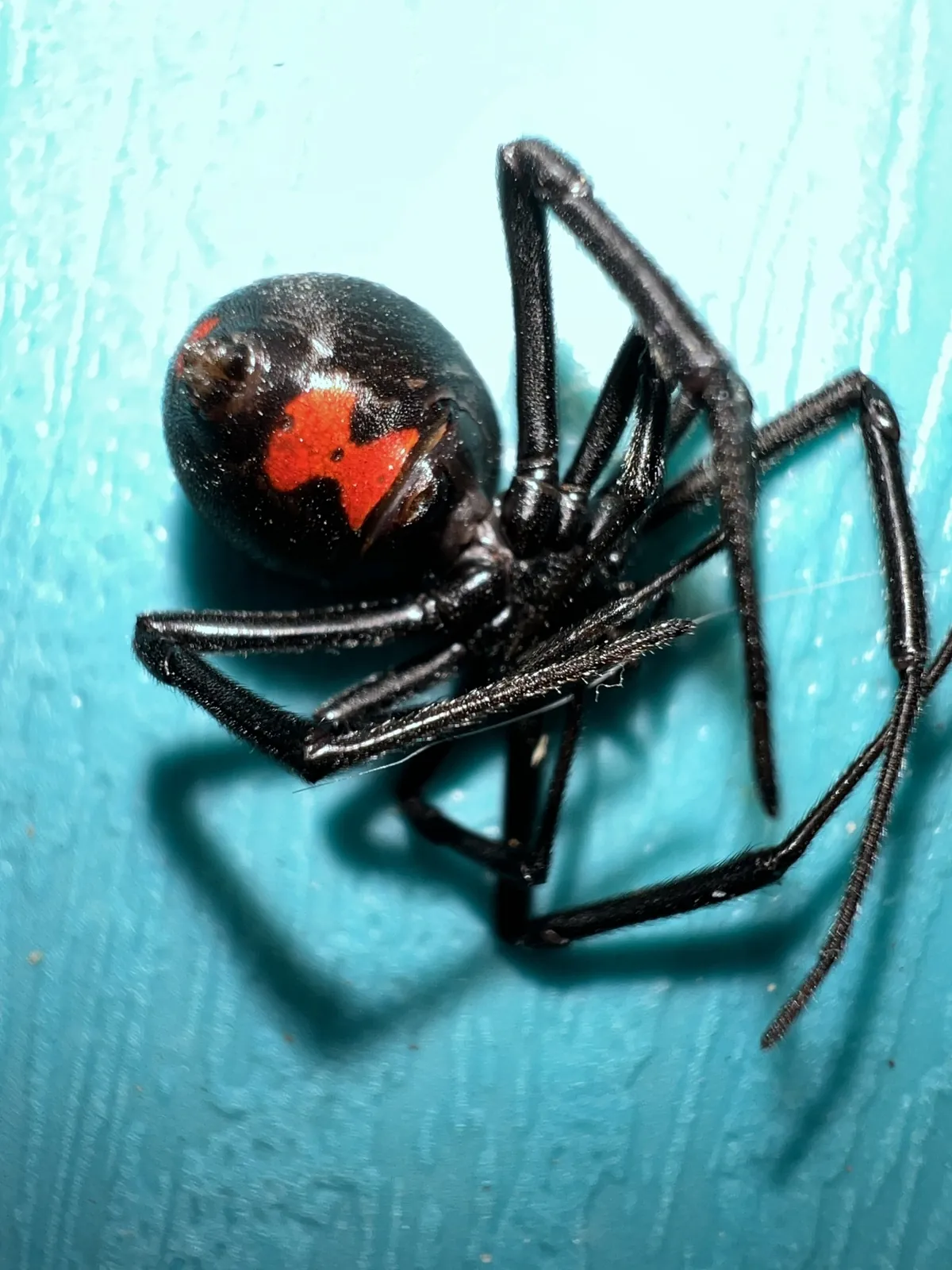
A female black widow is a shiny black spider with a round, bulbous abdomen and a red or red-orange hourglass on the underside. She lives in a messy, sticky web in dark spots low to the ground.
Females
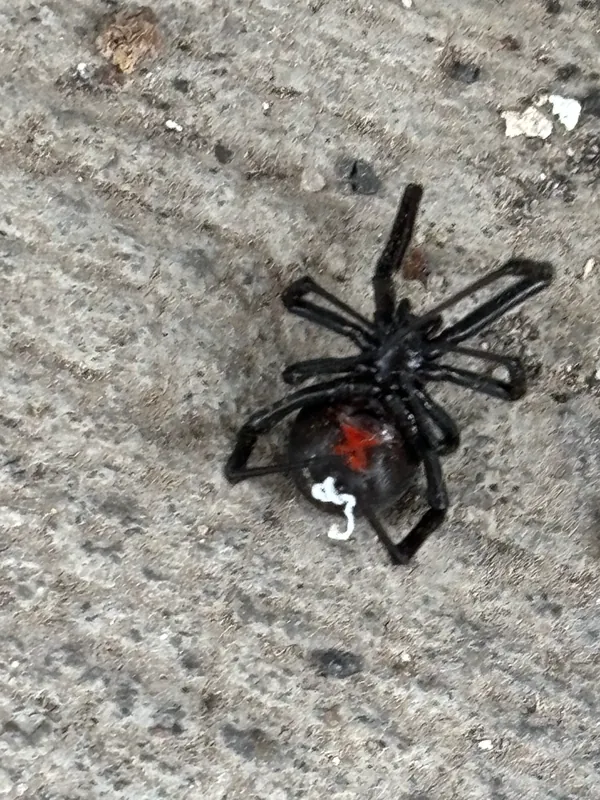
The spider most people picture is the adult female. She is glossy black, occasionally dark brown, with a round, bulbous abdomen and thin legs. Under the abdomen is a red or red-orange hourglass. In some widows the hourglass is split into two separate spots, shaped like a rough rectangle, or so faint it is barely visible, and it can fade or brighten over the spider's life. Western widow females are about 1/4 to 1/3 inch long in the body.
Males and young
Males are one-half to one-third the size of females, longer and slimmer, and light brown or gray with bands rather than black. Their hourglass is often orange or yellow. Young widows of both sexes are gray or pale brown with white, orange or red stripes and spots on top, and they darken as they molt. The underside hourglass is there through every stage. Nearly all bites come from adult females; males are unlikely to break human skin.
Webs, egg sacs and where they live
Widows build tangled, sticky, irregular webs, not neat wheel-shaped orb webs or funnel webs. They choose dark, undisturbed spots close to the ground. Outdoors, look in woodpiles, rock piles, rodent burrows, low shrubs, water meter and irrigation boxes, fences, eaves and around exterior lights. Indoors and in outbuildings, they settle in garages, sheds, basements, crawl spaces, room corners and behind furniture. Many move indoors in autumn.
Egg sacs are pear-shaped and whitish yellow to tan. Each holds about 200 eggs that hatch in about 2 weeks, and a female makes several sacs. She guards them, which is one reason bites happen near egg sacs.
Widows are found throughout North America and are most common in the southern and western US. Several species live in the country, including the southern black widow (Latrodectus mactans) and the western black widow (Latrodectus hesperus). All widows are potentially harmful to people.
Bites and symptoms
Widows are not aggressive and rarely bite away from the web. Most bites happen when someone presses on a spider hidden under a rock, a board or a seat. The bite feels like a sharp pinprick and may leave one or two tiny puncture marks, with slight swelling and redness.
The venom is a neurotoxin. Pain can spread from the bite to the chest, abdomen or the whole body, with muscle cramps, tightness, nausea, sweating, restlessness and sometimes trouble breathing. Symptoms usually worsen over the first day and ease after 2 to 3 days, though some last for weeks. Children and older adults are at greater risk. Deaths are rare.
If you are bitten
Stay calm. Wash the bite with soap and water, apply a cold, damp cloth or ice, and elevate the area if possible. Do not try to remove the venom. If you can do it safely, catch or photograph the spider for identification. Seek medical care promptly, and get emergency help right away for trouble breathing, severe pain or spreading cramps.
Lookalikes
False widows (Steatoda) are the most common mix-up. They are dark with a round abdomen but have no red hourglass underneath, and they often have white or pale markings on top. Other comb-footed cobweb spiders are smaller and mottled brown. Spider beetles in pantries are round and shiny but have six legs.
Keeping widows away
Wear heavy gloves and long sleeves when moving firewood, stones or stored items. Remove clutter and debris piles, seal cracks and gaps, and fit doors with sweeps and windows with tight screens. Vacuum or crush spiders, webs and egg sacs while wearing gloves; freezing egg sacs for several weeks also kills them. Insecticides can kill adults but do little to egg sacs. Repellent plants and ultrasonic devices have not been shown to work.
Where in the US
Widow spiders live throughout North America and are most common in the southern and western US. Widows prefer dark, dry, undisturbed places near the ground, and many move into garages, sheds and basements as fall turns cold.
Photos
Often mistaken for
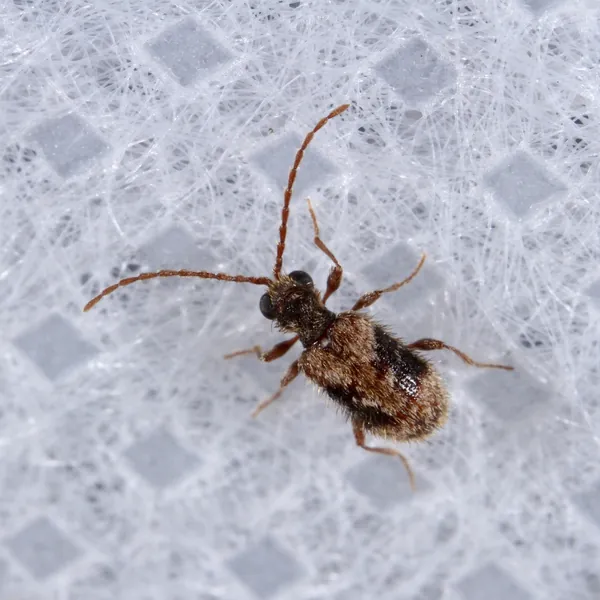
Photo: Joshua Ebright via iNaturalist, CC BY 4.0
Spider beetle
1–5 mm, round with long legs
Round, shiny and dark, but has six legs and lives in stored food.
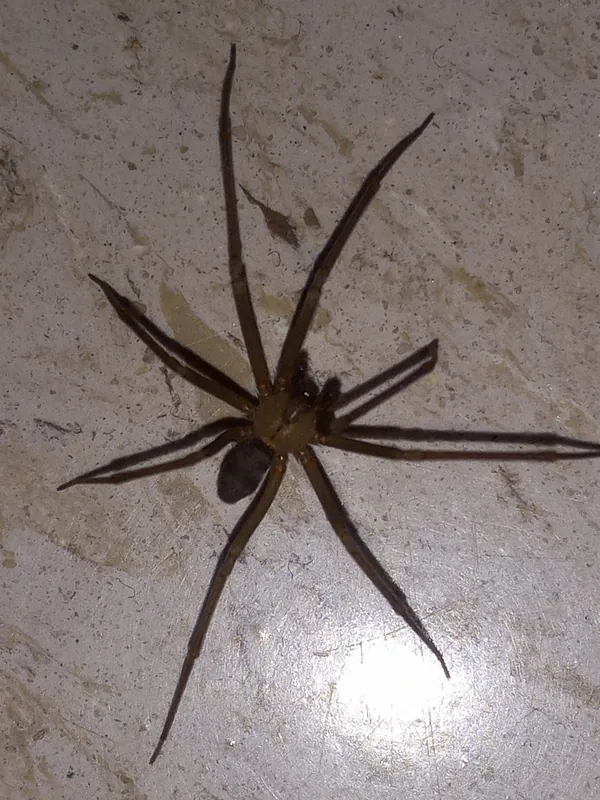
Photo: SnakeyAtWork via iNaturalist, CC BY 4.0
Brown recluse
Body about 10 mm (3/8 inch); with legs about the size of a quarter
Tan, long-legged and flat, with a violin mark on top; no hourglass, no tangled web.
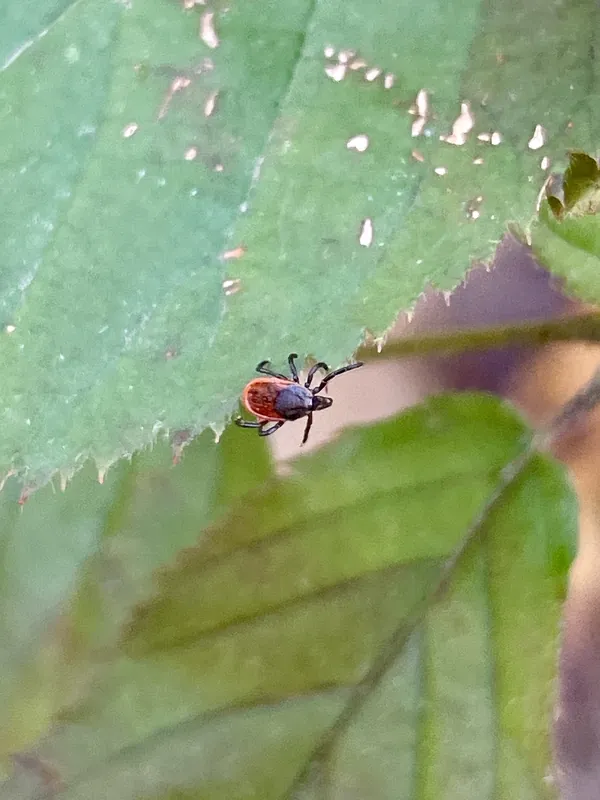
Photo: infiniteuniverse via iNaturalist, CC0 1.0 (public domain dedication)
Tick
1–5 mm unfed (nymphs ~1–2 mm); up to 10 mm engorged
An engorged tick is round and gray, but has no waist or web and clings to skin.
When to call a professional
Call a pest professional if you find widows repeatedly indoors, in a child's play area, or in places you cannot reach safely such as crawl spaces and under decks. A professional removes webs and egg sacs, treats dark harborages with a residual insecticide, and points out the gaps and clutter that let spiders in. One spider in a woodpile or water meter box can be handled with gloves and a vacuum.
Questions
Do all black widows have a red hourglass?
Adult females usually do, but it can be split into two spots, shaped like a rectangle, or barely visible. Males and young widows often have orange or yellow markings and pale stripes.
Are male black widows dangerous?
Rarely. Males are much smaller and are unlikely to penetrate human skin. Nearly all bites come from adult females.
What does a black widow bite feel like?
A sharp pinprick at first. Within hours, pain and muscle cramps may spread toward the chest or abdomen, which is the time to seek medical care.
Where do black widows hide in a house?
In dark, undisturbed spots near the floor: garages, basements, crawl spaces, room corners, under desks and behind furniture.