Ant vs termite: telling the workers apart
A termite worker is milky white, soft and about 1/8 inch (3 mm) long, with no narrow waist and straight beaded antennae; an ant worker is darker and harder, with a pinched waist and elbowed antennae.
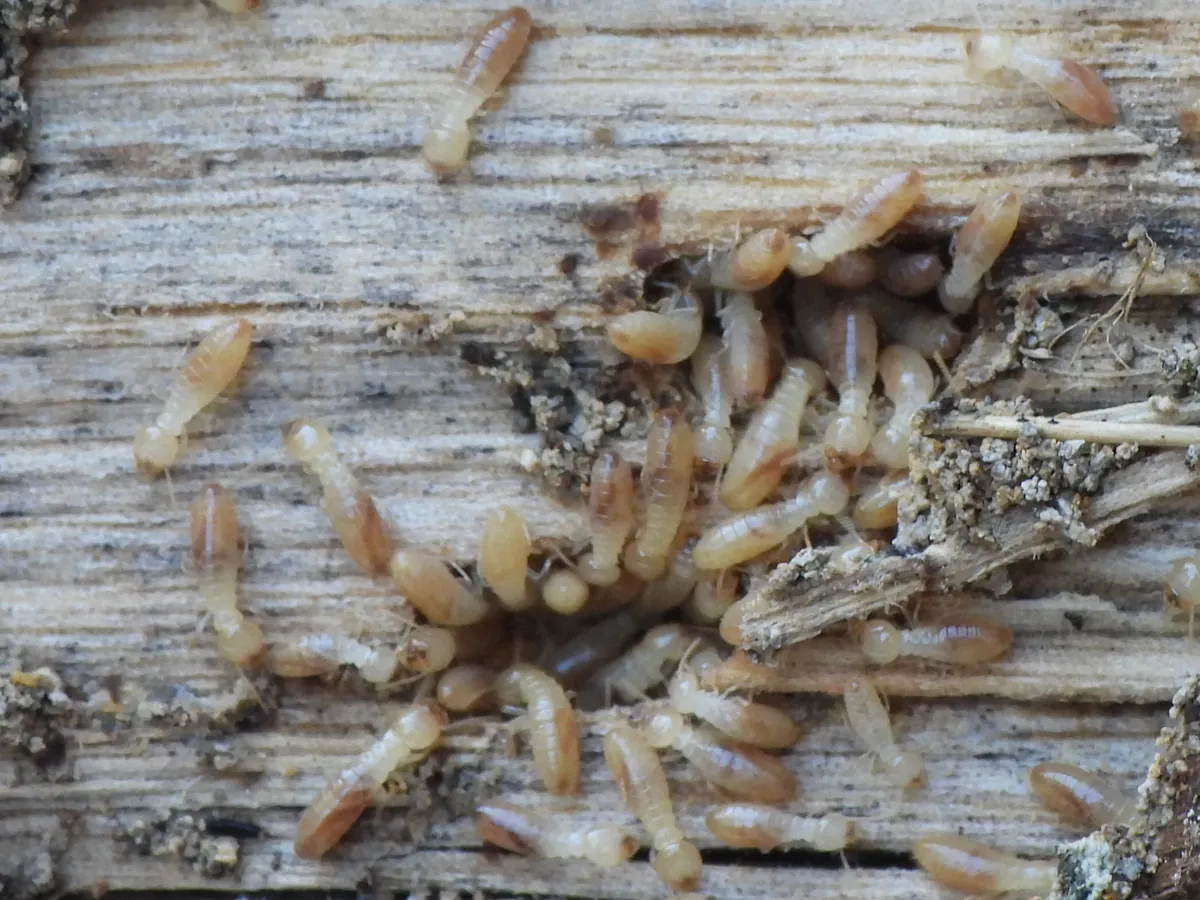
Look at the body first
Most people find termite workers by breaking open a mud tube or a piece of damaged wood. They are small, about 1/8 inch (3 mm), milky white and soft enough to crush with a fingertip. They have no eyes and no wings. The body is the same width from head to tail, with no narrow waist, and the antennae stick straight out like a short string of beads. Soldiers in the same spot look similar but have a large, hard, yellowish-brown head with long jaws.
Ant workers have a hard, shiny body and a pinched waist between the chest and abdomen. Their antennae bend at a sharp elbow. Carpenter ants, the ant most often blamed for wood damage, are large: 1/4 to 1/2 inch (6–13 mm), black or red and black. Smaller household ants are often brown, tan or black, but they still have the pinched waist and bent antennae.
Where you find them
Where you see the insect is almost as useful as its shape. Termite workers avoid open air. They stay inside wood, soil and the pencil-width mud tubes they build over foundations. If you see a pale insect only after you break into a tube or a board, it is almost certainly a termite.
Ants walk in the open. Carpenter ants forage along trails at night, often from about 10 p.m. to 2 a.m., and come in for sweets, grease and other insects.
What the wood looks like
Termites eat wood. Subterranean termite galleries follow the grain and are lined with soil, and damaged wood sounds hollow or punches in easily with a screwdriver. They do not throw out sawdust.
Carpenter ants do not eat wood. They chew out nest galleries that are smooth and clean, and they push the debris outside. Piles of coarse, stringy sawdust mixed with insect parts below a crack or hole point to carpenter ants. Drywood termites are the exception among termites: they push out small, hard, six-sided pellets, not sawdust. See termite droppings.
If you have winged ones
Swarmers are easier to compare than workers because the wings help. See flying ants vs termites.
What to do next
If you think you have found termite workers, save a few in a sealed bag or a small jar of rubbing alcohol and book an inspection. If they are carpenter ants, start with finding the nest.
Photos
Side by side
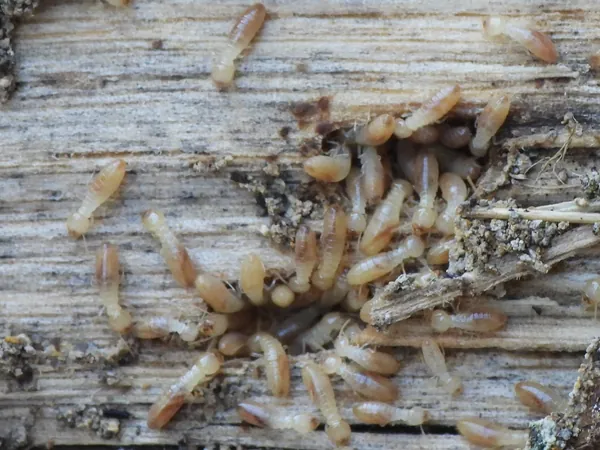 Termite | 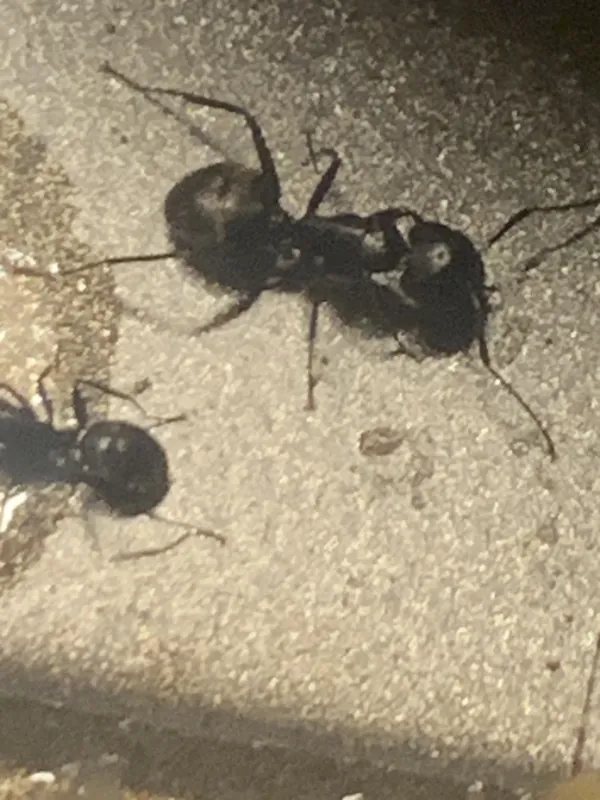 Carpenter ant | |
|---|---|---|
| Size | About 1/8 inch (3 mm) | 1/4 to 1/2 inch (6–13 mm) |
| Color | Milky white to cream | Black, or red and black |
| Body | Soft, pale, same width end to end | Hard, shiny, pinched waist |
| Antennae | Straight, beaded | Elbowed |
| Eyes | None | Present |
| Where seen | Inside wood, soil and mud tubes; avoid open air | Trails on floors and counters, mostly at night |
| Galleries | Follow the grain, lined with soil and mud | Smooth, clean, sanded-looking |
| Debris | No sawdust; mud in tubes and galleries | Coarse sawdust with insect parts |
| Eats wood | Yes, feeds on it | No, only tunnels to nest |
Photo credits: Termite: Photo: Sam Kieschnick via iNaturalist, CC BY 4.0; Carpenter ant: Photo: Chandler Beaty via iNaturalist, CC BY 4.0.
When to call a professional
Call a licensed pest company if you find pale workers in wood or mud tubes; termites need a professional inspection and usually professional treatment. For carpenter ants, call when you see sawdust piles, hear rustling in walls, or the ants keep coming back after baiting.
Questions
Are termites just white ants?
No. White ants is a nickname for termites, which are a different group of insects. They differ from ants in having a thick waist, straight antennae and no eyes in the workers.
Do carpenter ants eat wood like termites?
No. Carpenter ants hollow out wood to nest but do not eat it. Termites feed on the wood itself.
Why do I never see termites walking around?
Termite workers avoid open air and dry conditions. They travel inside soil, wood and mud tubes, so most people see only swarmers or damage.