What squirrel droppings look like
Squirrel droppings are small, brown to reddish pellets about 8–10 mm (3/8 inch) long, rounder and lighter than rat droppings, scattered in the attic along with chewed nut shells and nesting material.
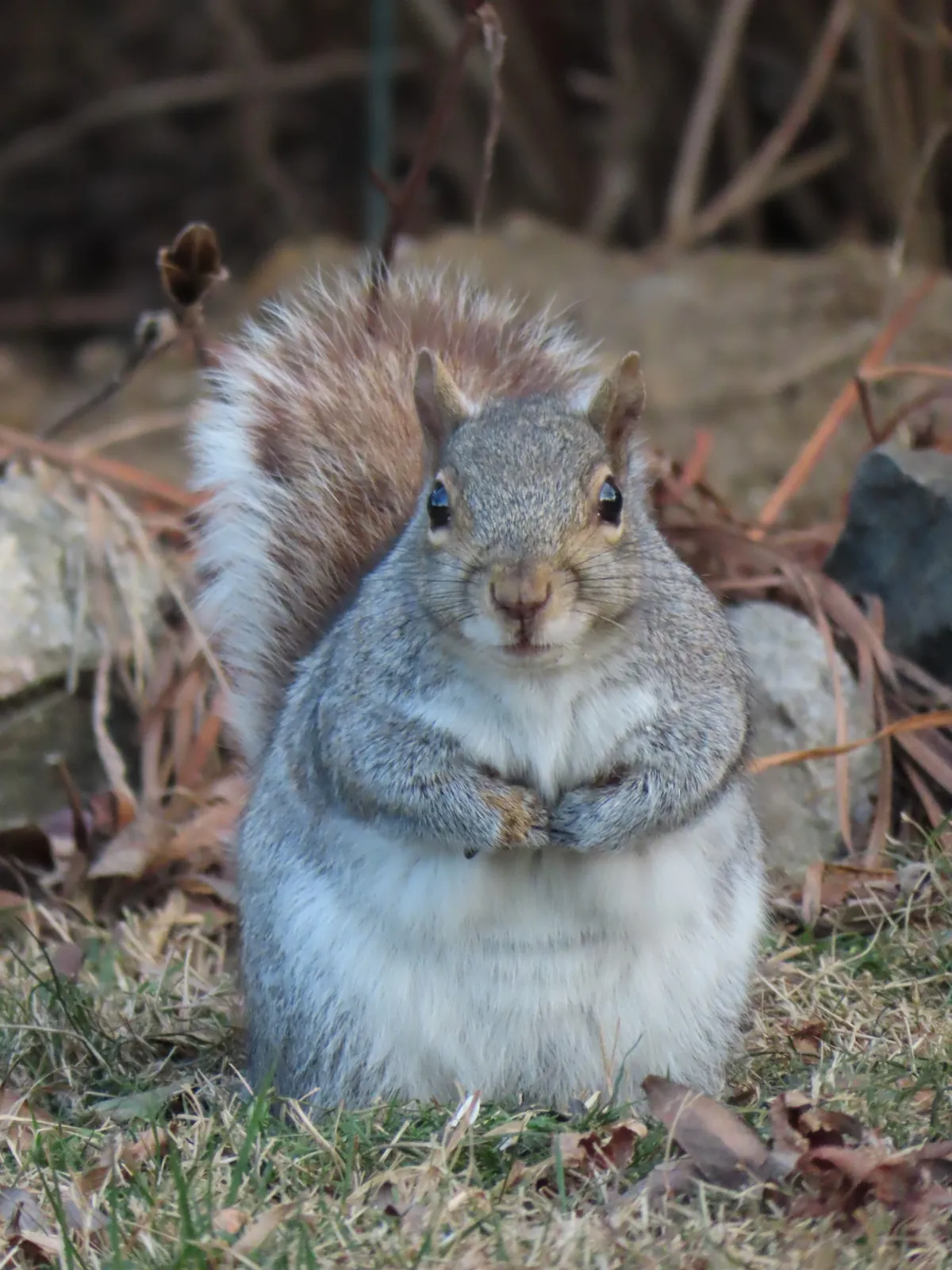
How to recognize squirrel droppings
Gray squirrel droppings are small pellets about 8–10 mm long, a bit over 1/4 inch and close to 3/8 inch. They are brown to reddish brown, with rounded ends and a slightly barrel shape. Fresh ones are darker and moist; older ones fade and dry out. Squirrels eat nuts, seeds, buds and other plant material, and the droppings reflect that.
Squirrels do not use a single toilet spot. Their droppings are scattered across the attic floor, often near the nest, along beams, and around the hole they use to get in. Urine stains on insulation or ceiling drywall are another sign.
Squirrel vs rat droppings
The most common mix-up in attics is squirrel versus rat.
| Sign | Squirrel | Rat |
|---|---|---|
| Size | 8–10 mm | 12–18 mm |
| Shape | Rounded, barrel-like | Capsule, blunt ends |
| Color | Brown to reddish, lighter | Dark brown to black |
| Noise | Daytime, busiest at dawn and dusk | Night, with squealing |
| Food debris | Nut shells, acorn caps, seed husks | Gnawed food packaging, nesting |
Mouse droppings are smaller still, 3–6 mm with pointed ends. See rat droppings, mouse droppings or the rat vs mouse droppings comparison.
Other signs of squirrels in the attic
- Running, rustling and gnawing overhead during the day. Texas A&M notes that daytime noise points to squirrels, while running, squealing and gnawing at night generally means rats.
- Remnants of pecans, acorns and other nuts.
- Nests of leaves, shredded insulation and other soft material.
- Chewed holes in soffits, fascia boards, siding and ridge vents, often near a tree limb or roofline that gives easy access.
- Gnawed electrical wiring, pipes and rafters. Squirrels keep their teeth worn down by gnawing, and chewed wiring is a fire risk.
Squirrels breed in February and March and again in July and August, and the young stay in the nest for 10 to 12 weeks. If you hear squeaking in spring or late summer, there may be babies in the attic.
Cleaning up squirrel droppings
Wear disposable gloves and a dust mask. Mist droppings and soiled insulation lightly with water so you do not raise dust, pick them up with a scoop or paper towels, seal everything in plastic bags and put them in the trash. Wash your hands afterward. Heavily soiled insulation may need to be replaced.
Getting squirrels out
- Find the entry hole. Look for chewed edges, dark rub marks and droppings around it.
- Wait if there are young. Shutting out the mother while babies are in the nest will kill them.
- Install a one-way door or exclusion funnel over the hole so squirrels can leave but not return.
- Once they are out, repair the hole and any other gaps with sheet metal or hardware cloth, not plastic or foam.
- Trim tree limbs back at least 8 to 10 feet from the roof. If you cannot, a 2-foot-wide sheet metal band around the trunk, 6 to 8 feet off the ground, keeps squirrels from climbing a lone tree.
Most states prohibit transporting and releasing live squirrels elsewhere, and relocated squirrels may come back anyway. Check your state wildlife agency before trapping. No poisons or fumigants are registered for tree squirrels in Texas.
Where in the US
Eastern gray squirrels live across the eastern half of the US and in many western cities, and fox squirrels range through the East, Midwest and Great Plains. Both readily move into attics where tree limbs reach the roof. Flying squirrels, which are active at night, also enter attics in much of the East.
Often mistaken for
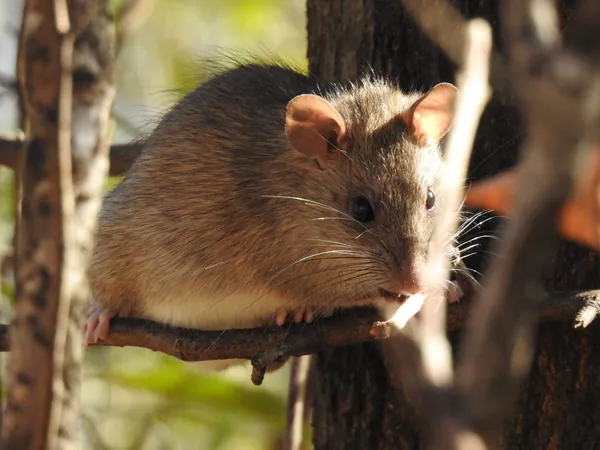
Photo: Laura Mae via iNaturalist, CC BY 4.0
Norway rat
Body 18–25 cm; tail shorter than the body (Norway rat)
Rat droppings are longer (12–18 mm), darker and capsule-shaped; rat noise is mostly at night.
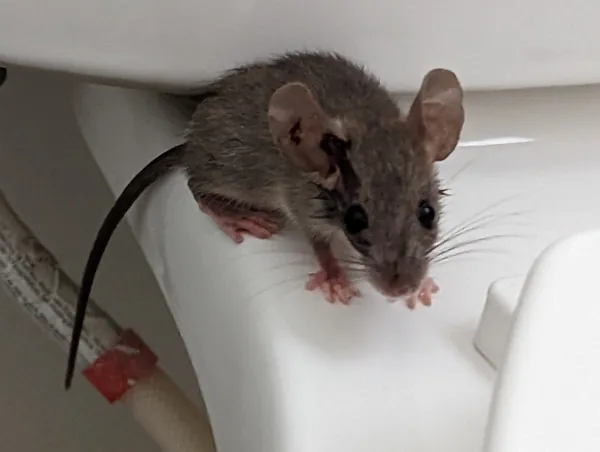
Photo: Justin via iNaturalist, CC BY 4.0
House mouse
Body 6.5–9.5 cm plus a tail about as long
Mouse droppings are smaller (3–6 mm), black and pointed at one or both ends.
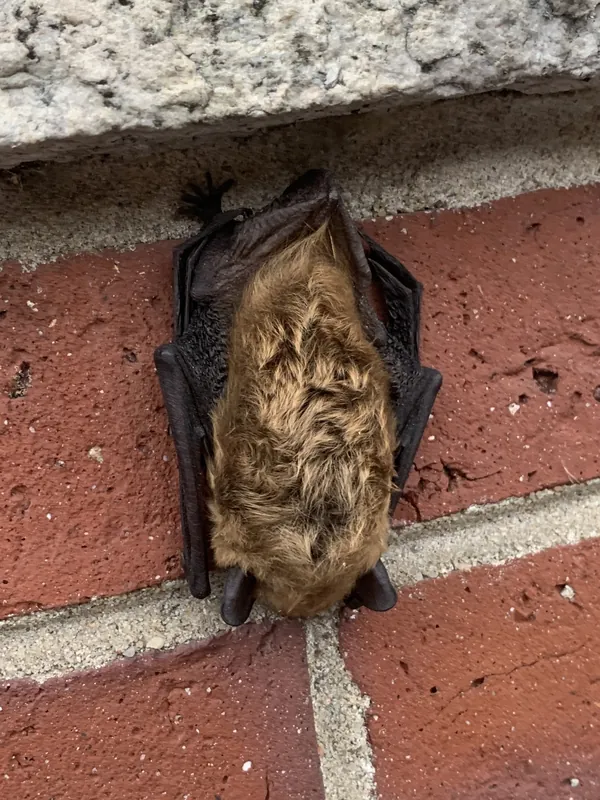
Photo: Thomas Irvine via iNaturalist, CC BY 4.0
Big brown bat
Body 10–13 cm, wingspan 28–33 cm
Bat droppings pile up under a roost and crumble to dust with shiny insect bits.
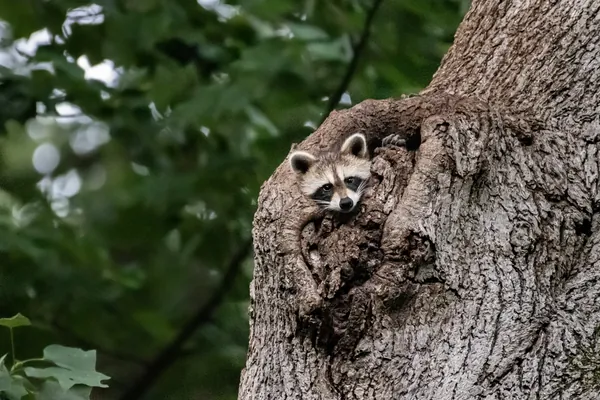
Photo: Troy B via iNaturalist, CC BY 4.0
Raccoon
60–95 cm including the ringed tail
Raccoon scat is much bigger, about as wide as a nickel, and piled in a latrine.
When to call a professional
Call a wildlife control operator if you cannot find or safely reach the entry hole, if there are babies in the nest, or if wiring has been chewed; have an electrician check any gnawed wires. A pro can install one-way doors on a high roofline, repair entry points with metal, and handle trapping under your state's rules.
Questions
How can I tell if I have squirrels or rats in the attic?
Squirrels are active by day, especially around dawn and dusk, and leave nut shells and 8–10 mm brown pellets. Rats are noisy at night and leave larger, darker droppings.
Are squirrel droppings dangerous?
Treat them like any rodent waste. Wear gloves and a mask, mist them before cleanup, and do not sweep or vacuum them dry.
Will squirrels leave the attic on their own?
Rarely for good. They come and go to feed, so the fix is a one-way door followed by sealing the hole once they are out.
When do squirrels have babies in attics?
Gray squirrels breed in February to March and July to August. The young stay in the nest for 10 to 12 weeks.