What a tick bite looks like
A tick bite usually looks like a small red bump or patch of redness at the spot where the tick was attached, and it fades within 1–2 days. A rash that appears or spreads days later is different and needs a doctor.
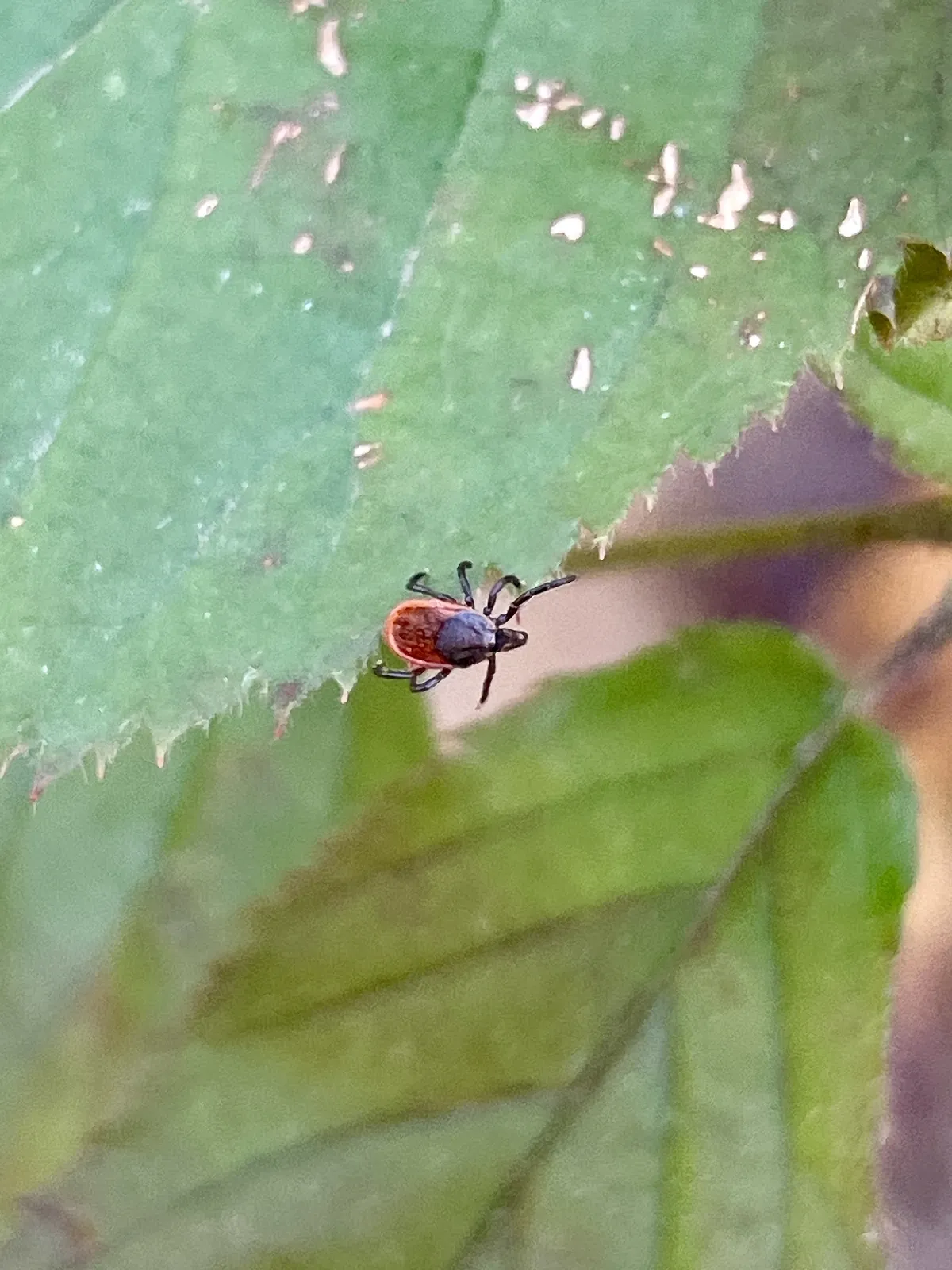
What a tick bite looks like
Most people find the tick, not the bite. An attached tick looks like a dark speck, a tiny scab or a skin tag, with its legs at the skin surface. A nymph is about the size of a poppy seed. A tick that has fed for a day or more swells into a gray or bluish bead.
Once the tick is off, a small bump or redness at the bite site is common. It appears right away and typically fades within 1–2 days. That early bump is not a sign of Lyme disease.
Ticks favor warm, thin-skinned spots. Check the armpits, in and around the ears, the hairline and scalp, the belly button, the backs of the knees, between the legs and the waistline.
How to remove a tick
Remove it as soon as you find it. Do not wait to see a healthcare provider; delay can raise the risk of infection.
- Grasp the tick as close to the skin as possible with clean, fine-tipped tweezers. Regular tweezers or fingers will do if that is all you have. Avoid squeezing the tick's body.
- Pull straight up with steady, even pressure. Do not twist or jerk, which can leave mouthparts in the skin.
- If mouthparts stay behind and do not come out easily with tweezers, leave them. The skin usually pushes them out as it heals.
- Clean the bite and your hands with soap and water, rubbing alcohol or hand sanitizer.
- Dispose of the tick by sealing it in a bag or container, wrapping it tightly in tape, putting it in alcohol, or flushing it. Do not crush it with your fingers.
Do not use petroleum jelly, nail polish, a hot match or other substances to make the tick back out. These can make the tick push infected fluid into the skin.
Before you throw it away, take a clear photo, and write down the date and where you think you picked it up. CDC does not recommend lab testing of removed ticks: commercial tick tests are not held to clinical lab standards, a positive result does not mean you were infected, and a negative result can give false reassurance.
Why fast removal matters
Ticks spread germs while they feed, and the time needed varies from minutes to days depending on the tick and the germ. For Lyme disease, an infected blacklegged tick generally has to be attached for more than 24 hours, so removing it within 24 hours greatly lowers the risk. Daily tick checks and a shower within 2 hours of coming indoors help you find ticks early.
Rashes to watch for afterward
Over the next several weeks, look at the bite site and the rest of your skin.
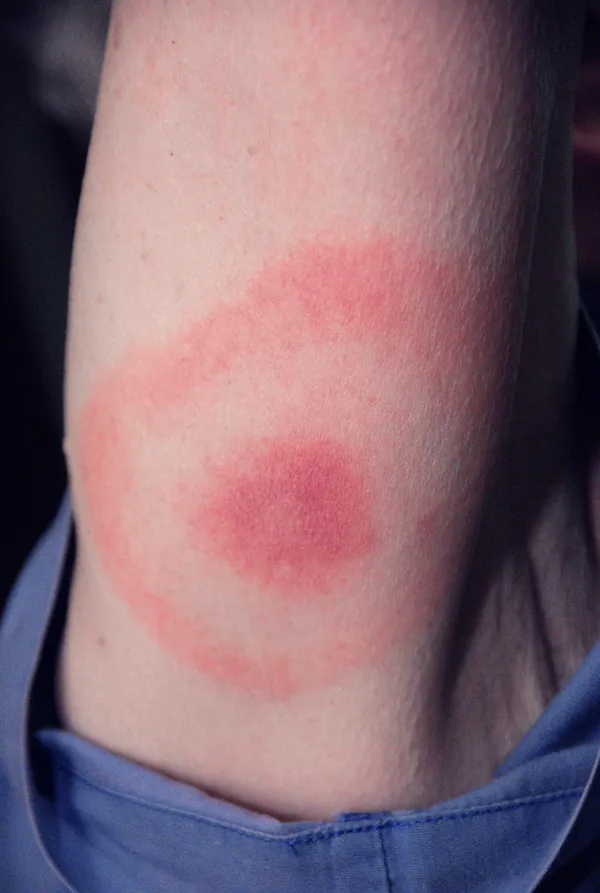
- The Lyme disease rash (erythema migrans) appears 3 to 30 days after the bite, typically about 7. It expands slowly over several days and can reach 12 inches (30 cm) or more across. It may feel warm but is rarely itchy or painful. Some clear in the center into a target or bull's-eye; many do not.
- After a lone star tick bite, a circular, expanding rash called STARI sometimes develops.
- Fever, chills, headache, fatigue, muscle and joint aches, and swollen lymph nodes can occur with or without any rash.
These descriptions are a guide for when to get checked, not a way to diagnose yourself. Several tick-borne illnesses look alike early on, and some cause no rash at all.
When to see a doctor
See a healthcare provider if you develop a rash or fever within several weeks of a tick bite. Tell them about the bite, when it happened, and where you most likely picked up the tick. Get checked too if a rash keeps growing, if you feel flu-like after a known bite, or if the bite site looks infected, with spreading redness, warmth or pus. Do not wait for tick test results before getting care.
Which tick was it
Knowing the species helps your doctor. Compare your photo with the four common US ticks on what a tick looks like. Blacklegged ticks spread Lyme disease in the East and along the Pacific coast; American dog, lone star and brown dog ticks spread other infections.
Photos

When to call a professional
You do not need a professional to remove a tick; do it yourself right away. Medical care, not pest control, is the priority after a bite. Call a pest professional only if ticks are turning up indoors on walls and furniture, which suggests brown dog ticks breeding inside, and have your veterinarian treat the dog at the same time.
Questions
Is it normal to have a red bump after a tick bite?
Yes. A small bump or redness at the bite site right after removal is common and usually fades within 1–2 days. It is not a sign of Lyme disease.
What if the tick's head is still in my skin?
Try to remove the mouthparts with clean tweezers. If they do not come out easily, leave them alone; the skin usually pushes them out as it heals.
How long does a tick have to be attached to give you Lyme disease?
Generally more than 24 hours, according to CDC. Removing a tick within 24 hours greatly reduces the risk, which is why daily tick checks matter.
Should I get the tick tested?
CDC advises against it. Tick test results are not reliable enough to guide treatment, and a negative result can give false reassurance. Watch for symptoms instead.
When does a Lyme rash show up?
Between 3 and 30 days after the bite, typically about 7 days. It grows over several days and may or may not look like a bull's-eye.