Drain flies: what they are and how to get rid of them
To get rid of drain flies, find the drain they breed in and scrub out the slimy film inside it with a stiff brush; boiling water, bleach and drain cleaners don't remove that film, so the flies keep coming back.
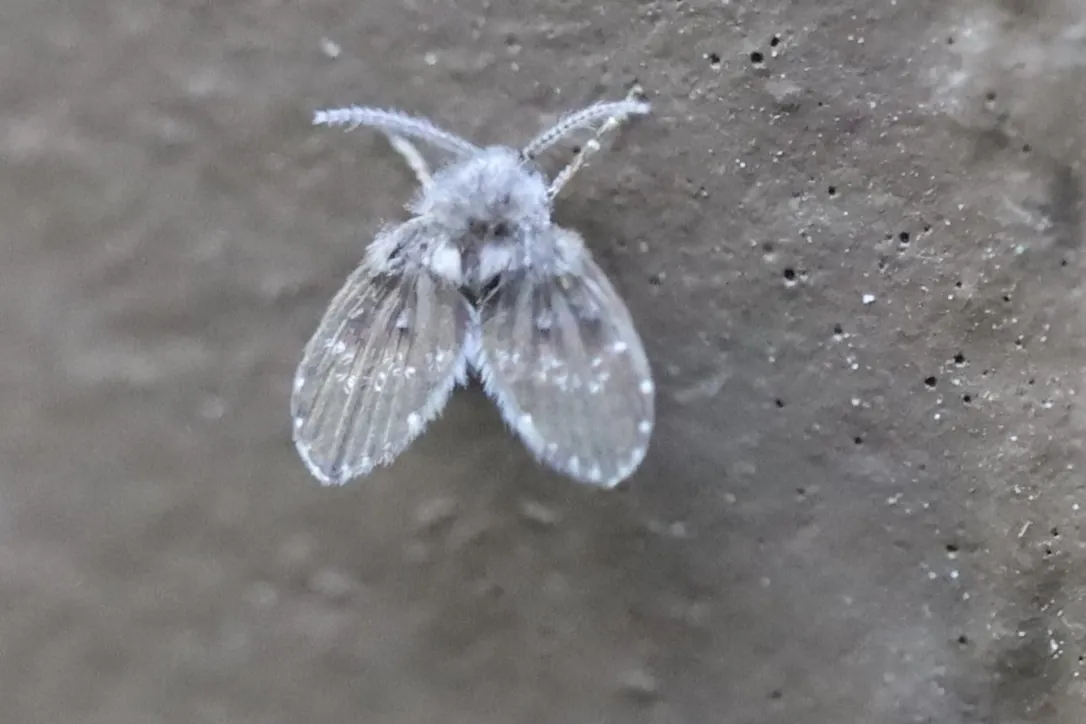
What a drain fly looks like
Drain flies, also called moth flies, are about 1/8 inch long, roughly the size of a sesame seed and a third the size of a house fly. The body and wings are covered in fine hairs, so they look fuzzy, like a tiny moth. At rest they hold their leaf-shaped wings roof-like over the body. They are weak fliers that make short, hopping flights, and you usually see them sitting on bathroom walls, mirrors and windows near a sink, tub or shower.
The larvae are slender, legless maggots up to about 1/4 inch long that live in the wet slime coating the inside of drains. One end carries a short siphon they use to breathe while buried in the muck.
Why they keep coming back
Females lay eggs in the slimy, gelatinous film of organic matter that builds up inside drains and traps. Eggs hatch in about 48 hours, and the whole cycle from egg to adult can take as little as 8 days in warm conditions. As long as the film stays, new flies keep emerging. Killing adults with a spray does nothing about the larvae.
Step 1: Find the breeding drain
Check every drain in the room where you see adults, including overflow openings on sinks and tubs, floor drains, and drains that are rarely used.
- Tape method: put a piece of clear tape, sticky side down, over the drain opening overnight. Flies emerging from that drain get stuck to it.
- Jar method: coat the inside of a cup with petroleum jelly or vegetable oil and turn it upside down over the drain for 24 hours.
- Slime check: lift the drain cover and scrape the slime a few inches down with a dull knife. Look for tiny worm-like larvae.
Step 2: Clean the drain properly
- If the drain is slow, snake it first to clear the clog.
- Scrub the inside of the pipe with a stiff-bristled drain brush to remove the gelatinous film.
- For sinks with a U- or J-shaped trap, take the trap off and clean it out.
- Run water to make sure the drain flows freely.
- For upkeep, use a bacteria- or enzyme-based drain cleaner, which breaks down the film over time.
UC IPM calls boiling water and bleach a common misconception: they don't remove the film and give at best short-term control. The University of Minnesota adds that chemical drain cleaners don't work either. Insecticides are generally unnecessary in homes, since cleaning one or two drains usually solves the problem.
If cleaning doesn't stop them
If you clean every drain and flies keep appearing, they are breeding somewhere hidden. Look for leaks under sinks and dishwashers, wet areas around a sump pump, and condensation pans under refrigerators. A broken drain or sewer line under a slab or inside a wall can also feed them, and finding it may require a plumber.
Drain fly, fungus gnat, or fruit fly
Three small flies show up indoors, and each comes from a different place. Fuzzy and moth-like near a drain: drain fly. Slender, dark and mosquito-like around houseplants: fungus gnat. Tan with red eyes around fruit and trash: fruit fly. Getting the ID right tells you where to clean.
Where in the US
Drain flies turn up in homes across the US, indoors in any season, wherever drains collect organic film. They are also common around sewage treatment plants, compost and manure. When they come from an outside source, more flies show up outdoors than inside.
Often mistaken for
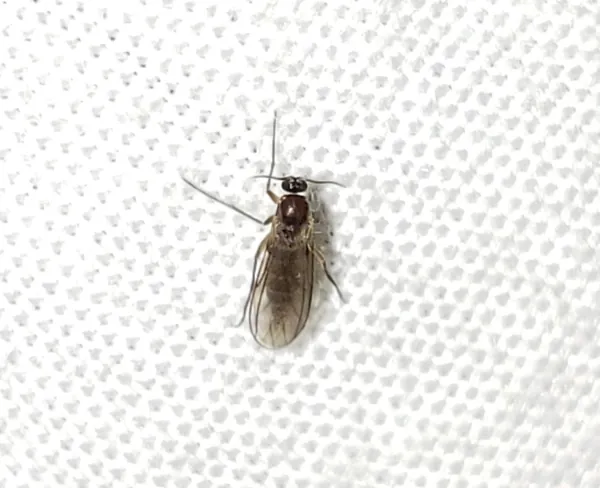
Photo: Arturo Santos via iNaturalist, CC BY 4.0
Fungus gnat
2–4 mm, slender, long legs, dark
Slender, dark, mosquito-like with long legs; hovers around houseplant soil.
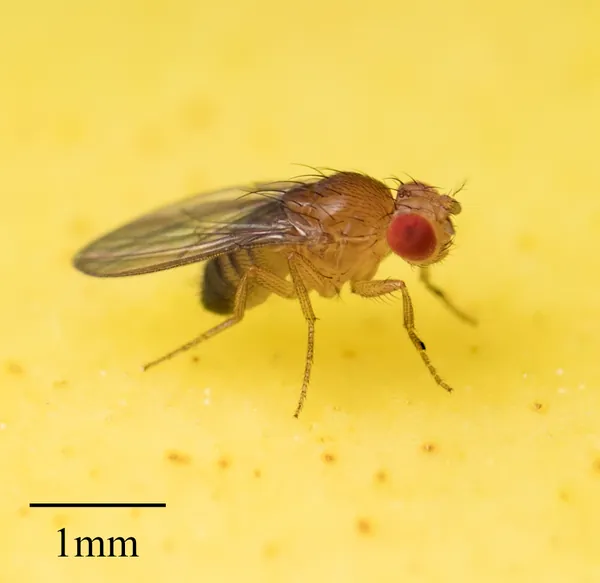
Photo: Jesse Rorabaugh via iNaturalist, CC0 1.0 (public domain dedication)
Fruit fly
About 3 mm, tan body, usually red eyes
Tan body and red eyes, not fuzzy; gathers on ripe fruit and trash.
Choose a treatment
Drain flies are a cleaning problem, not a spraying problem; the plan only escalates when the breeding site is hidden.
Find and scrub the drain
Do it yourself
- Tape each drain in the room overnight, sticky side down, to see which one they come from. Include sink and tub overflows.
- Snake the drain if it's slow, then scrub inside the pipe with a stiff drain brush to remove the slime film.
- Remove and clean the sink trap if there is one.
- Follow with a bacteria- or enzyme-based drain cleaner weekly for a few weeks.
- Skip bleach, boiling water and chemical drain cleaners; they don't remove the film.
Professional
Not needed.
Check every drain and leak
Do it yourself
- Repeat the tape test on every drain in the house, including floor drains, basement drains and rarely used showers.
- Clean each breeding drain the same way, and pour water into unused drains weekly.
- Check for hidden wet spots: leaks under sinks and dishwashers, refrigerator drip pans, sump pump pits, and damp crawlspaces.
- Use sticky traps near drains to track whether numbers are dropping.
Professional
A pest service can apply bacterial or enzyme drain foams and inspect for hidden breeding sites.
Plumber for a hidden leak
Do it yourself
- Note where flies appear first each day and any damp spots, odors or stains.
- Don't spray insecticides; they won't reach the breeding site.
Professional
Persistent flies with no drain source usually mean a broken drain or sewer line under the slab or inside a wall. A plumber can camera-inspect the lines. The leak has to be repaired and the wet organic material removed.
In kitchens, also check floor drains, garbage disposal splash guards, and drip pans under refrigerators and ice machines.
If flies persist after you clean your drains, tell your landlord in writing; a leaking line under the floor is a building repair.
When to call a professional
Call a plumber or pest professional if flies keep coming after you have scrubbed every drain, or if they appear near a floor drain, basement slab or wall with no obvious source. That usually means a broken pipe or sewage leak under the floor or inside a wall, which needs to be found and repaired. Pest services also offer professional drain cleaning with bacterial or enzyme foams.
Questions
Does bleach kill drain flies?
Not for long. Bleach and boiling water don't remove the slime film the larvae live in. Scrub the drain with a stiff brush and use an enzyme drain cleaner for upkeep.
Do drain flies bite?
No. They are a nuisance, not a health threat in homes.
How long do drain flies live?
The full life cycle takes as little as 8 days in warm conditions and up to 24 days when cool, so new flies keep appearing until the breeding film is gone.
How do I know which drain they come from?
Tape over each drain overnight, sticky side down, or invert a cup coated with petroleum jelly over it for 24 hours. The drain whose cover catches flies is the source.