What a bed bug looks like
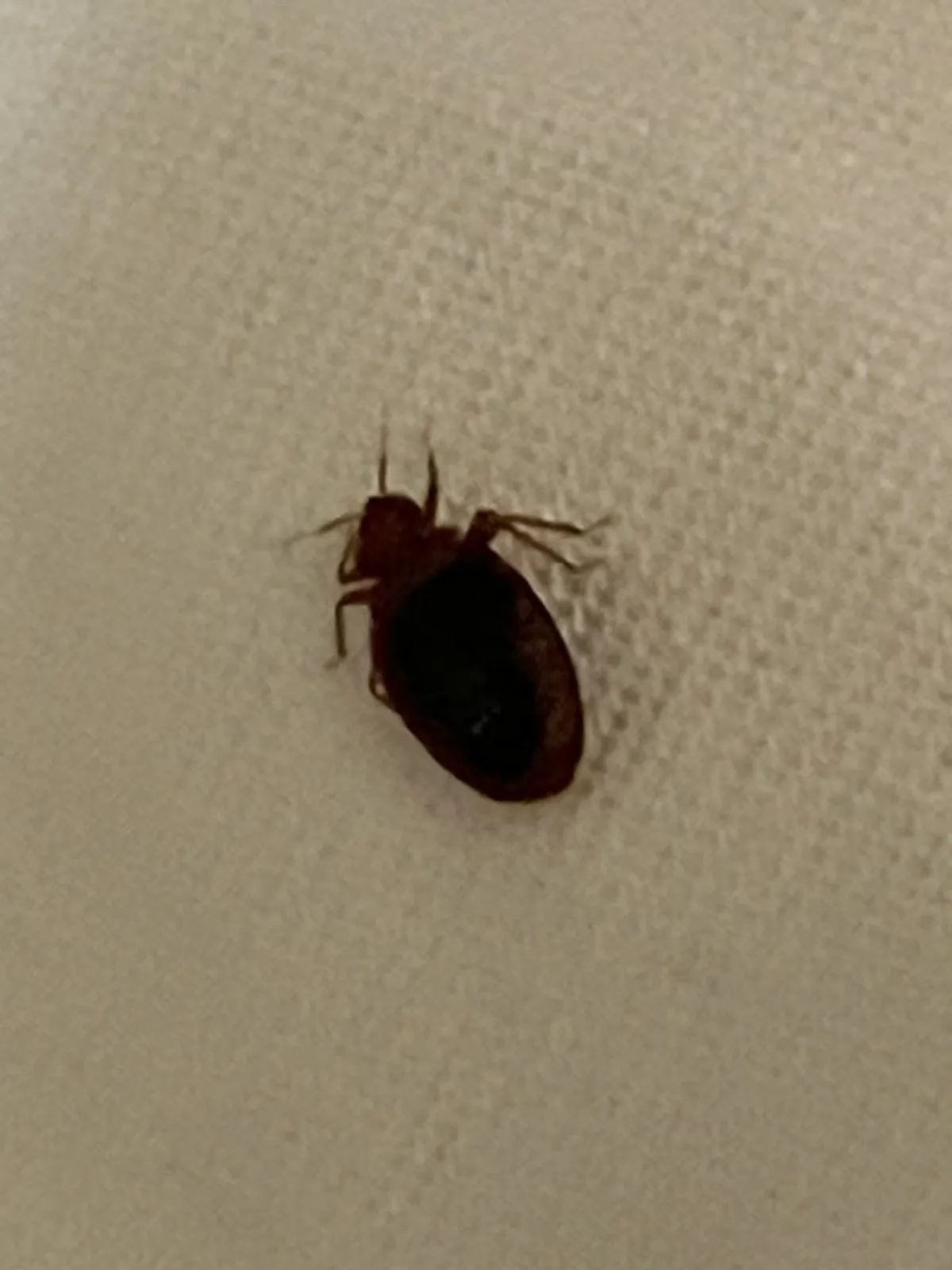
An adult bed bug is a flat, oval, wingless insect about 5 to 7 mm long (3/16 to 1/4 inch), rusty brown, and close to the size of an apple seed. After feeding it swells, turns redder and looks longer.
Adults
An adult bed bug is 5 to 7 mm long, roughly an apple seed, and flat enough to slide into a crack the width of a credit card. Unfed adults are brown and paper-thin. A bug that has just fed is reddish-brown, plump and more elongated, a bit like a tiny balloon. It can take in up to six times its own weight in blood in a single meal of 3 to 10 minutes.
Adults have six legs, two short antennae, no wings, and a head that is narrower than the broad, rounded abdomen. Seen from the side they are very low and flat. They crawl at a steady pace and do not jump.
Nymphs and eggs
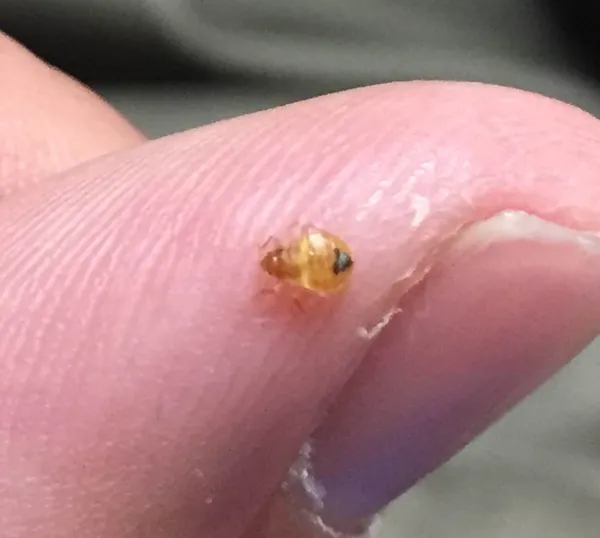
Young bed bugs (nymphs) pass through five stages, growing from about 1.5 mm to 4.5 mm. Each stage needs at least one blood meal before it can molt. Unfed nymphs are translucent or whitish-yellow and are hard to see against a pale sheet. A nymph that has just fed shows a bright red gut through its body.
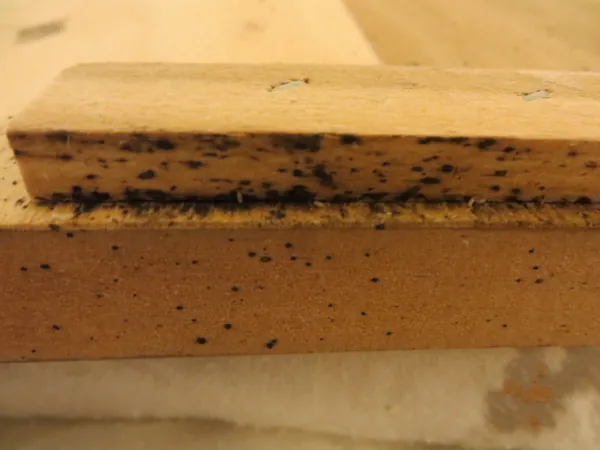
Eggs are about 1 mm long, pearl-white and roughly the size of a pinhead. They are glued in seams, crevices and the rough edges of wood, often in small groups. Eggs older than five days show a dark eye spot. At room temperature they hatch in about a week to two weeks, and a female lays 200 to 500 in her lifetime.
How long they live
Egg to adult takes as little as a month in a warm home, or up to four months when it is cooler. Adults can live a year or more. Without a meal, bed bugs last 1 to 4 months in a heated building and far longer in cool conditions, so leaving a home empty rarely starves them out.
Where you find them
About 85% of bed bugs in a home live in or near the bed: mattress seams and tags, box springs, the bed frame and headboard. The rest spread to sofas, nightstands, baseboards, curtains and outlets. They are carried in on luggage, used furniture and folded clothing, and a clean home is no protection. See signs of bed bugs for the stains, eggs and shed skins that confirm an infestation, and how to check for bed bugs for a step-by-step search.
Bugs that are often mistaken for bed bugs
Several small insects get sent to extension labs as "bed bugs." Bat bugs are near-identical and need a hand lens to separate. Carpet beetles are rounder and patterned, and their larvae are hairy. Booklice are much smaller, pale and soft. Fleas are narrow from the side and jump. Compare them on bugs that look like bed bugs and bed bugs vs carpet beetles.
Bites
Bed bugs feed while you sleep and the bite is painless. Red, itchy welts may show up a day or more later, sometimes in a line, but some people never react at all. Bites alone cannot confirm bed bugs. Read what bed bug bites look like before you treat anything.
What to do if you find one
Catch it on clear tape or in a sealed bag or jar so it can be identified. Then search the bed closely, put interceptor traps under the bed legs, and wash and dry bedding on high heat. Skip bug bombs. If you confirm more than one bug, read how to get rid of bed bugs, which walks through a plan by severity.
Where in the US
Bed bugs can turn up anywhere in the US, in cities, suburbs and rural towns alike. They live indoors, so climate matters little: a heated home keeps them active year-round. They turn up wherever people sleep or sit for long periods, including homes, apartments, hotels (including expensive ones), dorms and shelters, and spread through travel and used furniture. Apartment buildings are especially prone because bugs can move between units through wall voids and shared pathways.
Photos

Often mistaken for
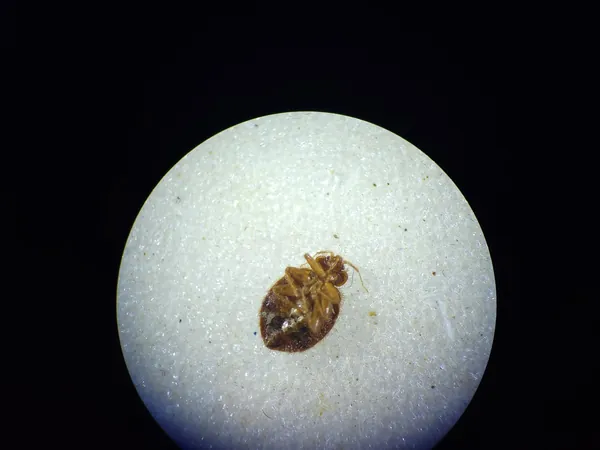
Photo: Matt Pelikan via iNaturalist, CC BY 4.0
Bat bug
About the size of a bed bug, 5–7 mm
Near-identical; longer hairs on the thorax. Points to bats in the attic or walls.
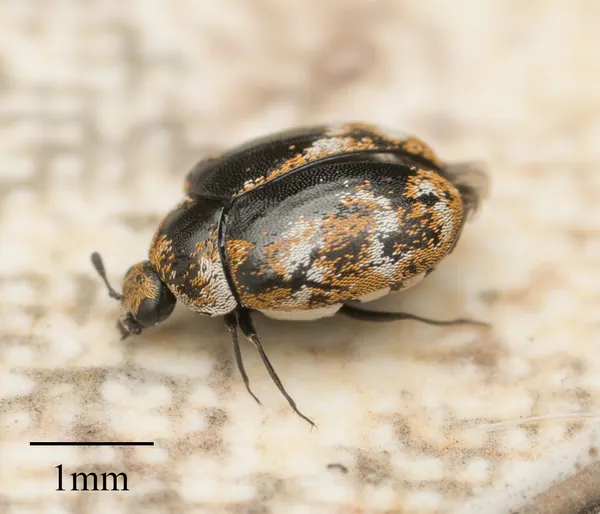
Photo: Jesse Rorabaugh via iNaturalist, CC0 1.0 (public domain dedication)
Carpet beetle
2–4 mm adult; larvae up to 5 mm and hairy
Rounder, domed and mottled; larvae are hairy and banded. Does not feed on blood.
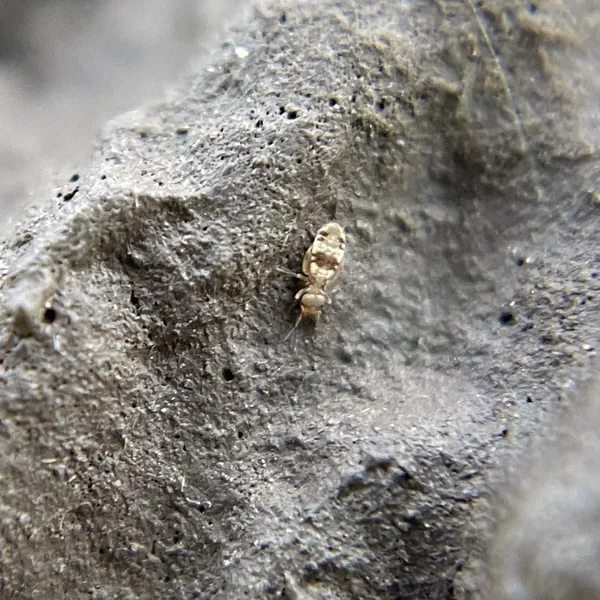
Photo: northerly via iNaturalist, CC BY 4.0
Booklouse
About 1 mm, pale and soft
About 1 mm, pale and soft, with a wide head. Lives on mold in damp paper.
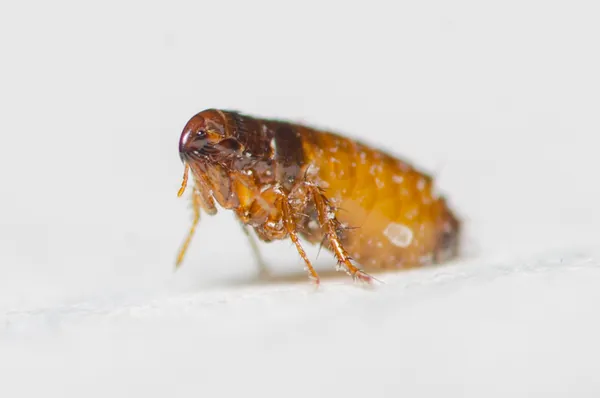
Photo: Justin Williams via iNaturalist, CC BY 4.0
Flea
1–3 mm, dark reddish brown, flattened side to side
Narrow from the side and jumps; found where pets rest.
When to call a professional
Call a licensed pest management professional with bed bug experience once you have confirmed live bugs, eggs or fecal spots, especially in an apartment, where neighbouring units may also need inspection. Ask how they will confirm the identification, what methods they use (heat, targeted insecticides, or both) and how many follow-up visits are included. Most infestations need more than one visit.
Questions
Can you see bed bugs with the naked eye?
Yes. Adults and older nymphs are visible, about the size of an apple seed. Eggs and the youngest unfed nymphs are pale and only about 1 mm, so a flashlight and a magnifier help.
Do bed bugs fly or jump?
No. Bed bugs have no wings and cannot jump. They crawl, and they spread mostly by riding in luggage, furniture and clothing.
What color are bed bugs?
Unfed adults are brown. After feeding they turn reddish-brown and swell. Nymphs are translucent to whitish-yellow until they feed.
Do bed bugs carry disease?
Bed bugs are not known to spread disease to people. The main health effects are itching, lost sleep, and skin infection from scratching.