Bugs that look like termites
The bug that most often looks like a termite is a winged ant, since carpenter ants and other ants swarm in spring just as termites do. Powderpost beetles, booklice and barklice are also mistaken for termites.
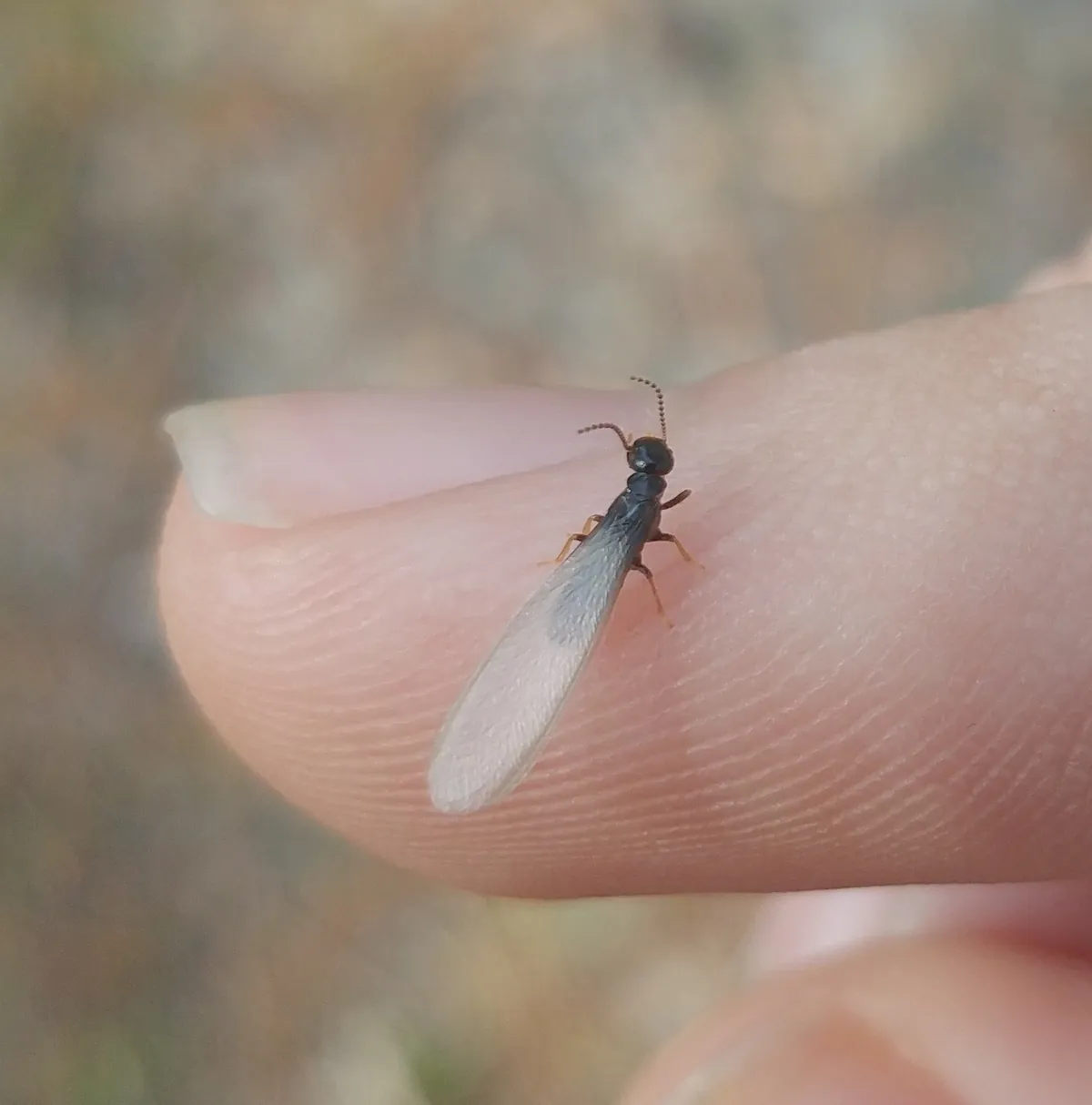
Start with three body parts
Winged ants and termite swarmers come out at about the same time of year, and both gather at windows. Three features separate them: antennae, waist and wings. A termite has straight antennae, a thick waist and two pairs of wings the same length. An ant has elbowed antennae, a pinched waist and front wings longer than the hind wings. For a side-by-side photo guide, see flying ants vs termites; for wingless workers, see ant vs termite.
| Bug | Size | Color and shape | Where found | Page |
|---|---|---|---|---|
| Termite swarmer | About 3/8 in with wings | Dark brown to black, thick waist, 4 equal wings | Windows and doors in spring | Termites |
| Termite worker | 1/8–1/4 in | Creamy white to caramel, soft, no waist | Inside wood, mud tubes | Termites |
| Carpenter ant swarmer | Up to 3/4 in | Dark, pinched waist, elbowed antennae | Windows in spring and early summer | Carpenter ants |
| Other winged ants | Smaller | Same ant features | Windows, patios, lawns | Flying ants vs termites |
| Powderpost beetle | 1/16–1/4 in | Narrow, hard, red-brown to black | Windowsills near damaged wood | none |
| Booklouse | 1–2 mm | Pale, soft, wingless, broad head | Damp paper, books, pantry | Tiny bugs |
| Barklouse | Under 1/4 in | Small, wings folded over back, in groups | Tree bark outdoors | none |
Winged ants
The flying bug that looks like an ant with wings is usually exactly that: a winged ant. Carpenter ant swarmers are dark and up to 3/4 inch long, larger than the 1/4 to 1/2 inch workers. They fly from established colonies on warm days in spring and early summer. Many winged carpenter ants at windows inside the house probably came from a nest indoors; see carpenter ants. Smaller ant species swarm too, and the same antennae, waist and wing checks apply.
Termite swarmers are dark brown to black with brownish-gray wings, and they shed those wings soon after flying. They live only about a day and can't damage wood themselves. Swarmers coming from a stump or woodpile in the yard don't necessarily mean the house is infested; swarmers emerging next to the foundation, a porch or a patio are more concerning. See signs of termites.
Workers: white ants that aren't ants
Termite workers are soft, wingless and creamy white to light caramel, 1/8 to 1/4 inch long, and you usually find them only inside wood or mud tubes. They are the "white ants" people describe. Ant workers are dark and hard-bodied with a pinched waist. Carpenter ants leave smooth, clean galleries and push out coarse, stringy shavings mixed with insect parts. Termite tunnels contain soil or fecal pellets.
Wood-boring beetles
Powderpost beetles also damage dry wood, second only to termites in that ability. The adults are small, narrow beetles, about 1/16 to 1/4 inch and red-brown to black, and are occasionally found on windowsills near damaged wood because some fly to light. The damage is easy to tell from termite work. Look for round exit holes, about pinhead-size for the most common type, and a fine powder like flour or talc sifting out of them. Termites don't leave round holes or loose powder; subterranean termites leave mud tubes.
Booklice and barklice
Booklice are 1 to 2 mm, soft, wingless and pale tan, gray or nearly clear, so a few on a windowsill or box of papers can look like tiny termite workers. They feed on mold in damp paper, books and stored food and don't harm wood. Lowering humidity below 50% gets rid of them.
Barklice are their outdoor relatives: under 1/4 inch, with two pairs of wings folded over the back, often moving in groups on tree bark. One species spins silky webbing over trunks and limbs in late summer. They are harmless to trees and people, and no treatment is needed.
Next step
If the bug is a termite, or you find mud tubes or damaged wood, book a termite inspection before buying any treatment.
Photos
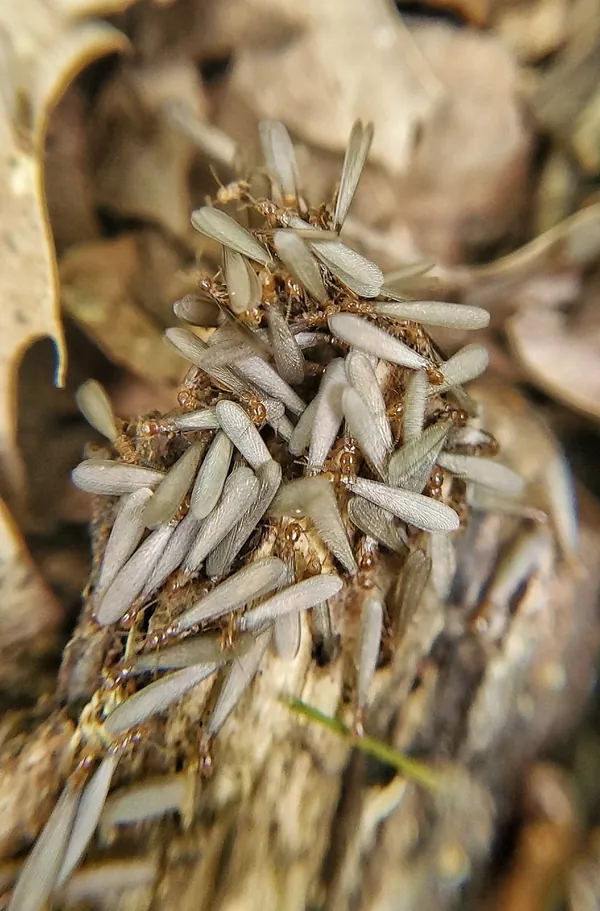
Side by side
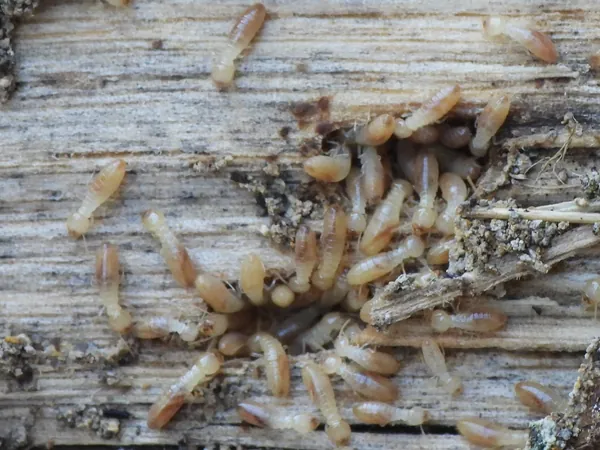 Termite | 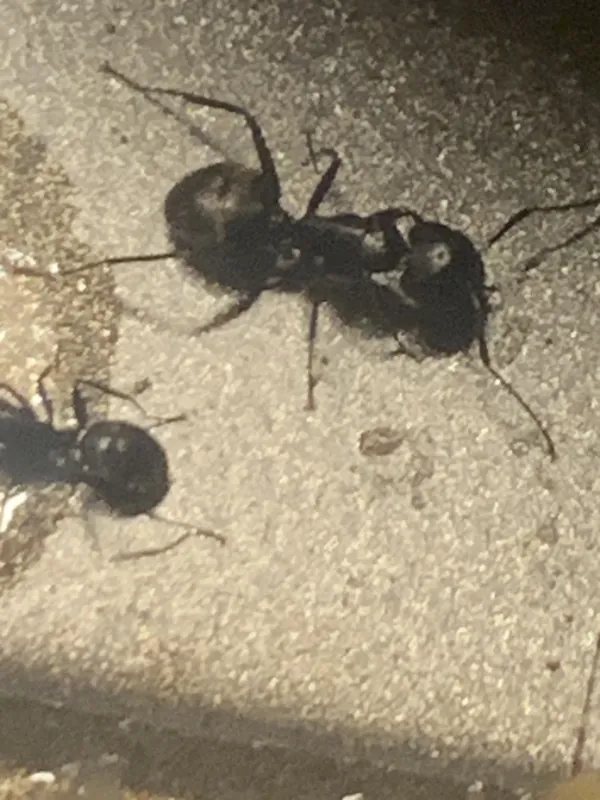 Carpenter ant | |
|---|---|---|
| Antennae | Straight, beadlike | Elbowed |
| Waist | Broad, no pinch | Narrow, pinched |
| Wings (swarmers) | Two pairs, equal length | Front pair longer than hind pair |
| Swarmer color | Dark brown to black, brownish-gray wings | Dark brown to black |
| Workers | Creamy white, soft, 1/8–1/4 in | Dark, 1/4–1/2 in |
| Wood damage | Tunnels with soil or fecal pellets; mud tubes | Smooth, clean galleries; piles of coarse shavings |
Photo credits: Termite: Photo: Sam Kieschnick via iNaturalist, CC BY 4.0; Carpenter ant: Photo: Chandler Beaty via iNaturalist, CC BY 4.0.
When to call a professional
Get a professional termite inspection if termite swarmers emerge indoors or next to the foundation, or if you find mud tubes or soft, hollow wood. Call one for carpenter ants if many winged ants appear inside in spring, which points to a nest in the house. Powderpost beetle damage in structural wood also needs a professional opinion; booklice and barklice never do.
Questions
What bug looks like an ant with wings?
Usually a winged ant, such as a carpenter ant swarmer. If its antennae are straight, its waist is thick and its four wings are the same length, it is a termite swarmer instead.
What flying bugs look like termites?
Winged ants are by far the most common. Powderpost beetles that fly to windows and barklice with wings folded over their backs are also mistaken for termites.
Do winged termites mean my house is infested?
Not always. Swarmers from a stump or woodpile in the yard don't necessarily mean the house is infested, but swarmers coming out indoors or next to the foundation are a reason for an inspection.
What are the tiny white bugs that look like termites?
Often booklice, which are 1 to 2 mm and pale and live on mold in damp paper. Termite workers stay hidden inside wood and mud tubes.