Carpenter bees: identification and how to get rid of them
To get rid of carpenter bees, puff an insecticide dust labeled for bees into each active 1/2-inch hole after dark, leave the holes open for a few days, then plug them and paint or seal the bare wood.
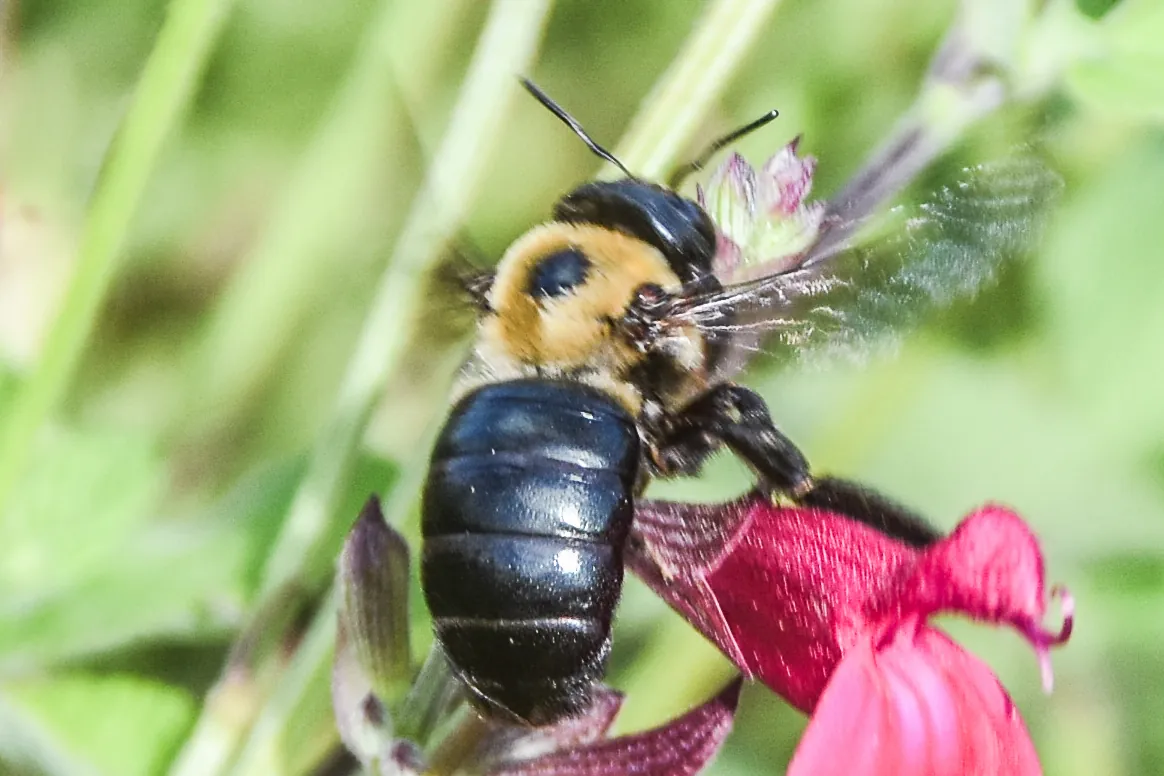
What a carpenter bee looks like
The eastern carpenter bee (Xylocopa virginica) is about the size of a bumble bee, 1/2 to 1 inch long, with a hairy thorax. The quick tell is the abdomen: on a carpenter bee it is shiny black and nearly hairless; on a bumble bee it is fully hairy, usually with yellow bands. Bumble bees nest in existing cavities, often underground. Carpenter bees drill into wood.
Males hover near nest holes in spring, darting at anyone who comes close. They have no stinger and cannot sting. Females can sting but rarely do unless handled.
The holes and the damage
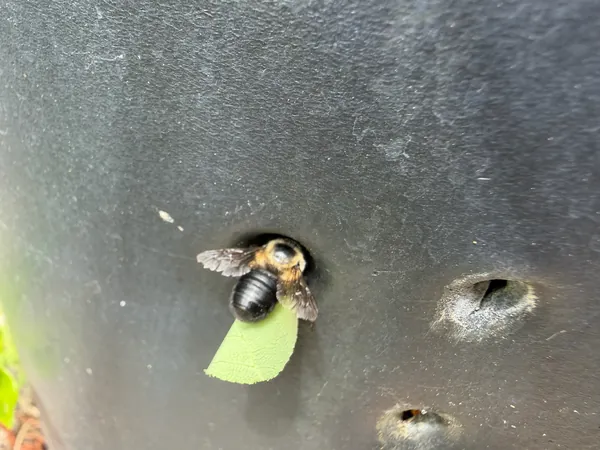
A female chews a nearly perfect round entrance hole about 1/2 inch across, about the width of a little finger, usually drilled across the grain. After about an inch, the tunnel turns at a right angle and runs along the grain. Signs include coarse sawdust on the ground below, stains of bee waste on the surface below the hole, and sometimes faint chewing sounds.
Carpenter bees do not eat wood. A new tunnel is only 4 to 6 inches long, and one bee does little harm. The damage comes from reuse: bees return to the same boards year after year, and tunnels used for many years can reach 10 feet. Open holes let in water and rot. Woodpeckers make it worse, tearing into infested wood to reach the larvae and overwintering adults inside.
Favored spots are unpainted, weathered softwoods such as cedar, redwood, cypress and pine, at least 2 inches thick: eaves, fascia boards, rafters, decks, railings, doors, siding and outdoor furniture. Painted and pressure-treated wood is attacked much less, and vinyl siding is not damaged.
Life cycle and timing
Adults spend winter inside old tunnels and come out in April and May to mate. Each female stocks 6 to 8 cells with a ball of pollen and nectar and one egg. Development takes about seven weeks. New adults appear in August, feed on flowers, then return to the tunnels for winter. Northern states have one generation a year; southern states sometimes have two.
Carpenter bees are important pollinators. If they are nesting in a fence or shed where damage does not matter, leaving them alone is reasonable.
How to get rid of carpenter bees
- Treat in spring, when bees are first drilling, and recheck in mid-summer and early fall.
- Work after dark on a cool evening, when bees are inside and slow. A red light helps, since bees do not see red well.
- Puff an insecticide dust labeled for bees or wasps into each active hole with a bulb duster. Pyrethroid dusts are the most effective and longest lasting. Wear gloves, goggles and a dust mask, and wash those clothes separately.
- Leave holes open for a few days so returning bees carry the dust through the tunnel.
- Plug each hole with a wooden dowel coated in carpenter's glue, or with steel wool or copper gauze topped with wood putty. This stops reuse and keeps water out.
- Paint or seal the wood.
Read and follow the label; the label is the law. Borate wood treatments do not work, because the bees do not eat the wood. Sprays on wood surfaces deter bees for only about 3–4 weeks outdoors.
Keeping them away
Paint all exposed wood with a polyurethane or oil-based paint and keep it maintained. Stains and clear preservatives give little protection. Fill old holes, nail holes and saw cuts in fall. Replace badly damaged boards with pressure-treated wood. Wooden carpenter bee traps with 1/2-inch holes, hung in early spring, catch some bees and help you monitor activity.
Where in the US
The eastern carpenter bee is the large wood-boring bee covered by extension services across the eastern US, including Pennsylvania, Ohio, Kentucky and South Carolina. It has one generation a year in northern states and sometimes two in southern states. Adults are active from April through summer.
Photos
Often mistaken for
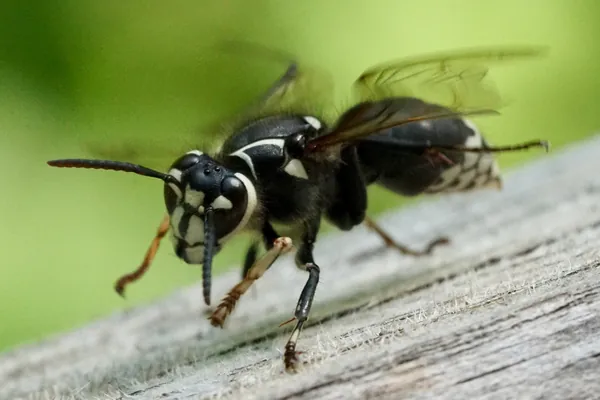
Photo: Amy Schnebelin via iNaturalist, CC BY 4.0
Hornet
Bald-faced hornet 15–20 mm; European hornet 25–35 mm
Thin waist and a smooth, banded abdomen; builds paper nests instead of drilling wood.
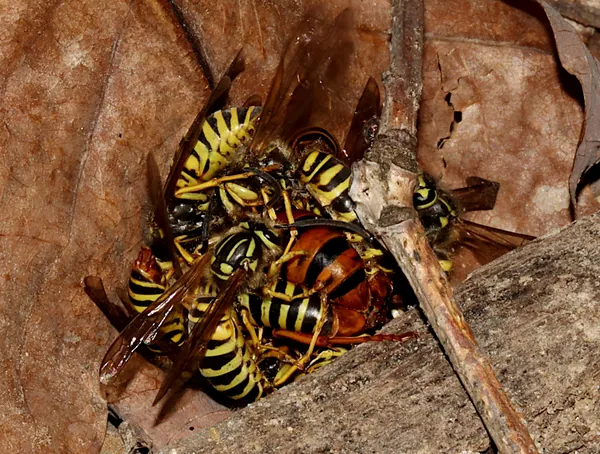
Photo: Gordon C. Snelling via iNaturalist, CC BY 4.0
Yellow jacket
10–16 mm, stout, bright yellow and black
Smaller, bright yellow and black, almost hairless; nests in the ground or wall voids.
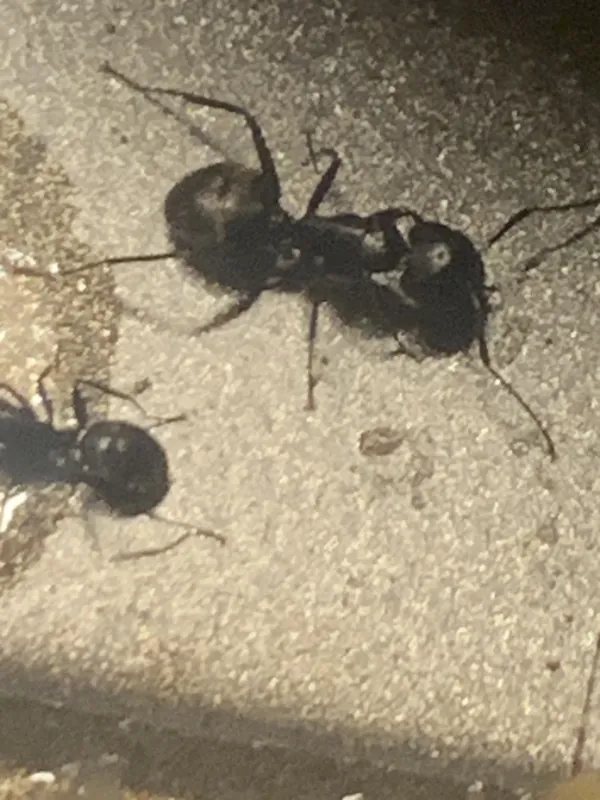
Photo: Chandler Beaty via iNaturalist, CC BY 4.0
Carpenter ant
Workers 6–13 mm, black or black and red
Also damages wood, but leaves sawdust-like frass from hidden galleries, not round 1/2-inch holes.
Choose a treatment
A few new holes are a weekend job; damage builds when the same boards are reused for years, so the plan scales with how many holes you have and how old they are.
Paint bare wood, then watch
Do it yourself
- The hovering bees are probably males guarding territory; they cannot sting.
- Paint or seal bare, weathered wood with a polyurethane or oil-based finish. Stains and clear preservatives give little protection.
- Fill nail holes, saw cuts and old holes with wood putty.
- Check the undersides of rails, fascia and eaves weekly through late spring for fresh round holes and sawdust.
Professional
Not needed. If bees are nesting in wood where damage does not matter, such as an old fence, you can leave them; they are pollinators.
Dust holes at night, then plug
Do it yourself
- After dark on a cool evening, puff an insecticide dust labeled for bees or wasps into each active hole with a bulb duster. Pyrethroid dusts are the most effective. Wear gloves, goggles and a dust mask.
- Leave the holes open for a few days so returning bees carry the dust inside.
- Plug each hole with a glued wooden dowel, or steel wool or copper gauze topped with wood putty.
- Paint or seal the wood. Read and follow the label; the label is the law.
Professional
Usually not needed for a few reachable holes. A professional can do the same dust treatment if you would rather not handle insecticide or work near bees.
Treat, plug, replace worst boards
Do it yourself
- Treat every active hole with dust at night in spring, then check again in mid-summer and early fall.
- Plug holes only after a few days.
- Replace boards that are riddled or soft with pressure-treated wood, then paint all exposed wood.
- Hang wooden carpenter bee traps in early spring to catch returning bees and monitor activity.
- Borate wood treatments do not work, because carpenter bees do not eat wood.
Professional
A professional treats all galleries, including high ones, and can tell you which boards have long tunnels worth replacing. Ask about the timing of follow-up visits through the season.
Call a professional
Do it yourself
- Do not dust holes from the top of a ladder with bees flying around you.
- Note where the holes and woodpecker damage are, and keep pets and children away from any treated areas.
- Once treated, repaint or replace the damaged trim, because woodpeckers keep hunting the bees and larvae inside infested wood.
Professional
A professional uses extension-pole dusters to treat galleries in eaves and soffits from a safer position, then advises on replacing damaged fascia or trim. Woodpecker damage means bees have been reusing long tunnels for years, so expect carpentry as well as treatment.
Keep children and pets away from treated holes and from the dust that falls below them. Wash the clothes you wore while dusting separately from other laundry.
Report carpenter bee holes to your landlord in writing; painting, plugging and replacing trim are maintenance jobs for the owner.
When to call a professional
Hire a pest professional when the holes are in eaves, soffits or rooflines that need a tall ladder, when many boards are riddled after several years, or when woodpeckers have opened up the wood. Professionals treat galleries with dust from extension poles and can advise which boards need replacing before painting.
Questions
Do carpenter bees sting?
Males, the ones that hover and dive at people, have no stinger. Females can sting but rarely do unless handled.
Should I plug carpenter bee holes right away?
Not if you treat them first. Leave treated holes open for a few days so bees carry the dust inside, then plug them with a glued dowel or steel wool and putty.
Do carpenter bees eat wood?
No. They chew tunnels to nest in and feed on pollen and nectar, so wood treatments that work by being eaten, such as borates, do not stop them.
Does painting wood stop carpenter bees?
Paint helps a lot. Bees strongly prefer bare, weathered wood. Stains and clear finishes give little protection.