What a cockroach looks like
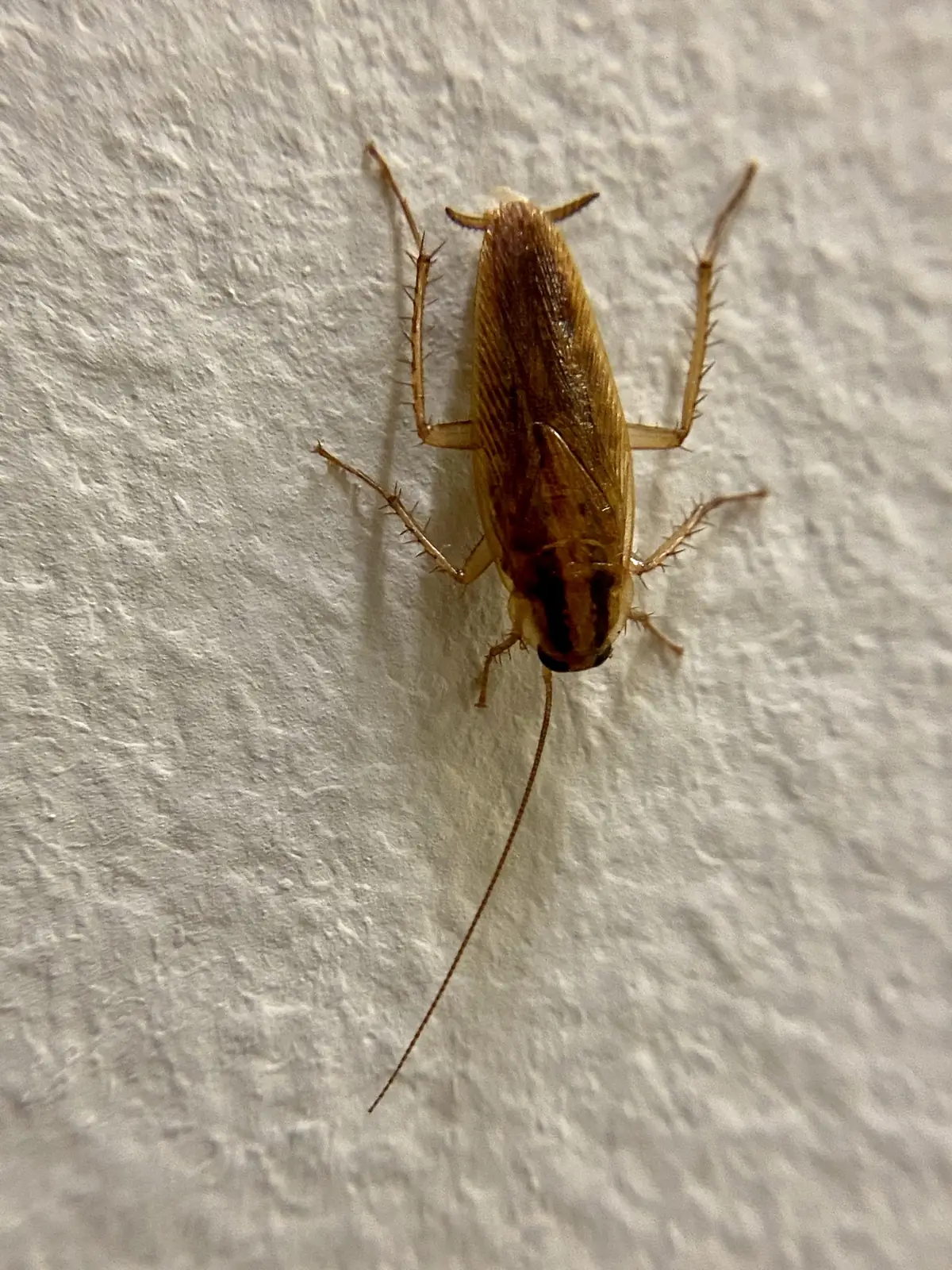
Cockroaches are flat, fast, brownish insects with long, thin antennae; the one most often found inside US homes is the German cockroach, light brown, about 1/2 inch long, with two dark stripes behind the head.
What a cockroach looks like
All house cockroaches share a flat, oval body that slips into narrow cracks, long whip-like antennae, spiny legs and a fast run. Adults of most species have wings folded flat over the back. Nymphs look like small, wingless adults. Cockroaches hide by day in warm, dark, damp cracks and come out at night to feed.
The four common US species
| German | American | Oriental | Smokybrown | |
|---|---|---|---|---|
| Adult size | 1/2–5/8 in | 1 1/2–2 in | About 1–1 1/4 in | 1 1/4–1 1/2 in |
| Color | Light brown, two dark stripes behind head | Reddish brown, pale yellow band behind head | Shiny black or very dark brown | Uniform dark brown to mahogany |
| Wings | Full, but doesn't fly | Full; seldom flies | Short pads (females), half-length (males); can't fly | Full; flies on warm evenings |
| Where | Kitchens, bathrooms, appliances | Basements, drains, sewers, boiler rooms | Cool, damp basements, crawlspaces, drains | Outdoors: mulch, eaves, trees; enters upper floors |
| Lives outdoors | No | Yes, in warm areas | Yes | Yes |
German cockroach
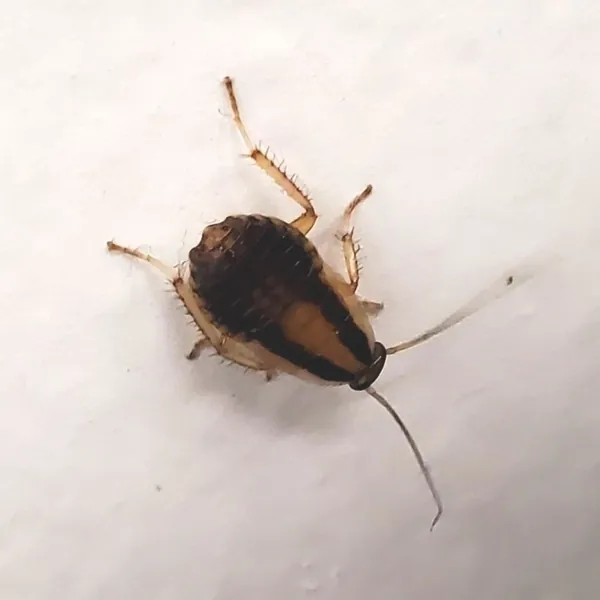
The German cockroach is by far the most common roach breeding inside homes and apartments, and it does not live outdoors. Adults are light brown and about 1/2 inch long, roughly the length of a fingernail, with two dark lengthwise stripes on the shield behind the head. Nymphs are darker with a pale stripe down the back. One female carries an egg case of about 30 to 40 young until it is ready to hatch, and a single female's offspring can number in the thousands within a year. That is why a few German roaches become a large problem quickly. They cluster in cracks under sinks, behind and under the refrigerator, stove and dishwasher, inside cabinets, and in warm electronics like toaster ovens and clocks.
American cockroach
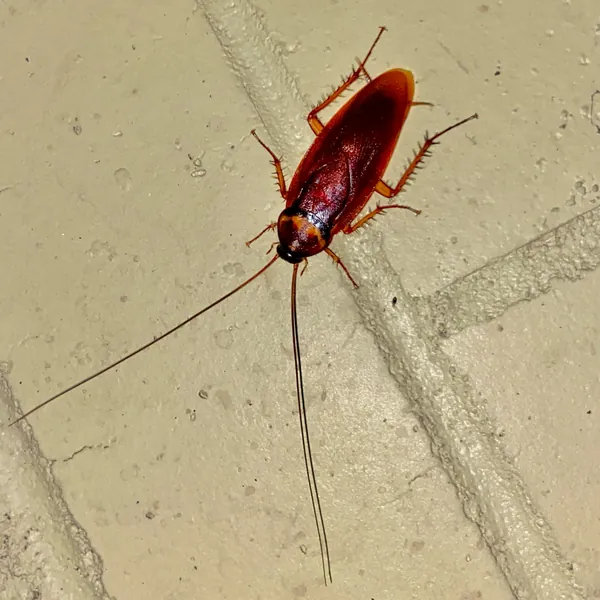
The largest common house roach, 1 1/2 to 2 inches long, reddish brown with a pale yellowish band around the edge of the shield behind the head. It lives in sewers, storm drains, steam tunnels and basements, and comes into ground floors through drains and damaged pipes. Finding one now and then usually means it wandered in, not that it is breeding in the kitchen.
Oriental cockroach
Shiny black or very dark brown and about an inch long. Females have tiny wing pads and males have wings covering part of the abdomen; neither can fly. They are sluggish, stay at ground level, and like cool, damp places: crawlspaces, basements, floor drains and sump pumps. They often get trapped in sinks and tubs because they can't climb smooth surfaces.
Smokybrown cockroach
A large, uniformly dark brown roach, 1 1/4 to 1 1/2 inches, with wings longer than its body. It is common outdoors in humid southern areas in mulch, tree holes, palm fronds and attic eaves, and it can fly into homes on warm evenings.
Signs of an infestation
Look with a flashlight at night or in dark corners for live roaches, droppings like ground pepper on cabinet hinges and corners, brown capsule-shaped egg cases, and shed skins. Large infestations have a musty odor. The cockroach droppings page covers what to look for. Cockroach droppings and shed skins contain allergens that can trigger sneezing, congestion and asthma, especially in children.
What to do
Baits, not sprays, are the main tool, backed by cleaning, sealing and fixing leaks. See how to get rid of cockroaches.
Where in the US
German cockroaches live indoors wherever people do, carried in on grocery bags, boxes, used appliances and furniture; they do not live outdoors. American cockroaches live outdoors in warm areas and in sewers, steam tunnels and boiler rooms everywhere. Smokybrown cockroaches are most common outdoors in the humid South. Oriental cockroaches live outdoors under stones, mulch and leaf litter and move into basements and crawlspaces, especially in dry weather.
Photos
Often mistaken for
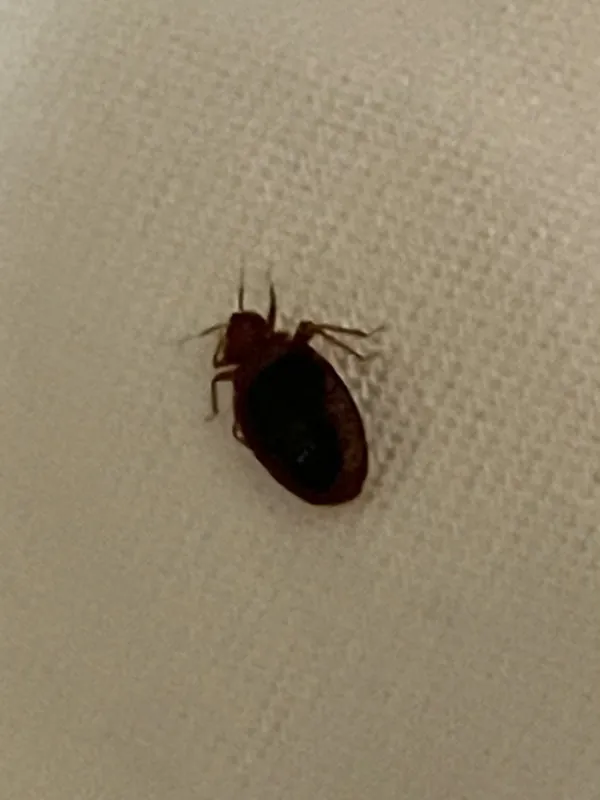
Photo: Evelyn Lazzaretti 🏳️⚧️ via iNaturalist, CC0 1.0 (public domain dedication)
Bed bug
5–7 mm adult, about the size of an apple seed
Rounder, reddish, no long antennae, and found in beds; German roach nymphs are longer with a pale back stripe.
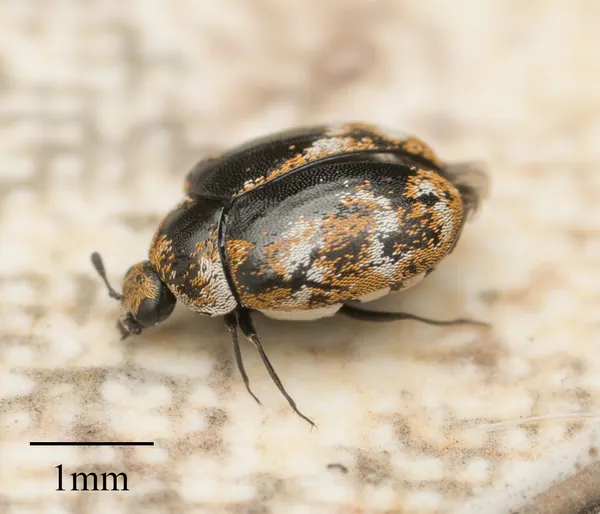
Photo: Jesse Rorabaugh via iNaturalist, CC0 1.0 (public domain dedication)
Carpet beetle
2–4 mm adult; larvae up to 5 mm and hairy
Small, round and domed with hard wing covers; doesn't run fast or hide in kitchen cracks.
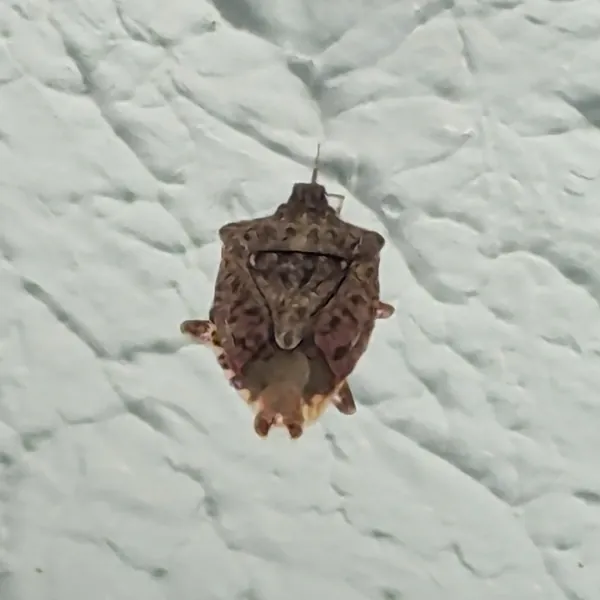
Photo: Emmett Collins-Sussman via iNaturalist, CC BY 4.0
Brown marmorated stink bug
14–17 mm, shield-shaped, mottled brown
Shield-shaped with banded antennae; slow, and comes indoors in fall to overwinter.
When to call a professional
Call a professional for German cockroaches you can see in daylight, roaches in more than one room, any infestation in an apartment building (they move between units), or anyone in the home with asthma. A good service inspects, uses gel baits and growth regulators in cracks rather than spraying baseboards, and should not need a year-long contract to clear a single-family home.
Questions
What does a German cockroach look like?
Light brown, about 1/2 inch long, with two dark parallel stripes on the shield behind the head. Nymphs are smaller and darker with a pale stripe down the back.
Does seeing one cockroach mean an infestation?
A single large American or Oriental roach can wander in from a drain or outdoors. A small German cockroach indoors usually means more are hiding nearby, because that species lives only indoors.
Are cockroaches dangerous?
They can carry germs from filth to food, and their droppings and shed skins contain allergens linked to asthma, especially in children.
Why do I see roaches in a clean house?
German cockroaches arrive in grocery bags, boxes and used appliances, and in apartments they travel between units along pipes and walls. Clean homes can still get them.