Moles, voles and gophers: how to tell them apart
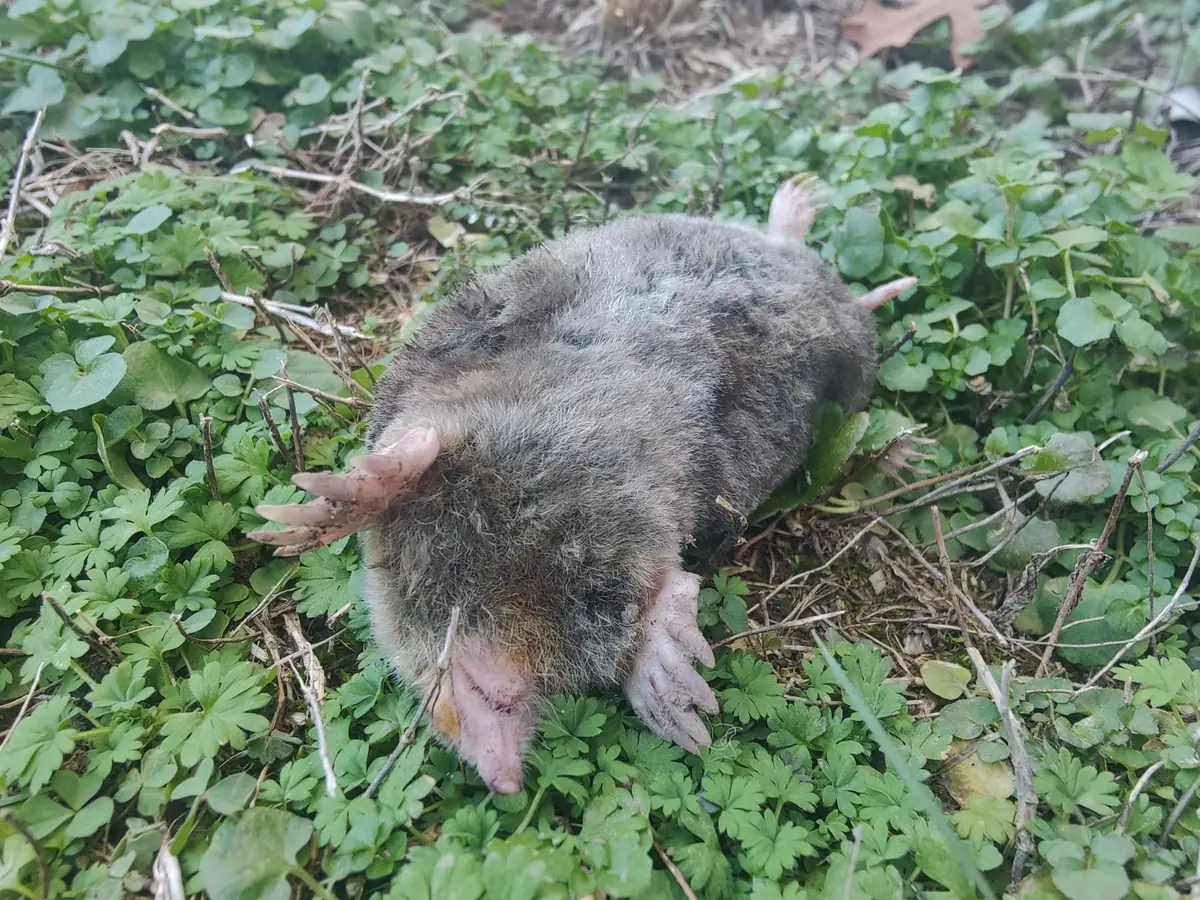
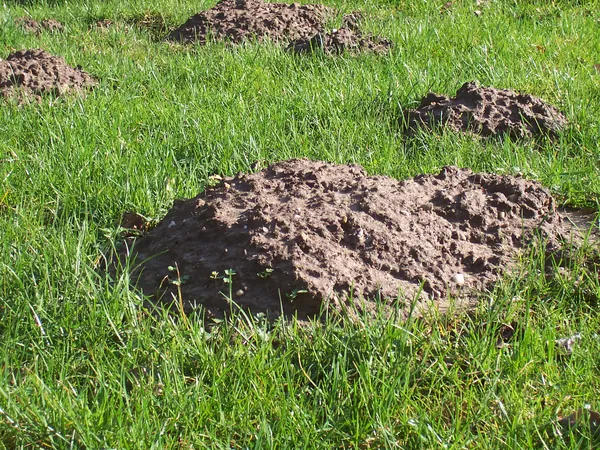
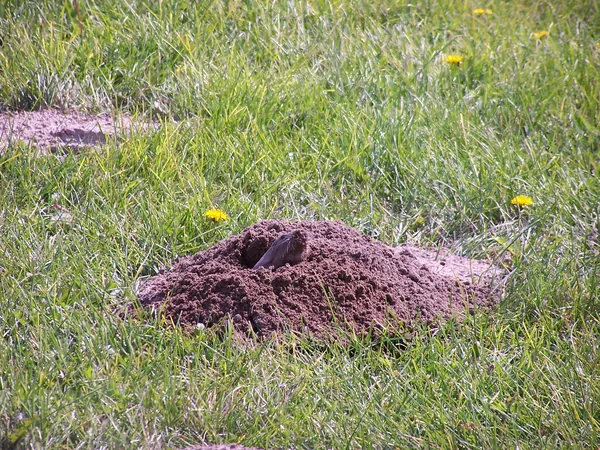
Moles leave raised ridges and round, volcano-shaped mounds with no open hole; voles leave open, golf-ball-size holes and grassy surface runways; pocket gophers leave fan- or crescent-shaped mounds with a plugged hole off to one side.
Read the mound first
Most people never see the animal. The yard damage tells you which one you have.
- Round, volcano-shaped mounds with no open hole, plus raised ridges that collapse underfoot, mean moles. The plug, if visible, sits in the center.
- Crescent or horseshoe-shaped mounds, viewed from above, with the plugged hole off to one side, mean pocket gophers. Gophers rarely make surface ridges.
- Open holes about 1.5–2 inches across, connected by narrow, grass-clipped runways mean voles. Voles make no mounds.
Moles
Moles are insect-eaters related to shrews, not rodents. The eastern mole is 6–8 inches long with gray, velvety fur, a pointed snout, tiny hidden eyes and ears, and huge, paddle-like front feet. Moles eat mainly earthworms, beetle grubs and other soil animals. They rarely eat roots or bulbs; when plants are chewed in a mole run, voles or mice using the tunnel are usually to blame. Mole damage comes from tunneling, which heaves and dries out roots. They also aerate soil and eat lawn grubs.
Surface ridges are feeding tunnels and may be used once and abandoned. Deep runways, 3–12 inches down, are used daily and are where mounds come from. The number of ridges says little about the number of moles: an acre typically supports no more than two or three.
Trapping in active main runways is the most reliable control. To find active runs, step down short sections of ridge and mark them; the ones raised again within a day or two are active. Harpoon, scissor-jaw and pincer traps are common. Trap in spring and fall, when moles are most active near the surface. Grain baits rarely work because moles do not eat grain; worm-shaped gel baits are an option, but read and follow the label; the label is the law. Grub control has not been proven to drive moles away, and castor oil repellents show only some effect on eastern moles.
Voles
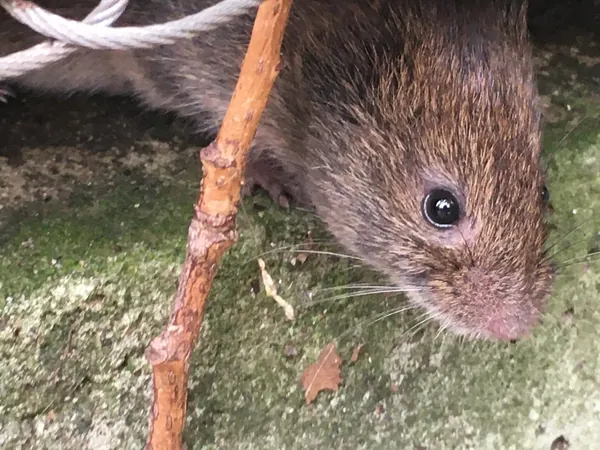
Voles are small, chunky, mouselike rodents, 5–8 inches including a short tail, with small eyes and partly hidden ears. They live in surface runways under grass, mulch or snow and feed on grass, plants, bulbs, roots and bark. Their worst damage is girdling: gnawing all the way around the base of a tree or shrub, which can kill it. Vole numbers swing widely and can spike every few years.
Control starts with habitat: remove weeds, heavy mulch and dense ground cover near gardens, and keep a 4-foot circle around young trees clear. Protect trunks with hardware cloth cylinders buried 4–6 inches deep and tall enough for snow. Snap traps set at right angles across runways, baited with peanut butter and oats or apple, work well in gardens. Cover traps to protect birds.
Pocket gophers
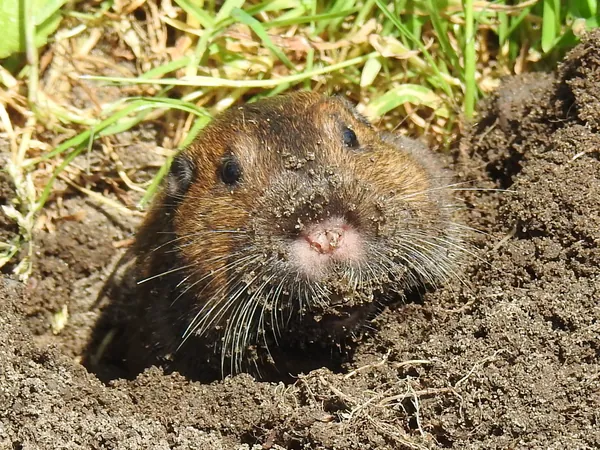
Gophers are burrowing rodents 6–10 inches long with fur-lined cheek pouches and long front claws. They spend nearly all their time underground, eating roots and pulling whole plants into tunnels, and they gnaw irrigation lines. Trapping is the main home method: probe 4–12 inches from the plugged side of a fresh mound to find the main tunnel, then set pincer or box traps in it. Protect new plantings with wire baskets. Poison baits for gophers are restricted in some states; check your state's rules before using any.
What does not work
Vibrating stakes, ultrasonic devices, pinwheels, castor bean plants and garlic have not been shown to repel moles or gophers in research. Repellents often just push the animal next door. California, for example, classifies moles and gophers as nongame mammals that owners may control by legal means. Rules differ by state, so check your state wildlife agency before trapping or baiting.
Where in the US
Eastern moles live across the eastern and central US, west into Texas and the Plains, and other mole species occur along the Pacific coast. Voles of one species or another live in nearly every state. Pocket gophers are mainly a western and Great Plains animal, with one species in the Southeast; in much of the East, a gopher-looking mound is usually a mole. Moles are most active near the surface in spring and fall, especially after rain.
Photos


Side by side
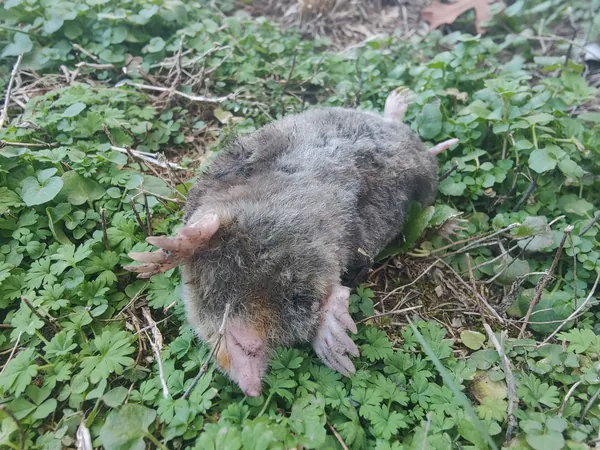 Eastern mole | Meadow vole | Pocket gopher | |
|---|---|---|---|
| What it is | Insectivore, not a rodent | Rodent (meadow mouse) | Rodent |
| Size | 6–8 in | 5–8 in with tail | 6–10 in with tail |
| Diet | Earthworms, grubs, soil insects | Grass, plants, bark, roots, bulbs | Roots, bulbs, whole plants |
| Mounds | Round volcano, plug centered or absent | None | Crescent or fan, plug off to one side |
| Holes | No open holes | Open, 1.5–2 in across | Plugged, rarely open |
| Surface sign | Raised ridges that sink underfoot | Grass-clipped runways | Mounds only |
| Plant damage | Indirect: roots heaved and dried | Gnawed and girdled bark, eaten plants | Plants pulled down, roots cut |
| Best control | Trapping in active runs | Remove cover, guards, snap traps | Trapping in main tunnel, wire baskets |
Photo credits: Eastern mole: Photo: Siddarth Machado via iNaturalist, CC BY 4.0; Meadow vole: Photo: Mila C. via iNaturalist, CC BY 4.0; Pocket gopher: Photo: Sam Kieschnick via iNaturalist, CC BY 4.0.
Often mistaken for
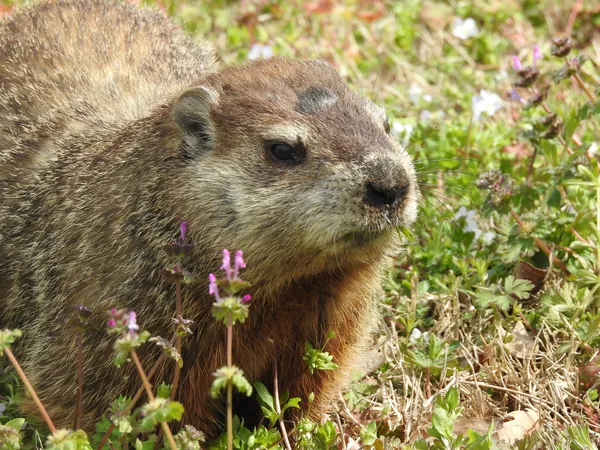
Photo: Laura Mae via iNaturalist, CC BY 4.0
Groundhog
40–65 cm, 2–6 kg
Groundhog burrows have a 10–12 inch open entrance with a big dirt mound; the animal is often seen above ground.
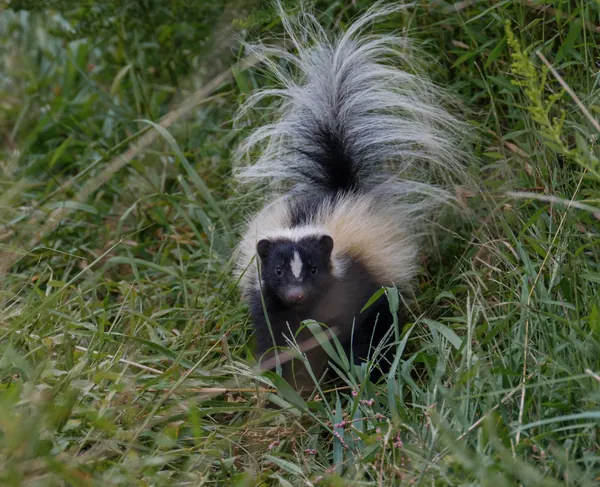
Photo: Mirko Schoenitz via iNaturalist, CC0 1.0 (public domain dedication)
Striped skunk
50–80 cm including the tail
Skunks dig small cone-shaped holes 3–5 inches across and roll back sod hunting grubs, but leave no tunnels.
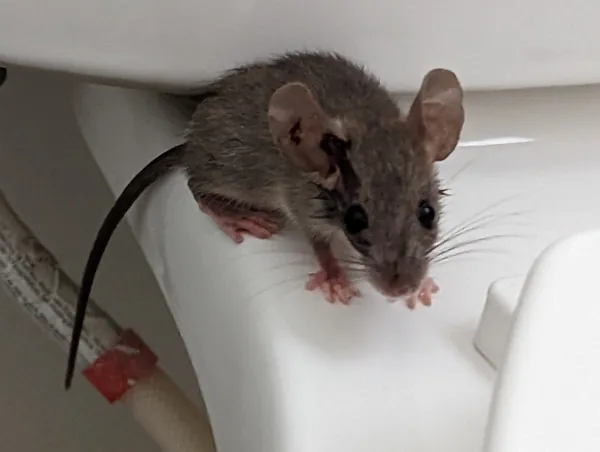
Photo: Justin via iNaturalist, CC BY 4.0
House mouse
Body 6.5–9.5 cm plus a tail about as long
Deer mice and house mice can use mole tunnels and gnaw roots, but do not make ridges or mounds.
Choose a treatment
First confirm which animal you have from the mounds, then match the method: moles and gophers are trapped in tunnels, voles are managed by removing cover and protecting plants.
Tamp down and tolerate
Do it yourself
- Step down ridges and rake out mounds; moles also eat grubs and aerate soil.
- Activity peaks in spring and fall after rain and often moves on.
- Skip vibrating stakes, ultrasonic devices and home remedies; research does not support them.
- Grub control has not been shown to drive moles away.
Professional
Not needed at this level.
Trap in active runways
Do it yourself
- Find active main runways: step down short sections and mark them; those raised again in a day or two are active.
- Set harpoon, scissor-jaw or pincer mole traps in those runways, at least 18 inches from a mound. Use several traps.
- Trap in spring and fall, when moles are near the surface.
- Grain baits rarely work on moles. If you use a worm-shaped gel bait, read and follow the label; the label is the law.
Professional
A pro traps main runways and can cover large lawns quickly. Expect several visits over one to two weeks.
Remove cover, guard trunks
Do it yourself
- Remove weeds, heavy mulch and dense ground cover near beds, and keep a 4-foot circle around young trees clear.
- Wrap trunks with hardware cloth cylinders buried 4–6 inches and taller than expected snow.
- Set snap traps at right angles across runways, baited with peanut butter and oats or apple, and cover them to protect birds.
- Do not use restricted-use vole baits; they are for non-residential sites.
Professional
For large plantings or orchards, a pro can trap intensively and advise on barriers. Toxic baits are restricted and handled only by licensed applicators.
Trap in the main tunnel
Do it yourself
- Probe 4–12 inches from the plugged side of a fresh mound to find the main tunnel.
- Set pincer or box traps in both directions in the tunnel, check often, and move them if nothing is caught in 1–2 days.
- Plant new shrubs and trees in wire baskets.
- Repellents, castor bean plants and vibrating devices have not been shown to work. Check your state's rules before using any poison bait.
Professional
A pro traps or baits the main tunnel system under your state's rules and can protect irrigation lines and new plantings.
Keep children and pets away from trap sites, and never put poison bait on the surface where pets or wildlife can reach it.
In vegetable gardens, rely on trapping, wire baskets and fencing rather than baits. Read and follow the label for any product; the label is the law.
When to call a professional
Call a professional if you have a large lawn or field with heavy, ongoing activity, if you are not comfortable setting traps, or if you are considering poison bait, which can be restricted-use and dangerous to pets and wildlife. Pros trap moles and gophers in main runways and can advise on wire barriers for gardens and new trees.
Questions
How do I know if I have moles or voles?
Moles leave raised ridges and round mounds with no open holes. Voles leave open holes about 1.5–2 inches wide and narrow surface runways through the grass, with no mounds.
Does killing grubs get rid of moles?
Not reliably. Research has not confirmed that grub control makes moles leave, since earthworms are a main food.
Do castor oil or vibrating stakes work on moles?
Vibrating and noise devices have no research support. Castor oil repellents showed some effect on eastern moles but tend to push them into neighboring yards.
Are there pocket gophers in the eastern US?
Mostly not, apart from one southeastern species. In much of the East, dirt mounds in a lawn are usually from moles.