What a flea looks like
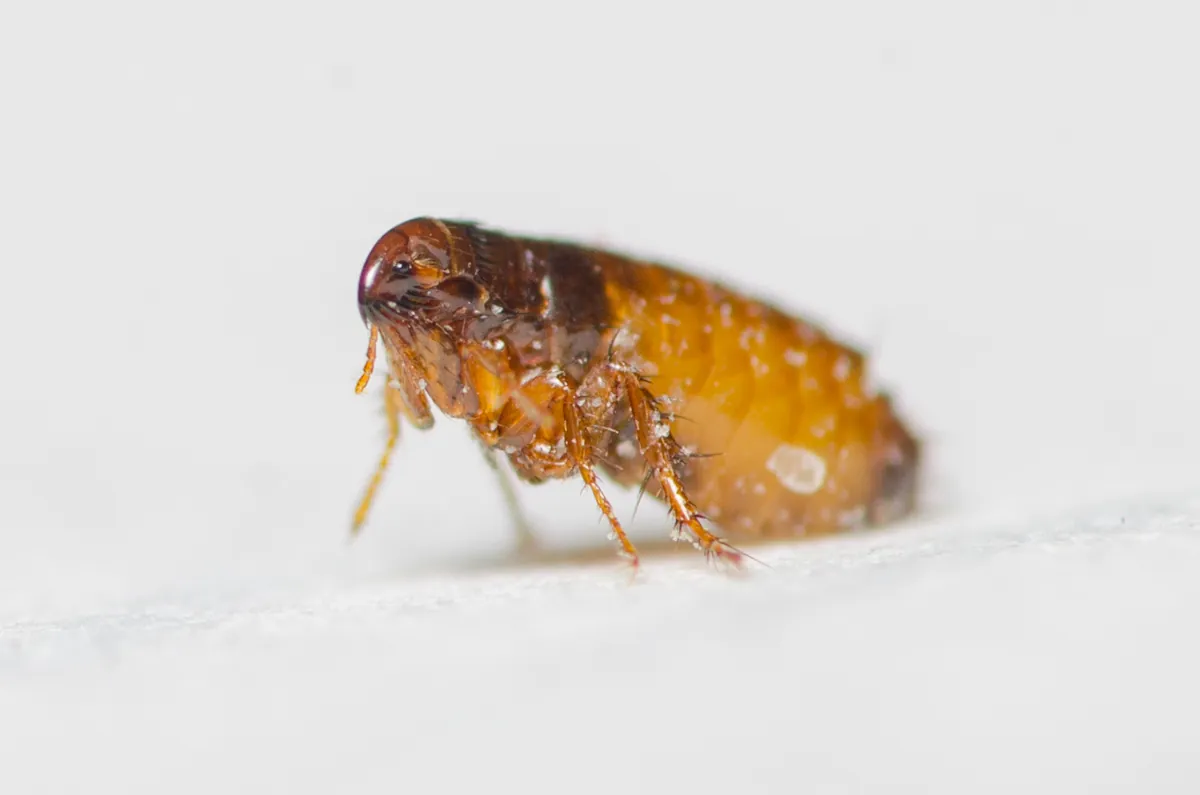
A flea is a wingless, dark reddish-brown insect 1–3 mm long, about the size of a sesame seed, flattened side to side so it looks like a thin sliver from above. It jumps rather than crawls.
Size, shape and color
An adult flea is no more than 1/8 inch (about 3 mm) long. It is reddish brown to almost black, has no wings, and its body is flattened from side to side. That shape is the best field mark: seen from above, a flea is a narrow sliver; seen from the side, it is a tiny teardrop. The hind legs are large, and a cat flea can jump about 6 inches straight up, which is how fleas reach pets, shoes and pant legs.
Under a hand lens, cat fleas show two rows of dark spines called combs, one along the lower edge of the head and one behind the head. The mouthparts pierce skin and suck blood.
Which flea it is
Almost every flea found on a dog, a cat or in a house is the cat flea, Ctenocephalides felis. Despite the name, it is also the most common flea on dogs. Other fleas matter in specific places. Ground squirrel fleas spread plague in rural parts of the western US, and cat fleas and Oriental rat fleas can spread flea-borne (murine) typhus, with most US cases reported from California, Texas and Hawaii.
Eggs, larvae and cocoons
Most of a flea population is not on the pet. Eggs are pearly white ovals about 1/32 inch (under 1 mm) long. A female lays roughly 20 to 50 a day, and they fall off the pet into bedding and carpet, where they hatch in 2 to 5 days.
Larvae are whitish, legless and wormlike, up to 3/16 inch (5 mm) long. They hide at the base of carpet fibers, avoid light, and feed on flea dirt, the dried blood that adult fleas excrete. They need humidity of about 75% or higher.
After 1 to 2 weeks, each larva spins a silk cocoon coated with dust and lint. A finished adult can wait inside for weeks or months, and in cool conditions up to 12 months, until warmth, breath or footsteps signal a host. That is why people moving into an empty house, or returning from a long trip, can be bitten by a wave of newly emerged fleas.
Where to look
On a pet, part the fur at the base of the tail, along the back and around the neck, or run a fine-toothed flea comb through the coat. Look for moving fleas and for black, pepper-like specks of flea dirt. In the house, check the places pets sleep and rest, and the spots where cats land when they jump off furniture.
On people, fleas usually bite the ankles and lower legs. See what flea bites look like.
Fleas and lookalikes
Bed bugs are bigger (4–5 mm), flattened top to bottom like a lentil, and they crawl instead of jumping. Ticks have eight legs, not six, and stay attached once they bite. Small beetles are rounder and usually slower. If you are not sure, compare with bugs that look like bed bugs or use the bug identifier.
What to do next
Treat the pet and the home at the same time. Ask a veterinarian which product fits each animal, and never put a dog product on a cat. The full plan is on how to get rid of fleas.
Where in the US
Cat fleas occur across the US wherever there are pets. Larvae need warmth (they develop fastest at 70–90°F) and humidity of about 75% or more, so fleas build up fastest in warm, humid weather and in humid regions. In Minnesota, fleas are rarely found in lawns because they do not survive the winter outdoors, but fleas on indoor pets can persist year-round.
Often mistaken for
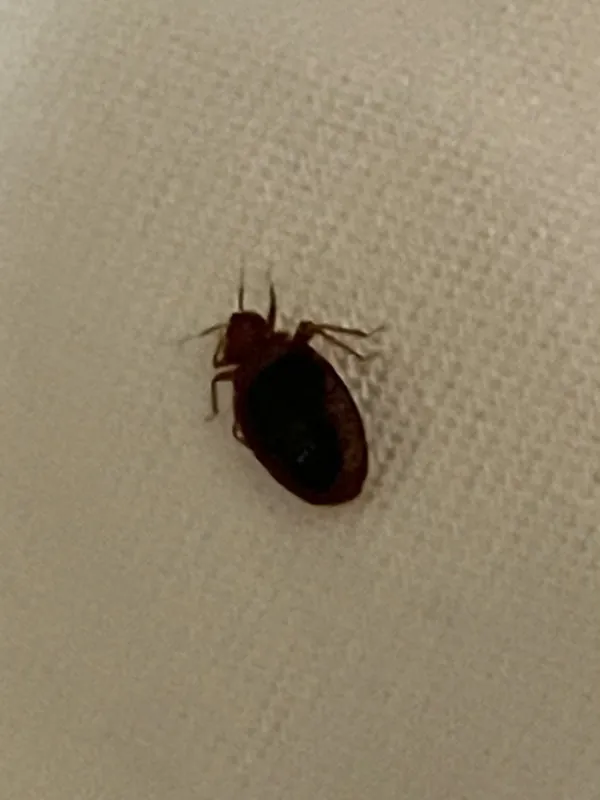
Photo: Evelyn Lazzaretti 🏳️⚧️ via iNaturalist, CC0 1.0 (public domain dedication)
Bed bug
5–7 mm adult, about the size of an apple seed
Larger (4–5 mm), flat top to bottom, crawls and never jumps; found in beds, not on pets.
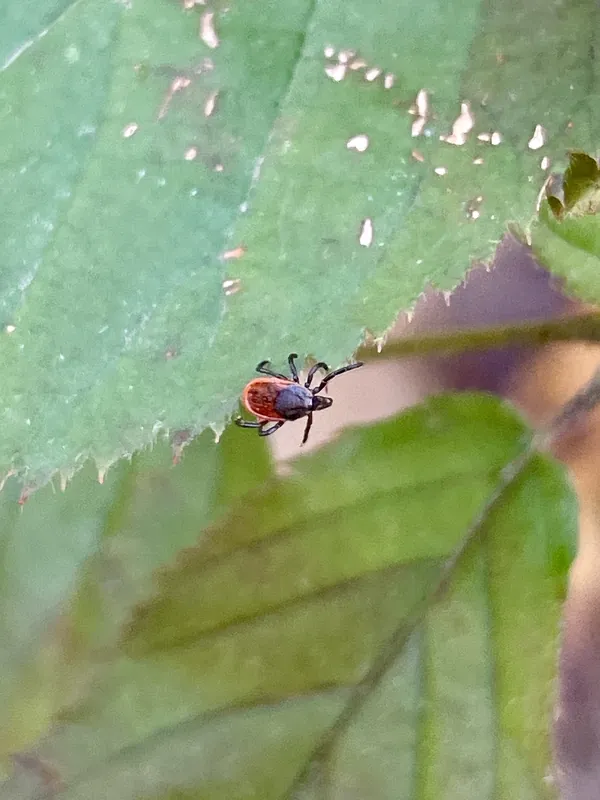
Photo: infiniteuniverse via iNaturalist, CC0 1.0 (public domain dedication)
Tick
1–5 mm unfed (nymphs ~1–2 mm); up to 10 mm engorged
Eight legs, no jumping; attaches to skin and swells as it feeds.
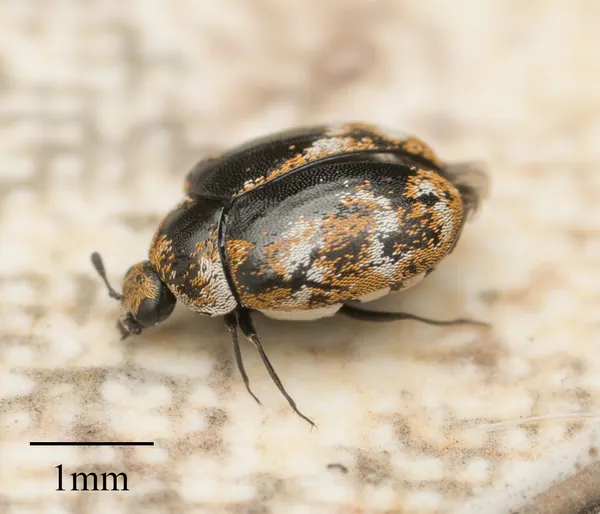
Photo: Jesse Rorabaugh via iNaturalist, CC0 1.0 (public domain dedication)
Carpet beetle
2–4 mm adult; larvae up to 5 mm and hairy
Round and often mottled; adults fly to windows and do not bite.
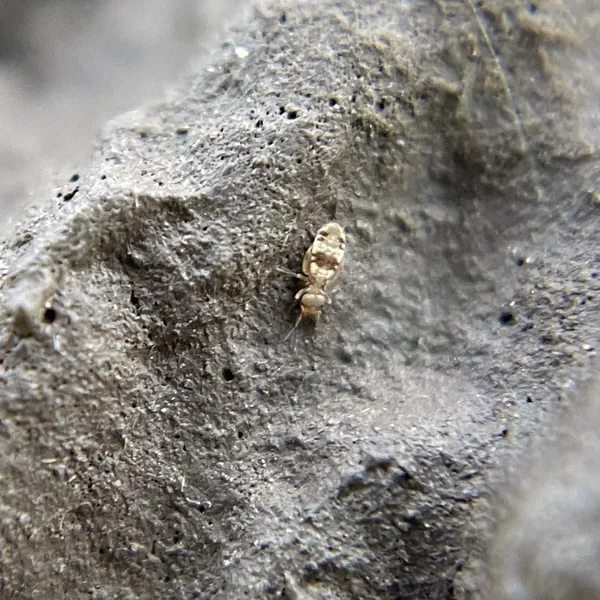
Photo: northerly via iNaturalist, CC BY 4.0
Booklouse
About 1 mm, pale and soft
Pale, soft and slow, about 1 mm; lives in damp paper and does not bite.
When to call a professional
Call a pest professional if you still see adult fleas after 4 weeks of treating every pet and vacuuming often, or if the house was vacant and fleas keep emerging. If raccoons, opossums or squirrels are living in the attic or crawl space, they can keep reinfesting the house; a wildlife control company can remove the animals and seal entry points.
Questions
Can you see fleas with the naked eye?
Yes. Adult fleas are 1–3 mm long and dark, so they are visible against light fur, white socks or a white towel. They move fast and jump, so they are easiest to spot with a flea comb.
Do fleas fly?
No. Fleas have no wings. They jump, and a cat flea can jump about 6 inches straight up.
Can fleas live on humans?
Fleas bite people but prefer animals. They usually bite people when the pets or wild animals they normally feed on are not available.
Can you have fleas without pets?
Yes. Fleas can wait in cocoons for months in an empty home, and raccoons, opossums or squirrels nesting in or under a house can bring them in.