What snake poop looks like
Snake poop is a single, cordlike dropping, dark and often wet when fresh, with a white chalky cap of urates at one end, much like a bird dropping, and sized to match the snake that left it.
How to recognize snake droppings
Snakes do not pass urine as a liquid the way mammals do. Like birds, they get rid of nitrogen waste as urates, a white, chalky paste. So a snake dropping usually has two parts: a dark brown or black fecal portion and a white or cream cap at one end.
The fecal part is cordlike, with constrictions and undulations along its length, and its size matches the snake. A small garter snake leaves something smaller than a pencil eraser; a large rat snake can leave a dropping several inches long. Because snakes swallow prey whole, the dark part often holds bits of hair, small bones, feathers or, in insect-eating species, shiny insect parts. Fresh droppings are moist and can smell strongly. Old ones dry out and the urate cap may crumble.
Snakes eat at long intervals, so you usually find one dropping at a time, not a scatter of many. That alone separates them from rodent droppings.
Snake vs bird and lizard droppings
Bird droppings also have white urate, but they tend to appear in clusters and splatters below a perch or nest. A snake dropping is an isolated event, usually on the ground, a shelf, or along a wall. Lizards such as geckos also leave droppings with a white tip, but they are much smaller. Rodent droppings never have a white cap; compare rat droppings and mouse droppings, or use the droppings comparison.
Other signs of a snake
- Shed skins: thin, clear, papery tubes with the scale pattern still visible, often left under boards, in rock piles, in basements or in insulation.
- Trails: wavy or straight tracks in dust or sand, with material pushed up on the outside of each curve.
- Fewer mice. Snakes go where the food is.
What a snake in the house usually means
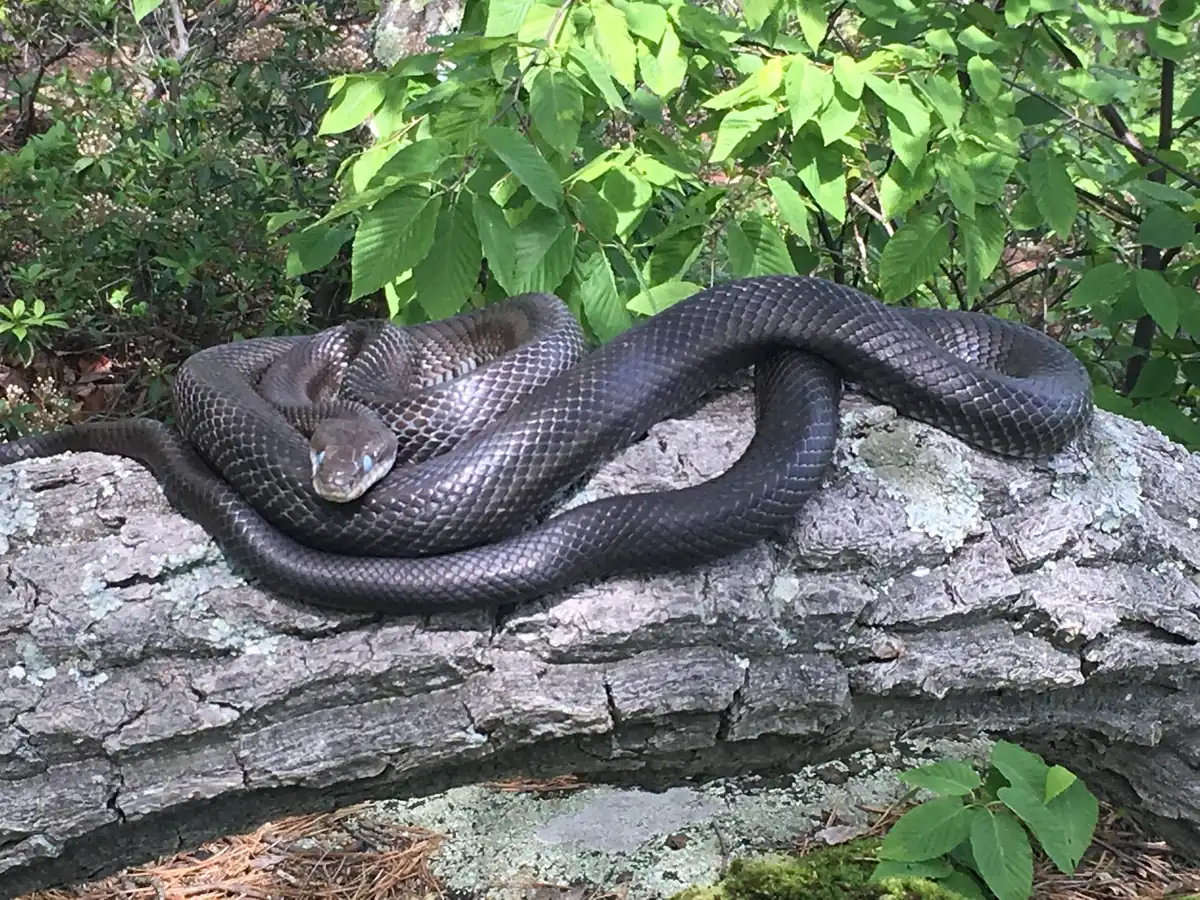
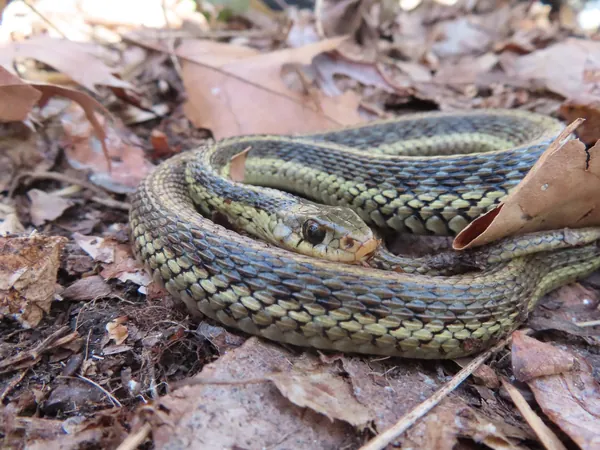
Snakes come indoors for food or shelter. Most snakes found around houses are harmless species such as garter, ribbon, ringneck, king and rat snakes. A snake in a basement, barn or attic in the eastern half of the country is very often a rat snake hunting mice and rats. If you find snake droppings indoors, look for a rodent problem first: see mice and rats.
Venomous snakes do live in parts of the US, so do not pick up any snake you cannot identify with confidence. Keep your distance and let it move away.
Keeping snakes out
- Seal openings larger than 1/4 inch around the foundation with 1/4-inch hardware cloth, caulk, mortar or concrete patch.
- Fit door sweeps and weather-stripping, and cover gaps under garage doors.
- Reduce rodents by keeping pet food and birdseed in sealed containers.
- Remove hiding spots near the house: woodpiles, rock piles, brush and tall grass. Store firewood away from the house and at least 12 inches off the ground.
Repellents do not work. Mississippi State tests on black rat snakes found that sulfur, lime, mothballs, cayenne spray and artificial skunk scent all failed, and no repellent is registered for snakes.
Cleaning up snake droppings
Wear disposable gloves. Pick up the dropping with a paper towel or inverted bag, seal it, and put it in the trash. Clean the surface with soap and water and wash your hands. The CDC notes that Salmonella is the most common germ carried by reptiles, so keep children and pets away until the spot is clean.
Where in the US
Snakes live in every region of the lower 48 states. In the eastern and central US, rat snakes are among the snakes most often found in basements, barns and attics, where they hunt mice and rats. Most snakes found around homes anywhere in the country are harmless species such as garter, ribbon, ringneck, king and rat snakes, which eat rodents, slugs, snails and insects.
Photos
Often mistaken for
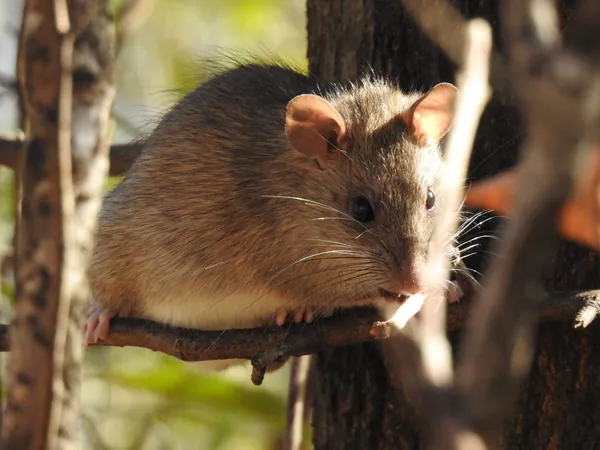
Photo: Laura Mae via iNaturalist, CC BY 4.0
Norway rat
Body 18–25 cm; tail shorter than the body (Norway rat)
Rat droppings are dark capsules 12–18 mm long, left by the dozen along walls, with no white cap.
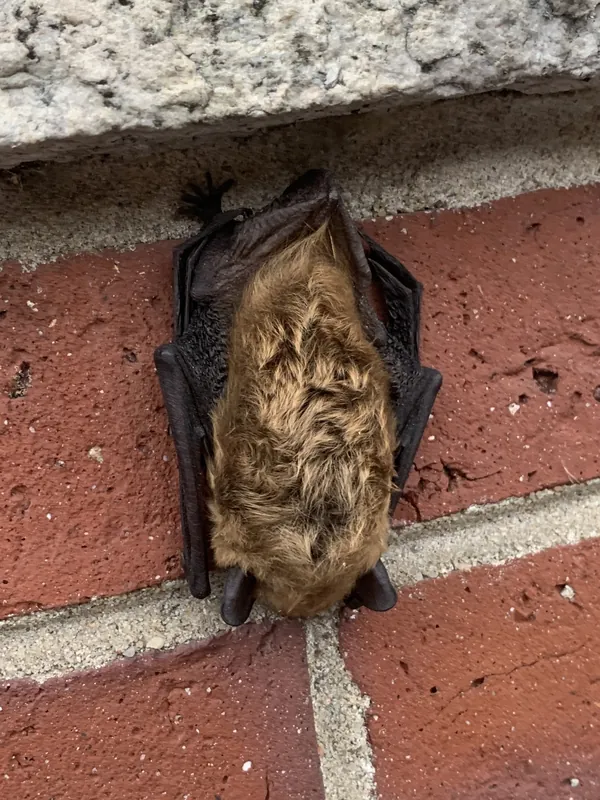
Photo: Thomas Irvine via iNaturalist, CC BY 4.0
Big brown bat
Body 10–13 cm, wingspan 28–33 cm
Bat droppings are small, pile up under a roost and crumble to dust; no white urate.
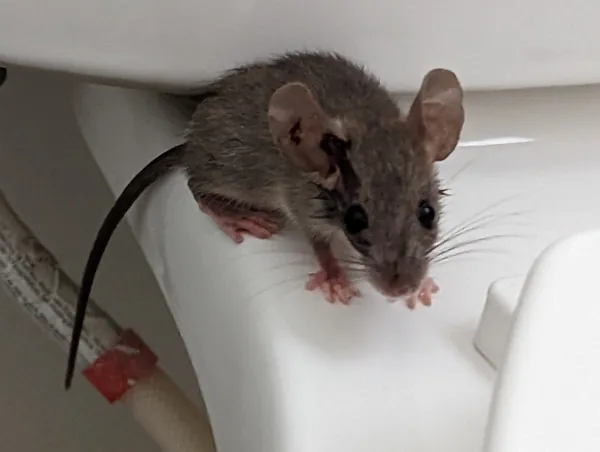
Photo: Justin via iNaturalist, CC BY 4.0
House mouse
Body 6.5–9.5 cm plus a tail about as long
Mouse droppings are 3–6 mm, pointed and scattered in large numbers.
When to call a professional
Call a wildlife control operator if you cannot find a snake that is loose in the living space, if you see snakes or shed skins repeatedly, or if you think the snake may be venomous. Snake visits indoors usually point to rodents, so a pest professional who seals entry points and controls mice can solve both problems. Many states protect native snakes, so check your state wildlife agency before killing or relocating one.
Questions
What is the white stuff in snake poop?
It is urates, the solid form of a snake's nitrogen waste, which it passes instead of liquid urine. The same chalky white shows up in bird droppings.
How big is snake poop?
It depends on the snake. Droppings scale with body size, from a fraction of an inch in a small garter snake to several inches in a large rat snake.
Does snake poop mean there is a snake in my house?
It means one has been there. Look for shed skins and entry gaps, and check for mice, which are what most house snakes are hunting.
Do mothballs or sulfur keep snakes away?
No. Tests on rat snakes found sulfur, lime, mothballs and cayenne did not repel them, and no repellent is registered for snakes.