What possum poop looks like
Possum (opossum) poop looks like a cat's or small dog's: firm, dark droppings 1 to 3 inches long, often pointed at the ends, but its shape and texture vary a lot because opossums eat almost anything.
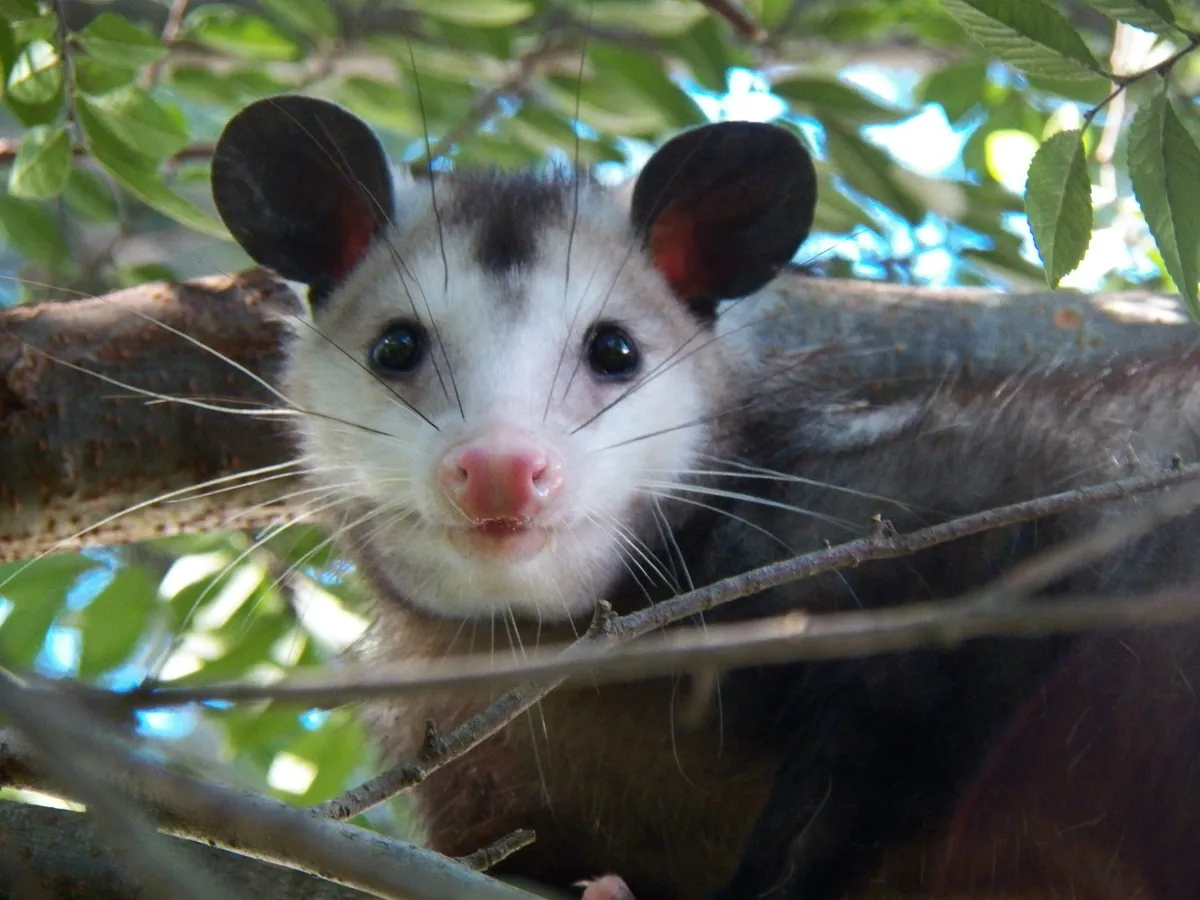
How to recognize opossum droppings
Opossum scat is hard to describe precisely because opossums eat nearly anything: fruit, insects, snails, rodents, carrion, garbage and pet food. When their droppings are firm, they are 1 to 3 inches long, dark, roughly tube-shaped and pointed at the ends, and they look like those of a house cat, small dog, fox or coyote. A diet of fruit or pet food makes them softer and less defined. UC IPM notes that opossum scat has no consistent size, shape or texture.
Look inside the dropping for clues to the diet: seeds and fruit skins, shiny bits of beetles, hair or bone, or fragments of trash.
Where you will find it
Opossums do not use a single latrine the way raccoons do. Their droppings turn up one or two at a time along the routes they travel and where they feed:
- Garden paths, walkways, patios and decks
- Beside pet food bowls, compost and trash cans
- Under fruit trees
- Near the entrance to a den under a deck, porch, shed or crawl space
Opossums den in burrows other animals have dug, tree hollows and brush piles. Around houses they use the space under steps, porches, decks and sheds, and sometimes attics, garages or crawl spaces, where they build untidy nests. Other signs include pet food that disappears overnight, dogs barking at night, and long silver-gray hairs caught at an opening. Their tracks are distinctive: the hind foot has an opposable thumb that points sideways, up to 90 degrees from the direction of travel.
Is opossum poop dangerous?
Treat it like any wild animal waste. Opossums can carry fleas, ticks, mites and lice, and UC IPM lists diseases including leptospirosis and toxoplasmosis among those they can carry. In parts of Southern California, opossum fleas are a concern for flea-borne typhus. Washington wildlife officials also advise wearing gloves when handling opossums or their waste.
To clean up:
- Wear disposable gloves.
- Pick up droppings with a bag turned inside out or a scoop, seal the bag and put it in the trash.
- Clean hard surfaces with soap and water, then wash your hands.
If the scat is in a pile in one spot on a roof, deck or attic, check whether it is actually a raccoon latrine, which needs extra precautions.
Keeping opossums from coming back
- Bring pet food in by nightfall and keep food scraps out of the compost.
- Use trash cans with tight lids and pick up fallen fruit.
- Block openings under decks, sheds and porches with 1/4-inch hardware cloth, buried about 6 inches deep if you can.
- Before you seal an opening, sprinkle flour at the entrance and check for outbound tracks so you do not trap an animal inside. In spring, look for a mother with young before sealing.
- Trim shrubs and limbs so they are at least 5 feet from the roof.
If an opossum wanders into the house, close interior doors, open an outside door and leave the room; it will usually leave on its own. Rules on trapping and moving opossums vary by state, and some states require a permit to release one off the property where it was caught, so check your state wildlife agency before trapping.
Where in the US
The Virginia opossum is the only marsupial in the US. It lives across the eastern and central states and along much of the Pacific coast, where it was introduced, and it is common in towns and suburbs. Opossums do not hibernate, so you can find droppings year-round, though they stay in their dens during the coldest spells.
Often mistaken for
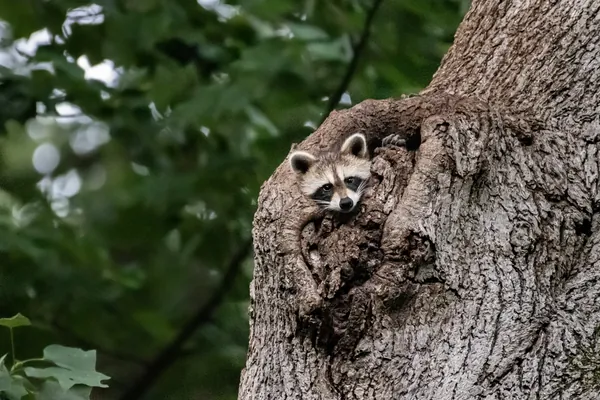
Photo: Troy B via iNaturalist, CC BY 4.0
Raccoon
60–95 cm including the ringed tail
Raccoon scat is blunt-ended, about as wide as a nickel, and piled in a latrine used night after night.
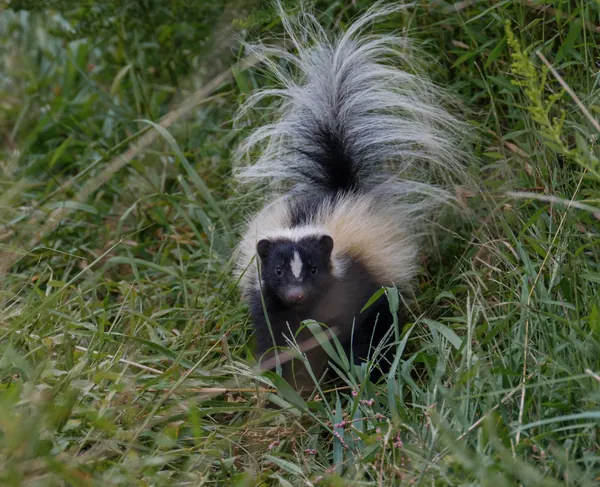
Photo: Mirko Schoenitz via iNaturalist, CC0 1.0 (public domain dedication)
Striped skunk
50–80 cm including the tail
Skunk droppings are about 1/2 inch wide and 2–4 inches long with blunt ends, found near lawn digging or a den.
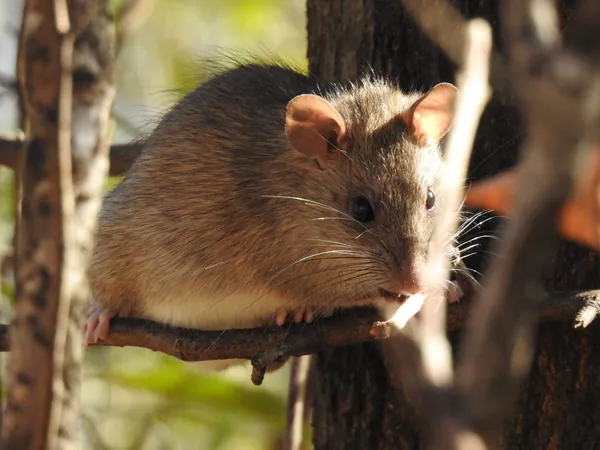
Photo: Laura Mae via iNaturalist, CC BY 4.0
Norway rat
Body 18–25 cm; tail shorter than the body (Norway rat)
Rat droppings are much smaller, 12–18 mm long, and left in large numbers along walls.
When to call a professional
Call a wildlife control operator if an opossum is living in your attic, crawl space or walls, if there is a mother with young, or if you need trapping done under your state's rules. Opossums are generally shy, but a cornered one may defend itself, so do not try to grab one. If you are bitten or scratched, wash the wound with soap and water and see a doctor.
Questions
What is the difference between possum and raccoon poop?
Raccoons pile blunt-ended scat in one latrine. Opossums leave droppings scattered along paths and feeding spots, often pointed at the ends and more variable in shape.
Do opossums poop in the same place?
Not usually. Unlike raccoons, they do not keep latrines, so droppings show up one or two at a time where they travel and feed.
Why is there possum poop on my porch or deck?
An opossum is likely feeding nearby or denning under the deck or porch. Look for an opening, pet food left out, or fallen fruit.
Is it safe to clean possum droppings without gloves?
Use gloves. Opossums can carry several diseases and parasites, so bag the droppings and wash your hands afterward.