Rat vs mouse droppings
Mouse droppings are 1/8 to 1/4 inch long with pointed ends, about a grain of rice, while rat droppings are 1/2 inch or longer and thicker, about a raisin; size is the most reliable difference.
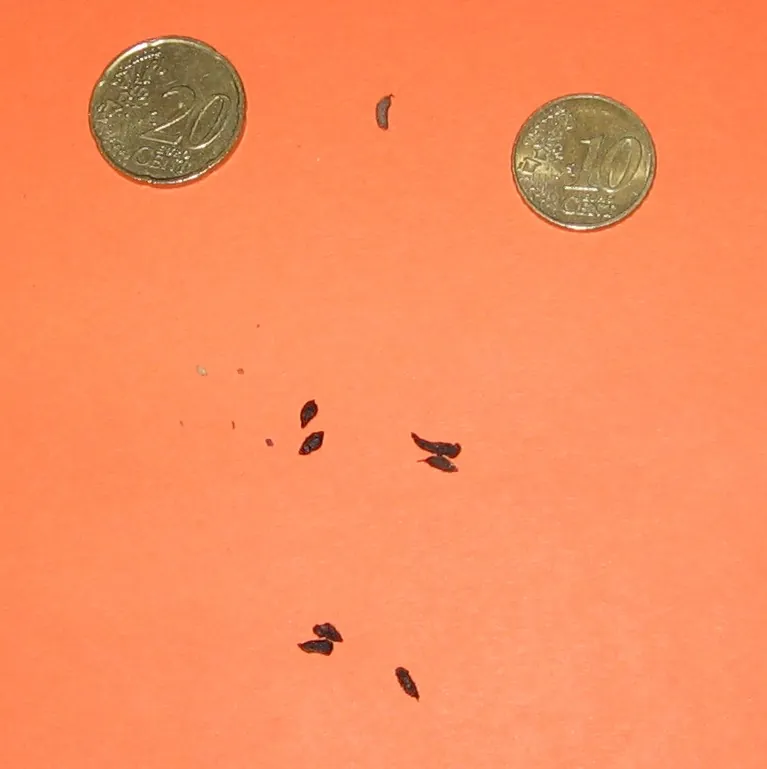
The size test
Size is the quickest and most reliable way to tell them apart. Pick up a few of the largest pellets with a gloved hand or a piece of paper (don't touch them bare-handed) and lay them next to a ruler or a grain of rice.
- 1/8 to 1/4 inch, slim, pointed: house mouse (or deer mouse).
- 3/4 inch or longer, thick, blunt: Norway rat.
- 1/4 to 1/2 inch, curved like a banana, pointed: roof rat.
Cornell's NYS IPM program puts the cutoff simply: mouse droppings are under 1/4 inch, rat droppings are over 1/3 inch.
Where the overlap is
Roof rat droppings are the source of most confusion. The smallest ones can be close to a large mouse dropping. The University of Arizona notes that droppings alone are not a reliable way to tell rat species apart. When sizes overlap, look at the biggest pellets in the group, where they are, and the other signs:
- Mice leave lots of small pellets scattered along walls, in drawers and in cabinets, usually close to the nest.
- Norway rats leave much larger droppings in basements, garages, crawlspaces and along foundations, often near burrows.
- Roof rats leave droppings up high: attics, tops of cabinets, shelves and beams, with dark greasy rub marks on rafters.
Not rodent droppings at all
Cockroach droppings can look like small rat droppings because they have blunt ends. They are smaller, and they have ridges running along their length, while rodent droppings are smooth. German cockroaches leave specks like ground pepper rather than pellets; see cockroach droppings. Bat droppings are about the size of a grain of rice but pile up below a roost or exit hole instead of being scattered; see bat droppings. For every pest side by side, use the droppings chart.
Why the difference matters
The cleanup is the same, but the fix is not. Mice slip through 1/4 inch gaps and stay within about 30 feet of their nest. Rats need about 1/2 inch, travel 100 feet or more, and are far more wary of traps, so they usually need more traps, heavier sealing materials and often professional help.
Cleaning up either one
Follow the CDC method for both: air the room out for 30 minutes, wear gloves, spray droppings with disinfectant or a fresh 1:9 bleach solution until soaked, wait 5 minutes, and wipe up with paper towels. Never sweep or vacuum rodent droppings, which can put hantavirus particles into the air.
Photos
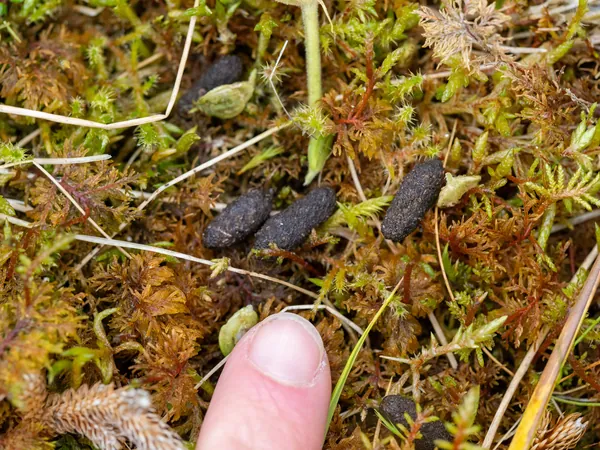

Side by side
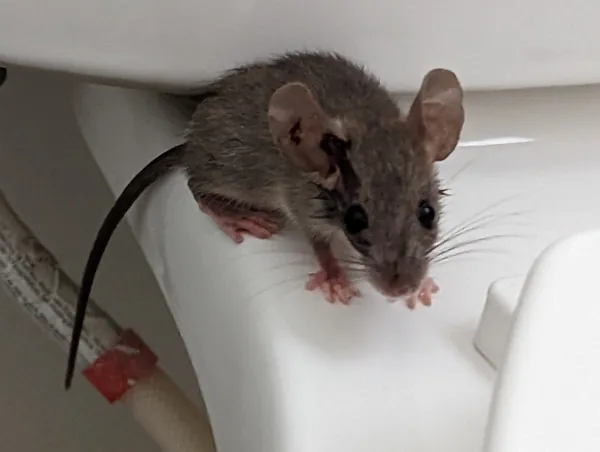 House mouse |  Norway rat | |
|---|---|---|
| Length | 1/8–1/4 in (3–6 mm) | Norway 3/4–1 in; roof 1/4–1/2 in |
| Everyday size | A grain of rice | A raisin (Norway); a long rice grain (roof) |
| Thickness | Slim | Thick (Norway), about 1/4 in across |
| Ends | At least one pointed end | Blunt (Norway); pointed, curved (roof) |
| Surface | Smooth | Smooth |
| Gap it fits through | About 1/4 in | About 1/2 in |
| Where found | Drawers, cabinets, along walls | Basements, garages (Norway); attics, ledges (roof) |
| Animal size | About 1/2 oz | 5–18 oz |
Photo credits: House mouse: Photo: Justin via iNaturalist, CC BY 4.0; Norway rat: Photo: Laura Mae via iNaturalist, CC BY 4.0.
When to call a professional
Call a professional if the droppings are rat-sized and inside the house, if you find them in the attic or along the tops of walls, or if you can't tell what left them. A technician can identify the animal from droppings, rub marks and gnawing, and seal entry points sized for the right pest.
Questions
How do I tell rat droppings from mouse droppings?
By size. Mouse droppings are 1/8 to 1/4 inch, about a grain of rice. Rat droppings are 1/2 inch or longer, up to the size of a raisin for a Norway rat.
Are rat droppings more dangerous than mouse droppings?
Treat both the same. Rodent droppings and urine can carry hantavirus and other germs, so clean them with disinfectant and paper towels, never with a broom or vacuum.
Could small droppings still be from a rat?
Yes. Roof rat droppings can be as short as 1/4 inch, which overlaps a large mouse dropping. Look at the largest pellets in the group and at where they are; roof rat droppings are curved and found up high.